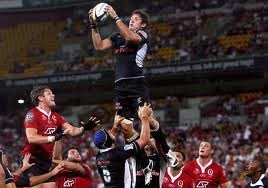
Keep your eyes on… Ian Madigan

The Irish Wolfhounds play England Saxons in late January in a game that should give Deccie a chance to look at a few up-and-coming options.  Who he picks to play fly-half will be of particular interest.  Wolfhounds fly-half may sound inconsequential, but with Radge moving towards retirement, Deccie will most likely be looking to groom someone he feels can back up, and challenge Jonny Sexton in the near future.

The choice would appear to come down to three Ians – Humphreys, Keatley and Madigan.  Humphreys has been the traditional choice for these games, and is the only one of the three that is first-choice at his province – but he’s now pushing 30 and management have made it clear that they believe his frailties are sufficient to ensure he won’t be making the step up to test level.  It’s time to move on.

That leaves us with Keatley and Madigan –  or Ewan Ma-dee-gan, as he will always be known to some.  Keatley has already played for Ireland and has a wealth of Pro12 experience with Connacht, but Madigan’s career graph is moving consistently upwards, and continued to do so on Friday night when he bagged another try and looked assured for most of Leinster’s rout of Cardiff.  Keatley, meanwhile, had the proverbial stinker in Munster’s pretty rank defeat to Ospreys.

Along with Devin Toner, Madigan is the most improved player in the Leinster squad.  Last season, most Leinster fans would have regarded McKinley as the more promising of the province’s two academy graduate out-halves, but Madigan has impressed hugely this term.  It is no exaggeration to say he is the best passer of a ball in the country, and his eye for a break, and pace to go with it, has seen him score four tries in six starts and four sub appearances so far.  A decidedly atypical Irish pivot, he plays more in the mould of an Aussie first-five, or a French 9-cum-10.

There’s still work to do.  Game management is an issue, with too many loose kicks and missed touchfinders (although he has got a big boot), and while this should improve with experience, it remains to be seen if he has ‘the mental’ to dictate a game in the manner that Jonny Sexton and Radge can.  The game is littered with talented out-halves who never learn this art – think of Shane Geraghty, Ryan Lamb or even James Hook.  His place-kicking has yet to be tested at Pro12 level, and we’re unlikely to see it for a while, given McFadden’s form with placed ball.  On Friday, well though Madigan played, Jonny’s cameo showed him where he has to get to – could Madigan have executed the deft cross-field chip for Dave Kearney, or the 75m gain from the penalty in his own 22?  The jury is still out, but with distribution skills to die for, this is one diamond that’s starting to polish up nicely.

A legend departs the international scene

This saturday’s game between Wales and Australia should make for decent viewing: expect to see two attacking sides with the shackles off playing under little enough pressure.  It’s also significant for one other reason: it’s the last time we’ll see Shane Williams in a test match.  The impish genius with the matchless step will depart the scene with a phenomenal 58 tries in 87 tests, including two in four caps over two tours for the Lions, and two grand slams with Wales.

It’s a haul that’s hard to argue with, but the strange thing is, that some do, particularly those with selective memories who can only recall the Kiwis battering through him on the ill-fated Lions tour in 2005 (when everyone around him was covering themselves in glory, right?) and overlook his frequent brilliance against Southern Hemisphere teams.  Indeed, WoC remembers looking on slack-jawed during a pub discussion where one 10-man rugby enthusiast insisted on his preference for Ian Dowling over Shane Williams, given the choice, on the basis of his sturdy defence.  Yowsa!

Fifty-eight test tries.  Fifty-eight!  To put that in context, Vincent Clerc has 31 and Sitiveni Sivivatu has 29.  Even the great Brian O’Driscoll is 13 behind on 45, and in almost 40 tests more than Williams, albeit from centre.  In fact, only David Campese and, erm, Daisuke Ohata (the veteran Japanese wing) have scored more international tries in the history of the game. And with all due respect to Ohata… ahhh, we’ll let him have his moment.

That alone would mark Williams out as one of the best finishers in the game, but Williams has always offered much more than an eye for the tryline.  Lethal in tight spaces or broken field, his ability to step off either foot is his greatest attacking weapon, but it’s followed closely by his exceptional hands and distribution.  It’s often forgotten that when Williams originally signed for Neath it was as a scrum-half.  His skill-set and willingness to take on responsibility have frequently seen him temporarily switch to scrummie or even first receiver down the years, usually when Mike Phillips is buried at the bottom of the ruck.

Remember him, not only as one of the most exciting players to watch, but one of the greatest wings of the modern game; a genius if you will.  Even in the modern era of bish and bosh rugby, there’ll always be room for a guy of his stature, but only if he’s unbelievably good.

Here’s a few classics that will live in the memory bank for a while.

1. Shaney Williams can’t do it against big physical teams?  Tell that to South Africa. He frequently outplayed Habana throughout his career.

2. Never one to hang around the wing, here he steps into midfield, runs a killer line, makes a brilliant offload, and turns up on the wing a couple of phases later to finish a great team try:


3. Or just enjoy one of the many montage tributes to his greatness on YouTube (Warning: may contain soft tackling):

Hey, didn’t you used to be Steven Sykes?

When the news got out that Ed O’Donoghue had signed for Wasps from Leinster a week ago, you may have found yourself saying ‘I didn’t think he was still there’, or perhaps you asked ‘What on earth happened him?’  It was certainly one of the more curious career spells for an established player in recent times.  Ed O’Donoghue arrived having had a successful season with Ulster and been called up to the Ireland squad for the summer tour to New Zealand, where he played against the Maori in a game Ireland were close to winning.  He looked set to provide solid back-up to Cullen and Hines.

O’Donoghue made a grand total of eight appearances for Leinster, four of them in their disastrous September last year, and appeared only twice in 2011.  Rumours circulated about a poor attitude and work ethic, and he didn’t even feature in the Leinster squad photos this year.  Apparently a trial with Matty Williams’ Narbonne didn’t work out.  Now, he’s gone to Wasps and Leinster fans won’t even notice his absence.

In his (and more pertinently, Nathan Hines’) place, Leinster signed Steve Sykes this summer.  He arrived from Natal Sharks with a good reputation as a footballing second row who would probably be capped were he not South African (where great locks are falling from the trees), and comes as a ‘project player’, with a view to playing for Ireland.  And so far… erm… a whopping two senior appearances and 123 minutes.  In the recent spate of matches, he appears to have fallen behind not only Devin Toner but Damian Browne, and dispatched to the A side, where, in the game against bottom of National Division One side Esher, one poster on Leinsterfans described him as having ‘excelled in his anonymity’.  For the next A match, against Melrose, he didn’t even feature, as Stephen Keogh’s brother Nelius partnered Mark Flanagan in the second row.  Is he injured?  Has he fallen out of favour?  How has an experienced Super 15 stalwart seemingly fallen behind obscure academy players in the Leinster pecking order?  Nobody seems to know, though, once again, rumours of a poor attitude are rife.  Leinster’s love affair with the lazy second row, dating back to the great Franno, appears to be ongoing.

If you see him, say, erm, hello.

What’s the hell is going on at… Ulster

Concern is growing for Ulster after another meek defeat in the AAA-Bank12.  A feeble 17-9 defeat left them empty handed from their trip to Glasgow, and leaves them 8th in the table, just 2 points ahead of Connacht and nine points behind the team in fourth place, which happens to be Glasgow.

It’s a worrying state of affairs for a team that finished third in what looked to be a breakthrough season last time around.  Last year’s Ulster were characterised by the number of tight victories they squeezed out, many of them won late in the day by Ruan Pienaar; this year’s model look to have lost that ability.  They are, admittedly, missing the ice-veined Suthifrikan, who is currently injured.  Another being badly missed is Jared Payne, the outstanding Kiwi signed to play full-back, who is out for the season.  Their troubles began in losing three in a row during the World Cup, amid a general sense that their much vaunted youngsters hadn’t quite grasped their opportunity, and they just haven’t got going at all yet.

The Glasgow match was the second week in a row that Ulster were in the game for the most part (the previous one being Leicester), before losing a try late in the day.  This time it was due to poor alignment and organisation, with Trimble allowing a gap for David Lemi to breeze into.  It’s also Ulster’s second week in a row without a try, and their attack is becoming an issue.  For a team with a relatively heralded backline, their attaking play has been littered with errors; poor passes, dropped ball, and little or no cutting edge in the opposition’s 22. 

Marshall is a good scrum half, albeit not in the Pienaar class, and with a tendency to box kick too often (well, he is an Irish scrum half, so what’s new?).  iHumph will never be everyone’s cup of tea, but he is at least an inventive touch player. In the absence of Paddy Wallace (recovering from a broken finger), the centre combination of Spence and Cave is full of hard running, but it’s all a bit boshtastic – they miss the subtlety that Paddy brings to their game.  Andy Trimble has plenty of gas and power outside them, but he’s spending his time trying to step through heavy traffic – someone needs to try and put him into some space.

A backline often lives and dies by the backrow in front of it – after all, you could have Ma’a Nonu and BOD in midfield, but if you can’t get them any quick ball, they would look ordinary.  Casting a glance over Ulster’s loose trio, it does look as if this is where their problems lie.  Ferris is outstanding, but all of Diack, Wannenberg, Henry or Falloon are in the ‘decent but not great’ category.  More often than not, the Ulster backrow looks imbalanced, with three contact-magnets trying to bosh their way through midfield.  They look better when Faloon, a good link man, plays well, but he needs to start performing with a bit more consistency.

The Heineken knock-outs look a step beyond Ulster this year (it probably requires them to beat Leicester 4-0 at home and get something from the trip to Clermont), and the Magners League playoffs look a long way off at the moment.  Ospreys are showing no sign of letting up, Leinster and Munster will surely stay in the top four, Glasgow are going well and Scarlets look to be up and running with all their internationals back.  It has all the hallmarks of being a(nother) disappointing season up north.

Scoooooooooooooop!

So, it’s open season at St Boshington’s – the recently-leaked RFU review of the tournament is out, and it does not make for pretty reading. The only people who seem to come out of it with any credit are Graham Rowntree and Tom “Woody” Wood – and the rest seemed to be engaged in constant squabbling and disagreements, which range from the predictable (“we had no gameplan”) to the petty (“we had to drive in traffic”).
Now, a lot has been written about how Johnno bottled it after their Lansdowne Road tonking, how England reverted to a dire brand of rugby and how consistency of selection evaporated in the face of media pressure, but we knew all that already.
And given the way the RWC went for England, the breadth of the moaning was entirely predictable – a modern version of Tolstoy’s classic line springs to mind – happy families all wear black and get Craig Joubert to work for them, every unhappy family is unhappy in their own way. Every team apart from the winners (and possibly Argentina) went home giving off about something (the coach, barracking of their star player, referees applyication of the laws, bias towards big teams, etc.).
The most surprising element to us was as follows. If you looked at the England squad pre-tournament and asked, Who are the biggest dickheads here who are likely to rock the boat?, you would have settled on younger lads – Ashton, Armitage and Hartley perhaps. You would have said the Shaws, Moodys and Tindalls of this world are the good eggs, the leaders, the ones who have been there and done it – they will be the ones to grasp the nettle, and guide the younger players through the tournament.
Yet the opposite happened – Tindall let the side down completely with his antics in Queenstown, Moody played shop steward and demanded more money before getting on the plane, and Shaw disappeared completely. Contrast this to Ben Youngs taking over coaching duties (then not being picked), and Tom Wood earning the respect of his peers (notwithstanding the jeering at players who trained hard) by always giving 100% in training despite having no chance of being picked.
The core of young men who had dragged Northampton from the depths of the Championship to the cusp of European glory last season – Hartley, Wood, Ashton, Foden – were marginalized in the team hierarchy in favour of the remaining men of 2003 (in complete contrast to Wales, for example). In a sense, who can blame Johnno – the 2003 team were real men who knew what was needed and did it on the pitch when it mattered – witness Clive Woodward being shooed away before extra time in the final that year.
Johnno gave those men the role of leaders of a team still in transition and they failed him utterly, behaving in a manner they would never have when Johnno and Lawrence Bruno Nero were the team generals. Johnno was simply too loyal to these men.  And they thoroughly let their country down, something the two above heroes never did in their playing days.
Finally, while the RFU is frantically compiling a report on who leaked this report, this might just be the best thing that ever happened to English rugby.  There can be no more papering over the cracks.  The coaches’ positions are no longer tenable, Johnno has already walked the plank, and surely now, England will build a new side around the likes of Tom Wood, Chris Robshaw and the Bens Youngs and Foden.  A new, experienced, respected head coach, with a team of his choosing, is the first order of the day.

Thirteenwatch: Round Deux

If our first Thirteenwatch was a case of ‘plenty of options, but none stand out’, this week there were a few intriguing developments.  Seconds out, round two…
Eoin Griffin (Connacht)

Taken to school by the world class Toulouse backline, and looked more or less what he is – a rookie learning his trade.  Still has a long way to go to get to international class, but we still have high hopes for the future.
BOD Rating: will have learned valuable lessons from the weekend’s mauling. 5/13 (-2)

Eoin O’Malley

Drafted into the Leinster team on the back of McFadden’s dead leg, and grabbed his chance, scoring two tries, and performing well in all facets of the game. A genuine outside centre with distribution skills and a great step, he is also a throwback to the times when centres were small chaps with quick feet and good skills and not 110kg boshing machines – he reminds us a bit of Matthew Tait.  The question is: does he have the physicalty for international rugby?
BOD Rating: the best performer in the shirt at the weekend, albeit against poor opposition.  Needs to maintain that perfromance level and he will get more chances to stake his claim. 9/13

Fergus McFadden (Leinster)

Injured with a dead leg this weekend, his hopes of a run at 13 have receded as O’Malley took his chance
BOD Rating: more likley to feature at 12 or on the wing, we reckon. 5/13 (-1)

Darren Cave (Ulster)

Another fine performance, full of hard running and good lines.  Caused Leicester plenty of problems, but Ulster couldn’t get over the tryline despite the huff and puff. 
BOD Rating: Upward curve continues, though, like McFadden, Cave just lacks that spark of magic.  9/13 (+1)

Danny Barnes (Munster)

An error-stren performance which will have done little for his confidence.  Given the shepherd’s hook very early in the second half, and had to watch Will Chambers take his place to huge effect.  Can expect to be warming the bench for the Scarlets double header.
BOD Rating: a long way off international level on this form 4/13 (-2)

Luke Fitzgerald (Leinster)

Superb performance on the wing, and looks to have his mojo working fully again.  Skills would appear to transfer to centre.  Perhaps a call to Chez Schmidt to gently encourage him to give Luke some gametime at 13 is in order.
BOD Rating: great to see the old Luke back, but we’d need to see him at centre before we get excited 7/13 (unch.)

Notes for Deccie: A visit to the RDS to see young Eoin O’Malley wouldn’t be a bad idea, Deccie.  The RDS, Deccie, it’s in south Dublin.  You know it Deccie, BOD and Jamie play there.  Keith is still injured Deccie.  Telling McGahan you’re still the boss down there and to stick him at centre won’t help, Deccie.  I wouldn’t advise it, Deccie.  No, Deccie, no!


Heineken Cup Round 2: The Good, the Bad and the Saints

Good week

Scarlet Fever
We have been banging on about the potential in the young Llanelli side for a while now, and we aren’t the only ones – key Scarlets played important roles in Wales’ RWC success and the potential at Stradey Park Parc Y Scarlets has long been acknowledge. This week, they arrived, filletting last years beaten finalists and wrapping up a 4 try bonus point on the hour. Sure, the Saints were distracted and sloppy and Peter Fitzgibbon was poor, but the Scarlets nullified the Saints scrum and let talent do the rest. Rhys Thomas, Ben Morgan, Rhys Priestland, JJV Davies, George North and Liam Williams were excellent.

Heavyweight Division
Last week, we pointed out how the Heineken Cup seemed to be rather open this year. This week, two of the favourites flexed their muscles – Leinster and Toulouse swatted aside what were expected to be troublesome opponents with ease. Both also had the luxury of making several changes and still looking formidable – they will take some beating this year.

Radge
After last week’s get out of jail stunt from Rog, we confidently predicted it was a stunning once off. And, not for the first time, the man came to his sides rescue in Europe. A nerveless injury time drop goal from the maestro got Munster out of France with a very useful 4 points. In spite of the new blood, the men in red know exactly what needs to be done and when – and they have the perfect executioner. We are at odds as to who is in the driving seat for the pool – but there is no doubt who is the star driver.

Bad Week

Les Autres Francais
Toulouse are HEC bluebloods, and reach the knock out stages pretty much every year – and will do so again this year. In the last two editions, they have been joined by a variety of fellow countrymen – Toulon, Stade, Clermont, Biarritz and Perpignan. This year, they might be a bit lonely in April. Castres and Racing Metro are out of it with two defeats and Montpellier now need to win in the RDS – don’t be surprised to see all three throw in the towel and concentrate on the Top 14 from here. Biarritz and Clermont are in scraps to the death to get through their pools – it doesn’t look like a vintage year for the French.

Northampton Saints
After 80 minutes of this year HEC, the Saints had an away victory nailed and were all set to stay on the radar as one of Europe’s best sides and a team with a bright future ahead of them. 41 phases and 80 minutes later, their European season lies in tatters – torn asunder by Rog and the Scarlets. The nature of some of the Saintly performances – Ryan Lamb (flaky), Dylan Hartley (weak-willed) and Chris Ashton (appalling attitude) and the likely departure of Jim Mallinder to replace Johnno at St Boshington’s creates an air of uncertainty about the future at Franklin’s Gardens. What an astonishing turnaround in 6 days.

No Romance at the Dog Track
It was the biggest night in the history of Connacht, but also one of the toughest.  After a great effort at The Stoop last week, the hope was that they could at least make life uncomfortable for Toulouse, for 50 or 60 minutes anyway.  Instead, they never fired a shot.  Maybe the occasion got the better of them, or perhaps Toulouse were simply too powerful, but Connacht are rarely hammered in their own ground like this.  It should have been a night to celebrate (and in some ways still was), but the old questions about the future of Connacht will be asked all over again this week.

Everyone Thinks They Have the Most Beautiful Wife at Home

After last week’s HEC action, everyone is banging on about how the AAABankPro’s contingent did themselves proud – and 9 wins from 12 is not to be sniffed at, especially when some Sky-hyped Premiership sides were downed in the process. Even our favourite corpulent ego-merchant has been giving his tuppence, making the not entirely ridiculous point that if the top 4 in England, France and Celt-land played each other, it would mostly be even between all 3 leagues.

Of course, the uncomfortable point for Barnesy and Miles among all this is that when Edinburgh (8th last season) beat London Samoan Irish (6th last season), its is the equivalent of Exeter beating Cardiff – something we can’t see happening too regularly.

Anyway, less Premiership-bashing, its not that bad to be fair, and is a sight better than Dragons-Connacht on a mucky Friday night. Let us do what nerds do and present a scientific analysis of which league is stronger. What we are going to do is take the top 6 in each league and look at their performances against one another in the following season’s HEC, for the last 3 European Cups. This controls for standard on the pitch – no-one cares about how much Sarries can stuff Treviso, if they can’t beat Munster (their equivalent this year as domestic champions in 2011).

We should acknowledge that the group stages are the most representative as teams play home and away. We will take knock-out stages into consideration as well, but they are less easy to extrapolate from, as one-off occasions.

So, our sample contains:

2009 HEC:
Celtic League: Leinster, Cardiff, Munster, Edinburgh, Glasgow, Scarlets
Premiership: Gloucester, Wasps, Ooooooooooooooohh Bath, Leicester, Sale Sharks, Harlequins
Top 14: Clermont, Toulouse, Stade Francais, Perpignan, Castres, Biarritz

2010 HEC:
Celtic League: Munster, Leinster, Edinburgh, Ospreys, Scarlets, Cardiff
Premiership: Leicester, Harlequins, London Irish, Ooooooooooooooohh Bath, Sale Sharks, Gloucester
Top 14: Perpignan, Toulouse, Clermont, Stade Francais, Biarritz, Brive

2011 HEC:
Celtic League: Leinster, Ospreys, Glasgow, Munster, Cardiff, Edinburgh
Premiership: Leicester, Northampton, Wasps, Ooooooooooooooohh Bath, London Irish, Saracens
Top 14: Perpignan, Toulon, Clermont, Toulouse, Castres, Racing Metro

2009:

Group Stages:


P

W

D

L

BP

Tot

Premiership

24

14

1

9

9

67

Celtic League

24

13

0

11

13

65

Top 14

24

8

1

15

7

41

Knock-out Stages:
Cardiff (CL) 9-6 Toulouse (T14)
Harleqiuns (AP) 5-6 Leinster (CL)
Cardiff (CL) 26-26 Leicester (AP)
Leinster (CL) 19-16 Leicester (AP)

Verdict: The Premiership shaded the regular season, but the Celts hit back with 2 wins and a draw against English opponents in the knock-out stages, both in neutral and English grounds. We think this makes up the 2 point differential so the Celtic League wins. Top 14 nowhere.

2010:

Group Stages:


P

W

D

L

BP

Tot

Celtic League

24

16

2

6

7

75

Top 14

24

11

0

13

11

55

Premiership

24

7

2

15

10

42

Knock-out Stages:
Leinster (CL) 29-28 Clermont (T14)
Biarritz (T14) 29-28 Ospreys (CL)
Toulouse (T14) 26-16 Leinster (CL)
Biarritz (T14) 18-7 Munster (CL)

Verdict: Although the Top 14 was soundly beaten in the regular season (not helped by Brive going 0-6), they won 3 of their 4 games at the business end (and the one they lost was one that got away). The best teams in the tournament were undoubtedly from France. Still, this is about the season as a whole and the Top 14 had 20 points less in the groups stages – so the Celtic League wins this one as well. The Premiership were laggards.

2011:

Group Stages:


P

W

D

L

BP

Tot

Top 14

26

14

1

11

8

66

Celtic League

26

12

0

14

12

60

Premiership

24

11

1

12

7

53

Knock-out Stages:

Leinster (CL) 17-10 Leicester (AP)
Leinster (CL) 32-23 Toulouse (T14)
Northampton (AP) 23-7 Perpignan (T14)
Leinster (CL) 33-22 Northampton (AP)

Verdict: The Celtic League was just behind the Top 14 on regular season (note the Celtic and French teams played extra games against one another due to vagaries of the draw). In terms of points per game, the Premiership (2.2) still lagged the Celts (2.3). In the knock-out stages, Leinster won the one game between the 2 leagues, albeit it home.. We still have to award this one to the Top 14. The Premiership once again is lagging behind, but not as much as in a grim 2010.

What do we think then? Undoubtedly, the League formerly known as Magners is the most consistent. The Top 14 seems to swing from the sublime to the ridiculous, and we should note that the occasional French team is not too bothered, so the overall standard is maybe higher than it looks. As for the Premiership – work to do. The best teams are as good as anyone, but the quality tapers off pretty quickly – teams like Bath and London Irish have a propensity to lose at home, something the French, Welsh and Irish do not make a habit of.

Of what use it this analysis? Well, when we meet Barnesy on our WoC away trip to Bath in December, we can blitz him with numbers. Then ask him about Matt Banahan. Altogether now: Oooooooooooooooohhh!!!

Thirteenwatch: Episode 1

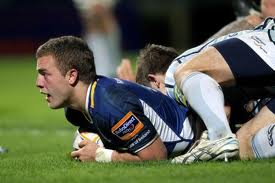
With his BODness out for this year’s Six Nations, in the absence of an Ireland backs coach, we’re stepping up our responsibilities and getting on the hunt for Ireland’s next 13, as a favour for Deccie.  We’re not even asking for a reward, it’s just our way of giving a little bit back – that’s the sort of guys we are. 

This week each of the provinces had an Irishman in the 13 shirt.  We were watching closely to see how they got on, and we’ll be back to update episodically over the next few months.

Eoin Griffin (Connacht)

Plenty of promise here.  Griffin made the crucial break for the first Connacht try, before perfectly executing the two-on-one to put O’Halloran in the corner.  He has plenty of gas, but is still a bit raw – witness his killing of the space when put into a wide channel shortly after Duffy’s try.  O’Driscoll would have straightened the line to give his wing the best chance of scoring. 

BOD Rating: not international class yet, but one for the future. 7/13

Fergus McFadden (Leinster)

Made yards in contact, but his partnership with Dorce looks flawed.  Both men want to plough into the nearest defender and neither really has great distribution skills, which makes for a one-dimensional, dare we say it, almost Ooooooooooohhhh! partnership.  Fergus was better than the badly-out-of-form Dorce, but still looks more of a 12 to us.

BOD Rating: needs a more complementary partner if he is to replace BOD. 6/13

Darren Cave (Ulster)

Less heralded than teammate Nevin Spence, but is getting the nod for Ulster at the moment, and is probably the form contender.  It was a day for the fatties in Ravenhill, but Cave put in a good shift against a quality opponent in Rougerie and was involved in the Ulster try.

BOD Rating: Cave is no BOD, but can expect to be in the shake up for caps if he keeps up this vein of form. 8/13

Danny Barnes (Munster)

Munster’s backline never really sparked this weekend, and was largely dominated by Saints’ potent mix of boshers up the middle and Ben Foden’s classy running.  Barnes showed some neat touches on the ball, and played a big part in Munster’s second try, but still has much to learn, particularly in defence where his passive line-speed allowed Foden and Ashton to create a superb try in the first half.

BOD Rating: still learning the position, but will get plenty of game time this year 6/13

Luke Fitzgerald and Tommy Bowe (Leinster & Ospreys)

Neither played 13, but both looked sharp as a tack, and will be contenders for the shirt if they get a run there.  Given Leinster’s misfiring centres, Luke could be due a run in the 13 shirt.

BOD Rating: need to see if they get a run in the 13 shirt, but if either or both get a chance, they would be strong contenders 7/13

Notes for Deccie: Early days Deccie, but if you’re starting Dorce you may want to think twice about partnering him with McFadden.  Yes, Deccie, we know Earls will be back in February.  No, Deccie, I don’t think that’s a good idea.  On the wing, Deccie, where he can score tries.  Come back, Deccie…


Heineken Cup Week 1: The Good, the Bad and the Referees

Good week
Flowers of Scotland
 
Scotland had a pretty grim RWC, and the drip-drip of dispiriting news, which seems to have been going on forever, continued with last weeks revelation that the man who will anchor the Jock pack for the next decade, Richie Gray, was flying the coop. And not to Toulon, Clermont or even Narbonne – to Sale Sharks! To team up with renowned team players like Mushy and Powell-y. But this weekend showed a chink of light in the gloom. On Saturday, Embra scored a well-earned win in Reading. London Irish might be awful, but any away win deserves a clap on the back in this competition. Then yesterday, Glasgow soaked up all the “running rugby” Bath could throw at them and struck for a last-minute sucker punch. The Scots are 2 for 2, and Edinburgh have a chance to go 2/2 themselves when Racing Metro come to town at the weekend. Long may it last.
 
Onwards and upwards


Wales, in contrast to Scotland, had an excellent RWC with talented young players who showed maturity that seemed out of reach for Mike Philips and Gav the elder statesmen of the side. Ospreys are top of the TripleALeague, and the good news seems set to last. And it continued this weekend, with a full house from our Welsh friends. Cardiff had the stand-out result of the weekend, winning in Paris and already looking like they have a firm stranglehold on Pool 2. Ospreys and the Scarlets also saw off French opposition, both showing admirable cojones when the pressure was put on in the second half.
23 Man Rugby

 
Deccie has yet to embrace the concept, but the rules of rugby these days allow shrewd coaches to replace players who aren’t injured with other players. During the game! I know – revolutionary. The best coaches, however, are completely au fait with the idea, and have responded in a rational fashion – pick 8 (or 7) men on the bench who you can tactically introduce in an attempt to win matches. You are often left with the (somewhat contradictory) idea that the correct XV was picked, but the substitutes made the difference. Joe Schmidt is an expert in this regard. He picked a pack (and a 9) to meet the physical intensity of Montpellier head-on. After 55 minutes, Leinster were teetering at 16-6, but Joe could introduce players better suited to tiring opponents such as Sean Cronin, Devin Toner, Shane Jennings and Eoin Reddan. The use of the bench was the key factor in Leinster’s recovery.

Bad Week

Homer Owens and Blind Dave Pearson

It’s an unfortunate state of affairs that so many high profile rugby matches are decided by the man in the middle.  As @sarahlennon08 tweeted, ‘After watching Owens and Pearson today, I have decided I don’t understand the laws of rugby.’  It felt a bit that way to us, too.  The last minute penalty for Leinster where the Montpellier chap was clearly first into the tackle zone, the scrum penalties when Munster were scrummaging at 90 degrees to the tryline, the blatant crooked feeds, O’Mahony playing the ball while his legs were in mid air in a maul, the same fellow being penalised at the lineout for contesting possesion, the stopping of the Saints maul in full flow… we were left saying ‘Huh?’  more than once.

Northampton Saints

They were a two minutes from a famous victory, and putting themselves in complete control of the pool, and as bad as Owens was, Saints will be kicking themselves.  Ryan Lamb lost his bottle kicking from hand, and needed to look for further territory.  Artemyev showed why Leinster were willing to let him go (he has feet for hands) and Northampton were fiddling around in a maul in their own half when they should have just been kicking downtown in the last minute of the game.  Saints have the pack to win the tournament, but have been on the wrong end of too many close matches.  They need to win a big one like this to be genuine contenders, but we think they’re still favourites to top the group.

Clermont Fly Halves

Two 10s, and both as flaky as each other.  Brock James has never recovered from that night in the RDS and Skrela plays like a man who is trying to remember if he left the iron on at home too often for a player at an elite club.  Between them, they let Ulster back into a game in which they should have been dead and buried.  Like Saints, Clermont have a pack to live with anyone, but their woes on the road will continue with these two fly-halves.  Morgan Parra at 10, anyone?