The Ha’Penney Place

So here we are in the middle of the Six Nations, the day before the pivotal game in Ireland’s campaign, about to blog about provincial concerns.  Hey, come back, readers!

The announcement that Rob Penney was to leave Munster came as a bit of a shock to the system.  It was one of those things we just expected to be ironed out, with a positive announcement emerging in the next month or so.  When there was talk of Penney’s contract being up in the air before Christmas, it looked like navigating qualification from the Heineken Cup pool would be critical.  With that box ticked, and the bonus of a home quarter-final secured, the rest looked like a formality.  Alas, no.  Penney is off, apparently to Japan where he has been offered a three-year deal and he has cited greater proximity to his native New Zealand as a reason for moving.

So, did he jump or was he pushed?  Yesterday’s statement, where he said ‘I just have to take this opportunity [in Japan]’ would indicate that Penney is driving the decision to leave.  But consider that he has only been offered a one year deal, and maybe he felt he wasn’t getting a great offer.  The one-year contract appears to have become the new PFO in rugby, a bet-hedging exercise from the paymasters that neither takes the drastic action of sacking the coach, nor particularly backs them to the hilt.  McGahan left Munster under similar circumstances.  With the future of European rugby and now the Pro12 shrouded in more doubt than ever, one can sympathise with those in charge of such matters, but all the recently contracted players signed on for two years and more, so Penney would surely have expected at least the same terms.

So where does it all leave Munster?  In a slightly odd position.  It looks like Penney is leaving a job half-done, and what direction the new coach takes them in will be interesting.  Penney had a pretty fixed idea on how to play the game, his Cantabrian rugby philosophy being somewhat dyed in the wool.  He spoke about the group being ‘un the put’ with regard to learning a new skills-based, high-mobility approach to attack, involving pods of tight forwards hanging out wide.  At times Munster struggled with it, but it looks as if he is departing just as the work was starting to bear fruit.

Munster find themselves top of the Pro 12, with 10 wins and just two losses, and after a careless opening weekend in the Heineken Cup, have navigated their group with ease.  While they may not have had to play especially well to win any of those matches, it’s worth casting one’s mind back to just what a rabble the team was in McGahan’s final season.  His final game was an embarrassing pasting at the hands of Ospreys in the Pro12 semi-final, by which stage he had reduced one of his best players, Conor Murray, into a confused mess who couldn’t seem to remember whether he was a scrum-half or a flanker.  Under Penney, a number of officer-class players have flourished, Murray included.  Peter O’Mahony’s rise has been swift, but it may be more instructive to look at Tommy O’Donnell, who was blown off the park in the decisive game of McGahan’s final season (the home defeat to Ulster in the Heineken Cup but has gone on to work his way to the fringes of the test team.

It looks like a decent body of work, but it’s hard to untangle how much of it to put down to the coach and how much to attribute to the group of players.  For all the good results, Penney’s Munster still struggle to execute the game plan he wants to play.  Occasionally it flickers into life; Earls’ superb team-try against Gloucester showcased Penneyball at its best, but for every moment of clarity, there are entire games where the passing across the backline is too substandard to get anything going.  At times they look doomed to remain ‘un the put’ until they can find a pair of centres who can pass the ball more than five metres.  For all the talk of Cantabrian total-rugby, Munster’s greatest asset is still their unyielding unwillingness to accept defeat, and ability to grind out wins.  Hey, what’s new?  Has this really come from the coach, or is to be attributed to the espirit de corps inherent in players like Paul O’Connell, Donnacha Ryan and Peter O’Mahony?  Forget ball skills, feel the pishun!

The following quotation from Paul O’Connell is hardly a ringing endorsement:

“I think Rob leaving doesn’t make a massive difference. I think a lot of the bits around my decision to stay are still firmly there. You’d love to think and I hope Anthony would remain, whether it is as head coach or forwards coach. I suppose he is one of the main guys I would have worked with the most in Munster.”

Against all that, though, if the team is consistently winning matches, the coach has to get some credit.  Too often in the meeja, poor performances were put down to his tactics not being right for Munster, while good ones were down to the senior players taking the lead. Calls for ‘up-the-jumper’ rugby in the ‘Munster tradition’ appear misplaced, with the pack now totally diferent in make-up and skillset from that which Kidney and McGahan presided over.  The Quins and Clermont games looked like pure Penneyball, with Caey Laulala’s lines of running and offloading to the fore, but it was Rog and Paulie who got the credit. It feels like something isn’t quite right, and dark murmurs of Penney’s unhappiness with commentary from outside the camp refuse to go away. Still, he’d hardly care if he had a 2-year extension, and the assumed ironclad backing from the top brass.

So where next?  Get someone in who can continue on the Penney-ball path (who, exactly?) or rip up the last two years and start again?  No doubt the ROG-Axel ticket will be trumpeted in certain quarters, but is either coach really ready?  ROG has had precisely one season coaching and would almost certainly deem it to be too soon for him.  Axel, on l’autre hand, appears to have the backing of the players, and looks a solid bet for the main gig.  He missed out last time, so presumably now they give it to him or he goes.  What his relationship with Penney is like, or his views on Penneyball we don’t know, but in all likelihood we are about to find out.

Roll Out The Big Guns

If Gerry is to be believed (and, let’s face it, Gerry could only be more believable if he was wearing Joe Namath’s coat) Dorce and Paulie will be drafted back in to the Ireland XV for the boshfest with the marauding tank divisions of the Red Army.

O’Connell for Tuohy is a no-brainer – as good as Tuohy was last week, and he was very good, completely not making us look like fools for calling for his inclusion for 2.5 years, POC-Toner is a more balanced partnership. Tuohy offers some change-up off the bench, but we can’t help feeling NWJMB would be a better impact option, particularly given O’Connell won’t be withdrawn. Tactically, anyway (Graham Taylor moment from the Milky Bar Kid aside).

Inside some-bloke-called-Brian, the choice was far less clear cut – we’d have given Dorce the nod purely on experience and guile, but it’s not a slam dunk. Bamm-Bamm was one of our best players last weekend, and offers a more acute attacking threat than Grizzly Adams does. Dorce may have been brilliant against BNZ, and he may be enjoying an extended career Indian summer with Leinster, but his form since RWC11 in green has been patchy.

The rest of the 23 will be unchanged, which is reward for some good performances last week – Luke Roysh would probably have come into the team were he fit, and his absence leaves Ireland looking pretty blunt out wide. But then, this game is going to won and lost by how Ireland defend against the big and boshy Welsh three-quarter line when they truck it up the middle. It’s going to be exhausting and dirty, the weather is going to be pretty awful with rain and wind forecast and maybe it’s a game for Johnny Sexton to take the aerial route.  He’s bound to have had plenty of experience with Racing in teams booting the ball really high and sending monsters down the field to chase it (albeit, without much success on the scoreboard) – if the Welsh backs are running backwards they can’t run down your throat.  That’s the idea anyway.

Eddie O’Sullivan and the rest of the third division of panellists on Against the Head stressed the importance of Ireland improving the accuracy of ‘contestable’ kicks, so both Murray and Sexton will be mindful to give the chasers a better chance of winning the ball.  Against Scotland they kicked slightly too long on a number of occasions.  The chasers must also be sharp.  Trimble is great at getting to the pitch of the ball, but occasionally lets his opponent jink his way out of trouble.  With George North, such indiscretions will be severely punished.  He needs to pin his man down to the ground and once that’s accomplished, we expect the forwards to flood the ruck like nobody’s business to effect the turnover or penalty.

This fixture has a curious record of away wins so Ireland’s status as marginal favourites, which is presumably based on home advantage, doesn’t amount to much. We said before the tournament started that Mike Philips was one of the key men – as he goes, Wales often go. If he is prominent, we are in trouble. Get him harrassed and off his game, and we are in business. Anyone know a bevy of blondes we can put on the sideline to distract him?

Lobster Pot

Rugby is a 23-man game now, “they” say. And “they” are rarely wrong, and certainly not in this case, though it’s a relatively recent phenomenon. As recently as the 2007 RWC final, South Africa made just one permanent change, and that after 72 minutes (we aren’t counting Bismarck’s brief appearance as a blood sub for John Smit). Such a situation is unthinkable today, where coaches pick an eight man bench with a substitution policy in mind.

Even players are conditioned in such a way – one of major reasons for the Leicester Tigers relative lack of success this year is the inability of Dan Cole to burn himself out for 60 minutes then let Castro take over. For example:

  • In this years HEC, in the 4 games against Ulster and Montpellier, Dan Cole played 314 minutes and Fraser Balmain (!) 6 – Leicester lost twice, won in the last minute once, and needed a last minute Ryan Lamb drop goal to seal victory in the other game
  • In the 2012-13 HEC, in the 4 games against Toulouse and the Hairsprays, Cole played 235 minutes (58, 54, 60, 63) with Castro coming off the bench and totting up 85 minutes in total. Leicester won twice, drew once and topped the pool

The loss of Castro to France is a major driver in the lower effectiveness of the Tiger pack this year. And speaking of France, French props would self-destruct were they asked to do a full 80 these days.

Pack changes are now typically made with impact in mind, not what a withdrawn player has done, but what their replacement can do – fresh beef and grunt off the bench is the order of the day. Frequently big performers are asked to do what Cole was – give it all for 50-60 minutes – that’s their role in the 23. In the backline, a bit more thought is required – bench backs are not always there to provide relief, but to give options in case of injury or a change in gameplan – a classic example here would be Ulster’s use of Paul Marshall last season, where Pienaar stepped into the ten channel and provided a more structured game, while Wee PJ had a breather.

It’s a form of the classic cliche forwards win matches, backs decide by how much (aside: the American football equivalent of offence wins matches, defence wins championships was proven in brutal fashion late Sunday night) – your forward replacements roles are to continue whatever the starter was doing, but the backs have a more cerebral role. That’s simplified of course, but the principle stands.

One critical error that must be avoided when changing backs on the fly is losing momentum. Last year in Fortress Aviva, Ireland were 13-6 up on France after the hour and Conor Murray was bossing the game – the entrance of Eoin Reddan saw Ireland lose all momentum, and almost the game.

And there was another classic example in Le Bosh on Saturday night – England had started abysmally with Jack “Pat McGibbon” Nowell to the fore and quickly went 16-3 down. In 20 minutes either side of half-time oranges, they scored 18 points and for all intents and purposes had the game won – the first score was created by a cheeky tap penalty (scrum-halves always tap penalties cheekily, don’t they? They assuredly do) by Danny Care, and the last was a cheeky Naas Botha-esque zero-backlift drop goal by the same player.

England essentially had the game won, but fell victim to substitution by numbers – Care was hauled ashore for Lee Dickson. Dickson’s selection above Ben Youngs in the first place was perplexing, and his play took all the wind out of England’s sails – they went from snappy incisive ruck ball that made Owen Farrell look like Carlos Spencer on the gain line to hand-waving, flapping and rumbles. An English acquaintence described Dickson as a “lobster in a bucket” – waving his bound claws ineffectively while predictably moving in a small arc.

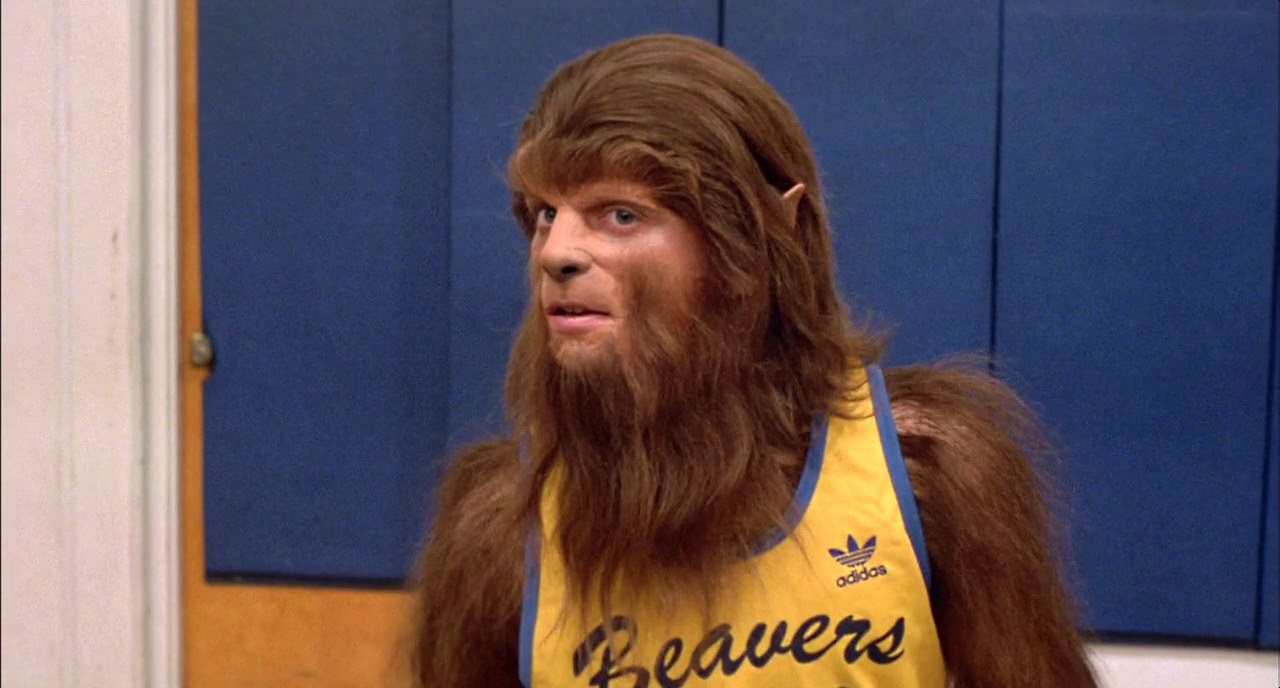
The change corresponded with the removal of the laughably ineffective Jean-Marc Doussain (didn’t it seem like Nyanga played scrum-half more than Doussain?) for Teen Wolf Maxime Machenaud – with England dawdling and France actually having someone who passed the ball from the base of the ruck, the dynamic of the game completely changed. France suddenly looked dangerous and the game seemed alive – it wasn’t guaranteed that France would win, but England sacrificed the initative voluntarily, and it might end up costing them the championship.

PS wouldn’t it be great if Machenaud wore Joe Namath’s fur coat – if you’re going to have hair like that, work it Maxime, work it

Job Done

Two new regimes got up and running this weekend.  The Schmidt regime and the ROG-as-pundit regime.

The rollercoaster of November was something of a bedding in period for Joe; this felt like the first performance with his imprint on it.  All in all, it was a low tension affair, a satisfactory ‘job done’.  Once Ireland got the first try at the end of the first half it never looked like they’d lose the game.  They pulled away comfortably.  Sure, Scotland were rubbish, but the trick is not getting dragged down to their level.  Previous Ireland teams have let Scotland make them look even more rubbish.

Positives were plenty, but chief among them has to be the backrow.  Ireland fans have gotten used to lopsided backrows where someone has to forego their natural game.  If one or two of the ‘loosies’ play well, one of them has a quiet game by comparison.  Here all three played terrifically.  The carve-up in roles looked a bit different with O’Brien out.  Heaslip did most of the carrying, leaving O’Mahony to busy himself in the ruck.  The Munster flanker has been accused of a lack of appetite for the dirty stuff in the past, but that couldn’t be levelled at him on Sunday, when he came up from the ground with turnover after turnover.

Heaslip won man of the match and showed exactly why he’s so valued by coaches.  Eleven carries for 66 metres tells its own story; every time he got the ball Ireland were at least a couple of metres further up the pitch when he was presenting it.  So far so Robin Copeland, but what makes Heaslip exceptional is that he is such an all-rounder.  While most flankers have one specialised talent, Heaslip is good at everything.  As well as leading the carrying, he also had the highest number of tackles in the pack, scored a try, almost scored another off the wing, played scrum half when Murray was getting sucked into rucks (as you read this Schmidt will be talking about protecting the ball better next week), caught a lineout and made his usual share of clear-outs.

Then there’s Chris Henry who is an absolute nuisance to play against.  He gave away his customary penalty early on, but remained well disciplined thereafter.  He doesn’t look like a #genuineopenside, but he has proven once given the chance that he is up to this level.  With Tuohy and Henderson belatedly promoted to the team and bench respectively, this felt like the day Ulster were finally recognised for three years of belligerent match-winning.

Watching the aftermath of the game on telly, we couldn’t help but notice the contrast between the enlightening discussion between Shane Horgan and Ronan O’Gara pitchside and the old lags (O’Shea excepted) in the studio.  O’Gara took to punditry as we expected he would; easily.  As always, it was all too tempting to try and read between the lines of what he was saying.  He’d heard from the Munster lads that Schmidt had driven standards sky-high.  Was that a dig at the man who ended his Ireland career in such ignominious circumstances?  He was also less than complimentary about his new club, describing Racing’s play as ‘more organised than usual’ in the recent win over Toulouse.  He was fascinating in his analysis of French rugby culture.  He has test rugby in his DNA and, like Shaggy, has plenty to say about it.  What a pity there wasn’t more of them and less of the studio on Sunday.  Watching McGurk and Hook exchange their usual cantankerous bleatings, a familiar thought came into our heads: ‘Get RADGE on!’.

Ireland: The Six Nations Verdict

Twenty-fourteen, eh? It feels a long way from Frankie’s annual “Grand Slam” prediction [Aside: remember Glenn McGrath used to predict a 5-0 Australia victory in every Ashes series? Not sure if Glenn McGrath was ever Steven Smith’s agent, mind] – a chastening series last year saw Ireland lose to Scotland and Italy, and avoid the wooden spoon only on points difference from France. The series was catastrophic, with virtually everything that could go wrong going wrong. For once, expectations seem realistic, with the trophy-laden mid-00’s a distant memory. We can recall in 2010 how a Triple Crown was being sniffed at ahead of our last game against Scotland – which we promptly lost. You never know when it might come back, and we’d gladly take one this year.

Before we go into too much detail about Ireland’s prospects this year, there are a couple of things it is worthwhile to consider:

  • Last year, Ireland finished 5th in the log, and missed out on the wooden spoon only on points difference. But this doesn’t represent Ireland’s real level – they hadn’t finished lower than 3rd since the Five turned Six – and the players remain competitive at HEC level. Last year was a complete bust, the coach was a busted flush who had lost the confidence of swathes of the dressing room, and the campaign was an unmitigated disaster – it’s safe to write it off as a uniquely poor year
  • Joe Schmidt is an excellent coach. In Leinster, he developed a team based on ruthlessness, accuracy and adventure that dominated Europe for three years. The big question is, can that success be transferred to international level where he has less time with his players, higher quality of opponent (sometimes, at least) and no Zebras or Cardiff to fill your boots against. But we will say this with confidence – he has a track record that is superior to Philip Saint-Andre, Stuart Lancaster, Jacques Brunel and Scott Johnson. And in time, he might have one better than Gatty as well

If Gerry’s “guess” at Sunday’s team is correct, and it ususally is – with the glaring exception of RWC11, when Fangio got Uncle Deccie’s exclusives – one thing more than any stands out, that the days of the same XV starting every game are behind us. Competition for places is here, and this week’s beneficiaries are Matinee Idol Andrew Trimble and Luke ‘Bamm-Bamm’ Marshall. The infamous Monday Morning Huddle-Ups will doubtless mean bigger names than Ferg and Dorce will be disappointed over the course of the next six weeks. This is Ireland like we haven’t known them in a long time.

The fixtures are generous to Ireland as well – a gentle beginning at home to Scotland, followed by a date everyone has ringed in the calendar for months – a chance to beat those pesky Welsh. Ireland lost to Scotland last year after a comedy of errors, and, despite last year’s win, probably still feel they owe the Welsh one – particularly after that happened between that listing legend and that taciturn Kiwi in the summer.

Ireland’s major problems have been gameplan, accuracy, consistency and selection. Our attacking has been anaemic for many years now, our error count off the charts [rumble for 1m, rumble for 0.5m, three drifting sideways passes for -2m, rumble – knock on], and injury was our best selector. The new coaching ticket showed signs of creeping accuracy in November, and the days of picking the same XV for every game are in the past. If we can develop that elusive consistency and a coherent attacking strategy, you feel Ireland will go from perennial third-placers (excepting that blip of last year) to something better.

It’s important that Ireland establish a base level of performance on days when they don’t have waves of emotion on which to draw.  They can’t be expected to play as well as against New Zealand, but it’s important the performance level doesn’t falll off a cliff-face as soon as we’re favourite to win a match.

If Ireland do start with two wins, they’ll have the Big Mo, and that can be crucial in this tournament. If they win two, they can win another two – Italy are a gimme, then England look strong but unimaginative and France are a coin toss. With some confidence and coherence, we are surely capable of winning one of them. All of which might just put us in the mix.  But to flip it over: lose to Wales and suddenly Twickenham looks a daunting trip and we’re staring down being one from three and becoming grumpy and despondent.  So much hinges on that Wales game in the second round.  The hell with accuracy, let’s get emotional!  Jamie and BOD: give Wazza hell!

Schmidt has publicly stated that sure aren’t we lucky to have both Rog and Johnny second place is his minimum requirement, and four wins are typically required to get it. We aren’t sure if we are there yet, but we expect to see a tight, accurate and ruthless team by St Patrick’s Day. With a foundation in place for RWC15.

The BOD Question

Having looked at Ireland’s pack yesterday, today we turn attention to the skinnier chaps who will be instructed with passing and running with the ball.  Yesterday’s main theme was that Ireland’s Tighthead Crisis was more or less a thing of the past.  Plenty of commenters were still nervous about the scrum, and with good reason, but at the very least we know we’ve options to get by even if a key player gets injured, which hasn’t been the case for years.

But if one crisis is over, another has sprouted up, and it’s at 13.  Maybe crisis is too strong a word, but this is Brian O’Driscoll’s last season for Ireland and his form is pretty terrible to say the least.  Naturally, you criticise BOD at your peril and there’s every chance he’ll roll back the years and conjure up a couple of big performances.  Unfortunately, it has to be considered that his body may not be capable of doing that.  When Keith Wood was being subjected to ‘you can never write Munster off’ arguments in a 2010 interview on Newstalk, he observed that ‘at some point you will write off this Munster side and you’ll be right, because they can’t go on forever’.  Same, sadly, goes for O’Driscoll.

Even forgetting about 2015 and focusing purely on this Six Nations, if there was an option available one might even think of starting him.  But there isn’t; not really. Darren Cave, whose face doesn’t fit, isn’t really a test class player – he was among the weaker echelons of the Ulster team in their recent win at Welford Road, and Robbie Henshaw was last seen ushering Saracens’ backline in for 11 tries.  The wait for Jared Payne – who has hardly had a chance to play centre anyway this season, with Bowe’s injury requiring him to continue at full-back – to qualify as Irish eligible goes on until next season.  So BOD starts .. until he doesn’t because he’s just too much of a liability.

Who to play alongside him, in perhaps the most closely fought position in the team?  Marshall or D’arcy?  It looks increasingly like Schmidt is going to run with the players who banked so much credit in the infamous New Zealand match.  That would mean D’arcy starting; he was exceptional in that game and has continued his good form for Leinster.  Scotland at home is one game where you’d like to see Marshall given the chance, with an expectation that he would offer a little more in attack in a game where Ireland can expect to win plenty of ball, but perhaps he’ll miss out by dint of Scotland being the first match and may have to wait for later (the Italy game?) to feature.

The half-backs pick themselves.  At this juncture, we all know how good Sexton and Murray are.  The getting-to-know-you phase is over, and what we really want to see is these two world-class performers unleash their inner test-match-animal.  It’s time they brought their influence and personality to bear on the tournament as a whole, and not just in the odd match here and there.  We’d like to see them dominate the series in the way that Mike Phillips does for Wales, or O’Gara – him again – did for Ireland.  Hopefully Eoin Reddan will return to fitness because his form has been electric, and it will be interesting to see if Schmidt uses his reserve halves.  Sexton and Murray are 80 minute men, but Schmidt likes a change-up at 9 in particular.

We’ve covered the issues around the back three in a previous post.  Luke Fitzgerald – assuming he can get over a troublesome abdominal strain – could be about to have a storming campaign, and as the incumbent from the New Zealand game, Dave Kearney looks likely to start on the other wing.  With Fitzgerald doubtful, it has compounded the strangeness of Simon Zebo not being called up, but it seems the Munster flyer is out of favour. The Kildare Lewis Moody is next in line – his international record should not be underestimated, but he isn’t the pin-the-ears-back type.

It looks like an all-Leinster 11-15, which hasn’t exactly sparked with their province this season.  The hope is that Schmidt’s gameplanning and eye for detail will get them to do so – and it’s likely he can, he saw them every day to up 8 months ago – otherwise he’ll be fielding some questions about a certain speedster and why he didn’t pick him.  It may all be immaterial in any case, as storms and floods are set to sweep the country.  It’s looking like a day to shove it up the jumper and grind Scotland down slowly. Bosh!

Crisis? What Crisis?

Remember Ireland’s Tighthead Crisis ™? After John Hayes was put out to pasture after the 2010 November internationals, and Mushy failed to last 40 minutes against England Saxons, Deccie turned to Mike Ross as pretty much the last Irish tighthead left standing. The one-man Scrummaging IMF subsequently gave Ireland’s scrum a solidity not seen in aeons, and even the ability to occasionally use the set piece as an attacking weapon. But behind him, the cupboard was still pretty bare – as Patsy Court will know after his shellacking (literally, from the England front row, and figuratively, from the Irish press) playing out of position in Twickers.

It was two years ago when the IRFU declared foreigners non grata in Irish rugger circles, particularly at tighthead which appeared the only position where there was an issue, in an effort to increase the number of eligible Irish internationals available to Deccie and his successors. Now, and due in no part whatsoever to those rules which hven’t even been applied in the one position they were brought in for, Ireland now have three tightheads who you would be comfortable starting in a big game:

  • Mike Ross might be slowing down, but is still around, and is the incumbent – being flogged around North America in June into the bargain.  The new scrum calls, however, do not appear to have helped his game
  • Deccie Fitz has a start in New Zealand under his belt, and when he is fit, he looks good, but is once again unavailable through injury – he’ll need to be fit for longer now that he’ll be Ulster’s number one next season and the Ulster conditioning team should be working day and night on a plan that gets the most value out of him, because he will be a valuable resource
  • Marty Mooradze has been Leinster’s most impressive prop this season, and has possibly nudged ahead of Ross in the provincial reckoning having started the final pool match in the Heineken Cup

Behind them, we have the Possibles, who are coming up on the rails but would still have us watching through our fingers against a big international scrum:

  • Stephen Archer has improved exponentially since being minced by the Scarlets 12 months ago – however he’s still behind BJ Botha at provincial level
  • Rodney Ah Here might have been shunted around Allianz Park by Mako Vunipola, who himself was shunted around Suncorp by Ben Alexander, but the new rules have (apparently) made him less ineffective and he has been brought into the national setup early. Presumably the Milky Bar Kid has seen something he likes and thinks he will benefit from some targetted coaching
  • Michael Bent … er … he has a hurl you know!
  • Nathan White will be Irish at the end of the year

At Academy level, the cupboard looks ok as well – Tadgh Furlong and Adam Macklin are the next generation in Leinster and Ulster.

Put it like this, it isn’t a crisis any more, and there is competition for places. So who starts? Its tough to make a case for Mike Ross given his decline over the last 18 months, and how Moore has surpassed him at Leinster – it seemed inevitable he would bypass him by year end, and with the process aleready appearing to take place, it puts Ross’ place in green in jeopardy. The smart thing to do, in the short and long term, is to give Moore a series of starts, especially with Scotland as the first test, with Ross on the bench as backup.  If he gets through that test, he may well find himself starting and finishing the series as number one.

So what about the rest of the Irish pack?

DJ Church and Besty will pack down alongside Moore in our fantasy pack, but both will feel hot breath on their necks, and it isn’t just the Irish press corps salivating on them; judging by recent form it is bringing the best out in them both. Jack McGrath has covered manfully for Cian Healy this sesaon and has already made a splash at international level, with Dave Kilcoyne the next man up – as usual Patsy Court is the fall guy. At hooker, the return of Risteard O hOstrais is fantastic news and increases the stiff competition at the level below Besty.  All the rest are curate’s eggs: Sean Cronin is manic around the park but can’t throw, Damien Varley is brilliant in the scrum and (especially) at ruck time, but can’t throw, and Mike Sherry is Jocky Wilson with the darts, but Owen Wilson in the tight (and injured in any case). The improving Rob Herring adds to the depth chart.

More competition at lock is good news – Paul O’Connell is inked in (presuming he is fit) and there are plenty of contenders for the No.4 shirt, even with Donnacha Ryan injured (thouh he may appear before the end of the series). Lighthouse Toner had a great November series and has continued to show incremental progression at Leinster – he is currently favourite. Jostling with him are Mike McCarthy, who has gradually got going this season and provides grunt in the middle of the pack and NWJMB, the coming kid of Irish forward play, who is simply astonishingly good. Toner looks set to start, though it would be a very Joe Schmidt move to bring McCarthy in for the away matches against the beef-heavy English and French packs. NWJMB to reprise his role with Ulster as impact substitute?

Sean O’Brien’s unfortunate injury looks to have opened the door for Chris Henry – Henry has been unlucky with the timing of injuries himself and would assuredly have more caps by now if always fit. As it stands, he’s a Schmidt favourite and his body of work of the last 24 months should be sufficient to see off stiff competition from Tommy O’Donnell. The assumption here is that POM and Jamie Heaslip are inked in at 6 and 8 and the two look part of the ‘core’ that will play all five matches, fitness permitting.

As usual, Ireland are well covered in the backrow.  Robin Copeland and Rhys Ruddock are regularly playing HEC rugby, and Jordi Murphy has forced his way into the reckoning.  Roger Wilson can’t even get in the squad, despite playing his best game (in this stint at Ravers) for Ulster in their epic victory over Leicester. Depending on Schmidt’s preference (and injuries), there is a non-zero possibility of each of them making the matchday 23, but Tommy O’Donnell looks best positioned to cover the backrow on the bench, and has impressed with how quickly he has found form since a lengthy injury lay-off.  He covers 6 and 8 effectively and if Jamie Heaslip were to get injured, which never happens anyway, Peter O’Mahony could move acros to No.8.

All in, the pack looks strong and deep. If we compare to the 2009 Grand Slam pack, the starting and backup props look superior (sorry, Tom), and the depth at second row is much better (sorry, Micko). On the flip side, you don’t have Jirry, Fez, Wally or Paul O’Connell at his peak – but it’s a unit which looks well-able to compete with the other nations. Mind you, our forwards have never really been the problem – inconsistent half-back selection (chopping and changing constantly, and a lack of faith in provincial partnerships) and anaemic attacking play have been far more of an issue in recent years. We’ll look at the backs tomorrow.

Ireland Squad Outrage Episode No.358

Joe Schmidt named his squad for the opening Six Nations match yesterday, and the main talking points were that the make-up of the matchday front row have effectively been named, with Marty Moore now certain to make his debut in some form or other, and the Southern natives getting a little restless that just five of their number have been retained.

There’s no surprise whatsoever in Marty Moore’s selection.  It’s been a rapid rise to prominence for the Castleknock man, but also a reflection on the still-somewhat modest (but far greater than at any time in the last decade) resources Ireland have in the position.  The last round of the Heineken Cup saw him selected ahead of Mike Ross against an Ospreys side with a reputation for hard scrummaging.  It’s not yet clear cut as to whether he is now Leinster’s definitive first choice prop, but that game had a feeling of the baton being passed on.  With Declan Fitzpatrick once again injured, the only other option is Stephen Archer; the Munster prop has improved immeasurably since his nadir of being ground into the mud by the Scarlets’ reserve pack, but he is just simply not in Moore’s class when it comes to technique in the scrum.  Moore could even start against Scotland, and if he comes through that, he may never look back.

As for the weighty numbers of Leinster men in the squad and Munster’s dearth, well, it’s not simply a game of balancing things out among the provinces.  Leinster have been the dominant force in Europe for the last five years and if their star is on the wane a little, the void has yet to be filled.  If anyone looks like doing so, it will most likely be Ulster.

Munster have a great many good players who are just not quite as good as those selected ahead of them and two of their star turns who would undoubtedly be there if fit, Keith Earls and Donnacha Ryan, are injured.  Take David Kilcoyne.  He has finally got going after a slow start to the season, but Jack McGrath has been making hay all year, deputising superbly for Cian Healy when called upon, and won man of the match in his first cap against Samoa.  Damien Varley is a doughty fellow, but who in their right mind would select him ahead of Rory Best or Sean Cronin, who offers wild-card potential as an impact reserve.  Same goes for Archer.

One Munster player who can have some legitimate grievances is Simon ‘Sizzle Factor’ Zebo (What the hell was all that ‘sizzle factor’ business about; it’s not even a thing).  Zebo is just back from injury, but looked a real threat against Edinburgh.  With Bowe and Earls injured, we’d have considered him a potential starter.  In the back three, we know Rob Kearney will start and Luke Fitzgerald’s superb form demands inclusion.  Adding Zebo to those two would make for an imbalanced, all-left-footed back three, so we can see the reasons against it.

But on l’autre hand, it leaves Ireland choosing a right winger from Andrew Trimble, Fergus McFadden and Dave Kearney, all game, hard-working chaps but not hugely threatening in attack at test level.  The Kildare Lewis Moody is just back from injury himself and has had even less gametime than Zebo (though he is famed for his levels of natural fitness and ability to hit form quickly).  Trimble is having a good season, but he’s a player who has had umpteen chances at test rugby and yet to really make much of an impact.  Dave Kearney is another Mr Solid, and hasn’t really offered much of a spark for Leinster in recent weeks.  It just lacks a little pizazz, or as Gerry would no doubt say, x-factor.  We hate to speculate like this, because it’s not really fair, but it’s a (non-)selection that makes you wonder if something is up between management and Zebo.  The only other wing capable of offering the same explosiveness is Craig Gilroy, but he’s been struggling to get motoring in heavy traffic all season, and remains weak in contact.

The only other area where a picture has emerged is scrum-half.  Isaac Boss can consider himself unlucky having been man of the match in the Wolfhounds game, but it’s impossible to argue with the form of Conor Murray and Eoin Reddan, both superb this season and a near-perfect yin and yang in terms of what they offer on aggregate over 80 minutes.

Taking Care of Bid’ness

Contract negotiations are a tricky thing at the best of times, and in a sense, it’s a thankless task for which you can only be criticised.  Throw contracts out like confetti and you’ll be accused of being wasteful (‘Why was Denis Leamy given a two year contract when he was clearly a crock?’).  Play hardball and you’ll be accused of not taking the players for granted (‘Come on, it’s Sean O’Brien, just pay the man’).

At this juncture it looks like the IRFU have more or less taken care of bid’ness, for this sseason anyway.  With Jamie Heaslip, Paul O’Connell and Keith Earls recently signing on the line that is dotted, pretty much all the red-flagged contract re-signings have been locked down*.  Marty Moore, Sean O’Brien and Conor Murray were among the others that had recently signed on.  It’s a great bit of business in what looked a particularly daunting assignment not that long ago.

This year always looked trickier than those in the recent past.  Two issues loomed especially large on proceedings: the uncertainty (still ongoing) over European rugby’s future and the possible emboldening of the French club owners following Racing’s successful recruitment of Johnny Sexton last year.  In truth, the IRFU must have done pretty well to convince the contracted players that they would have some actual rugby to play next season, because any sort of clarity seems miles off.  In France, they’ll always be assured that no matter what else, the Top 14 will remain a long, competitive grind.  And certainly, given that sheer number of stories circulating in the media, it appears that the French clubs believed they could lure one or two more Irish over to their league.

We all remember Brian O’Driscoll being linked with Biarritz, and the Basque club was seen as an exotic location where only our very best would be considered.  But this season just about every Irish player was linked in some way to some French club.  If you weren’t going on a fact-finding mission to some Top 14 training ground to check out the envy-inspiring facilities (‘We don’t even have to play three games a season in a run down heap of a ground for contractual reasons?!  I’m in’) you were pretty much alone.  Sean O’Brien to Clermont or Toulon, Donnacha Ryan to Perpignan, Jamie Healsip to Toulon, Conor Murray to Racing; they were all at it.

Even Marty Moore, having barely started a senior game of note, was apparently being lured to la sud de France by the megabucks.  Presumably the agents who fed the stories to a media who gleefully lapped it up can consider their mission to be accomplished.  Whatever about the lure of the lifestyle and money in France, but when Keith Earls was linked with Reading Samoa it looked a media story too far.  Why any player highly regarded at his team, where he gets to play Heineken Cup rugby on the doorstep of where he grew up, would give that up to scratch around the lower reaches of the Boshiership is anyone’s guess.

One thing that perhaps worked out in the IRFU’s favour has been the sheer weight of the workload Sexton has been under, which has been widely broadcast.  But at the end of the day, the players want to play for the teams to which they are so attached.  The IRFU hopefully recognise that the pull if playing for one’s native province still has a huge pull for the players.

*Not Tom Court obviously – his face just doesn’t fit

Irish Wolfhounds v England Saxons

Ireland have named their Wolfhounds team to play England Saxons this weekend.  As usual, this means two things: there’s a game of quasi-international rugby on, and we can maybe, possibly try to infer some things about what Schmidt’s thinking and who is likely to make the test team the following week.

All in all, it’s a decent looking team and most of those selected are starters with their province, or in the case of Robin Copeland, Welsh region.  Rhys Ruddock looks a sensible choice as captain as he has experience in the role for Leinster.  There aren’t too many of the experienced older hands in the side – the likes of James Coughlan or Gavin Duffy – though Isaac Boss could fit into that category.  It does seem a shame that Kieran Marmion wasn’t given the start at scrum-half. Most of the team are players on the rise who will see this as a stepping stone.

For the players themselves, no doubt some of them are trying to work out in their heads whether it’s good or bad news to be playing.  Is it a chance to put your hand up for selection against Scotland or proof that you’re still a little bit down the pecking order?  For Tommy O’Donnell it’s probably an indication that Chris Henry is going to start, as has always looked the likely outcome.  But then O’Donnell is still a little short of match-time and is in good enough form to get noticed.

Most selections can be taken at face value.  In the front row David Kilcoyne looks one rung off the test 23, behind Jack McGrath and the indomitable Cian Healy.  Rob Herring will be pleased to get the chance to impress at this level.   The all-Ulster second row will be out for blood.  Toner, O’Connell and McCarthy look like the test picks, but imagine the impact of springing NWJMB with 20 minuts to go?

Those who’ll be seeing the call up as good news will be Ian Madigan and Fergus McFadden.  For McFadden it’s likely that Schmidt is giving him match-time because he needs him for the test squd.  The Kildare Lewis Moody may be unfashionable, but his numbers in the green shirt are hard to knock.  And Ian Madigan has fallen behind Paddy Jackson in the race to back up Sexton and will be glad of a chance to remind us of his ability.  Can Schmidt coax the form he showed last season out of him? The news that Johnny Sex-bomb will be milked by Racing Metro on Saturday makes this a little more pertinent – if Sexton is to be rested for one game in the tournament by Schmidt (say, Italy), then there is a shirt up for grabs, for a game anyway.

Darren Cave will assuredly be even angrier after seeing a “12” next to his name – Jamie Heaslip will need to be mindful he doesn’t get blindsided by a tackle bag in training.  He’s now seemingly behind Robbie Henshaw, who is extremely raw at this level. No doubt Cave will feel that years of consistent form are going unrecognised, and he isn’t being given the chance to show what he can do. But with no centre on the bench, expect Cave to get some time at 13 in the second half after Keatley comes in and Madigan gets shifted out.

Possibly the most interesting performance to watch will be that of Marty Moore.  He came through his test against Ospreys impressively, and there is an increasing feeling that he will be capped – who knows, perhaps even starting – against Scotland.  Is this another screen test to see if he’s ready?  There’s still no sign of Declan Fitzpatrick so the matchday 23 is firmly within his grasp now.  He just has to bind on to it and wrestle it into the dirt, which he seems to be awfully good at.