
Welcome aboard everyone … we’d love your thoughts on our new abode
All posts in category Uncategorized
Welcome to our new home
Posted by whiffofcordite on April 1, 2012
https://whiffofcordite.com/2012/04/01/welcome-to-our-new-home/
Ireland’s Six Nations: Tha Playas
We’ve had our rant about the team’s general performance and management’s selection policy, but how about the players themselves, at an individual level. Unsurprisingly, as with the series itself, it was a pretty mixed bag. A handful distinguished themselves, a few more weren’t at their best, and the sorry affair in Twickenham looked like the end of the road for a handful of great servants to Irish rugby.
Outstanding achievement in the field of excellence: Rob Kearney, Stephen Ferris
Two players reborn after lengthy injury. We have a slight man-crush on Ferris, and it predates him taking his top off vs. France. Rob Keaney looked full of vim and vigour, and arguably topped his 2009 Lions form. Both look captaincy material in the long term, and are certainties for the Lions squad, and probables for the test team. Both are peerless as ultra-physical blindsides / safe-as-houses fullback in the Northern Hemisphere.
Critics answered: Keith Earls, Johnny Sexton
There were plenty of doubts around Keith Earls’ ability to play centre, and we had our own, in spite of ultimately endorsing the selection. He showed himself to be mostly up to task, and was Ireland’s most potent line-breaker. Who knows, paired with an inside centre with a semblance of attacking threat, he might have done either better. His homework is to expand his peripheral vision and watch some videos of Smuddy, BOD and Jacque Fourie – he can do better at bringing his outside backs into play. Jonny Sexton finally took ownership of the shirt. He wasn’t spectacular, but defended his channel manfully and his form with placed ball was finally up to task – he missed one easy kick in Paris, but otherwise kicked well. He needs to improve his tactical kicking – it’s not his strongest suit, but Ireland demand better.
Solid performers: Tommy Bowe, Rory Best, Mike Ross, Paul O’Connell, Conor Murray, Eoin Reddan
Tommy Bowe got among the tries, but Ireland need to get him much more involved than he is – to be fair, Bowe knows it as well. He certainly missed BOD and an in-form 12 to pop those little passes to him – he doesn’t yet seem to trust Earls. Rory Best captained the side manfully, and got himself two tries; he’s now one of the side’s most important figures. The lineout wasn’t up to its usual standards, and Besty needs to takle some of the blame here. Conor Murray and Eoin Reddan had their moments in mixed campaigns – Murray needs to stop over-complicating the game, he looks like he has the early symptoms of O’Leary disease, though unlike his predecessor he has good passing technique. Reddan is a solid performer, but as soon as Paul Marshall is at international level, he’s likely yo be ditched by Deccie (again). Paul O’Connell and Mike Ross’ injuries had a huge impact on the side, and not in a good way – they are, and will be, key men.
We need to see more: Jamie Heaslip, Cian Healy, Sean O’Brien, Andrew Trimble
None of the above disgraced themselves, but all four will have designs on making the Lions tour next year, and for one reason or another, weren’t at their best. Cian Healy was outstanding against Scotland, but fairly quiet by his standards for much of the tournament – we’d like to see him operate at a higher level and start assuming a lieutenant role. Jamie Heaslip got through a fair amount of donkey work and won his share of turnovers but a player of his ability needs to show a bit more. A number 8 who isn’t getting over the gainline is not a luxury Ireland can afford. Sean O’Brien suffered from being played out of position and cut a slightly frustrated figure, despite a good tackle count. Meanwhile Andy Trimble took his two tries brilliantly, but never quite showed the Ulster form that had propelled him into the team. As with Tommy Bowe, he needs to come off his wing and look for a few more touches of the ball – but stay outside if an overlap looks on! Its a 3/4 line in flux, Trimble still deserves time to show what he can do.
The best is yet to come: Donnacha Ryan, Peter O’Mahony, Sean Cronin, Fergus McFadden
Four players we need to see a bit more of, and all of them knocking pretty hard. Donncha Ryan belatedly got his chance to start and grabbed it – the pity was he wasn’t given it sooner. Peter O’Mahony had a solid debut, but was a victim of Deccie’s rigid pecking order, and went back to the bench. McFadden and Cronin need to be used off the bench earlier by Kidney, at the very least, and it would be nice if McFadden could get some time at 12 – Ryan should now be a mainstay and the other three should be marked for a minimum of a test start in New Zealand, form permitting of course.
End of the line: Donncha O’Callaghan, Tom Court, Gordon D’arcy, Tomas O’Leary, and possibly, maybe, Ronan O’Gara
O’Callaghan and D’arcy we’ve been over already. O’Leary’s pass is just not up to standard – he needs a fresh start somewhere out of the limelight – his confidence is shot to pieces and he was cruelly exposed against England. Tom Court was unfortunate to be asked to perform a task for which he is simply not equipped – it is surely time to explore some new options, such as they are.
Now, the last one – ROG. Controversial for sure, so let us tread carefully here. ROG is now very much the second choice 10, and we’re slightly baffled by Deccie’s tactic of shunting Sexton to 12 to bring him on. Truth be told, he didn’t make much of a splash in any of his cameos this Six Nations, though he’s obviously still very much a class player. We wouldn’t retire a player as great as ROG without careful consideration, but it might be worth just starting to think about the season after next when he will no longer be around to call upon. It won’t be too long until we’re back in the uncomfortable position of having only one test fly-half, unless we can pre-empt it a bit, and expose someone like Ian Madigan to test rugby. It could be worth putting ROG in the ‘Break Glass In Case of Emergency’ box, and maybe giving him the summer off – is it really necessary to fly a 35 year old across the world to sit on the bench in three tests? For now let’s just say we’re putting the idea out there, but not with any real conviction behind it yet. It’s dependant on a big end-of-season finish from Madigan for starters.
Posted by whiffofcordite on March 21, 2012
https://whiffofcordite.com/2012/03/21/irelands-six-nations-tha-playas/
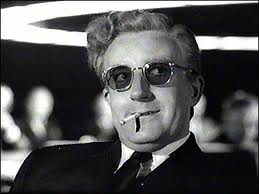
Six Nations: Dr. Deccie or How I Learned to Stop Worrying and Love the Choke Tackle
 Here’s a question nobody really knows the answer to: how will Ireland do in the Six Nations this year? The bookies have us as lowly fourth favourites, but the Observer has us down as winners, and Shaun Edwards (mindgames alert!) has said we’re overwhelming favourites. But Frankie ‘My Client!’ Sheahan’s traditional Grand Slam prediction on Against the Head was a bit half-hearted and the public at large seem fairly underwhelmed by the whole thing. There doesn’t seem to be a whole lot of feeling that, even with the provinces demolishing all before them, Ireland can really capitalise and win the Championship.
The truth is that this Ireland team flatters to deceive, and has done since their annus mirabilis in 2009. Just what is this team all about? They made matchwood of Australia’s tight forwards in the World Cup, and played at a ferocious pace against England last Spring, but looked dull and ponderous for vast swathes of 2011, never more so than when they kicked the ball over 50 times in the Millenium Stadium in losing to a poor Wales side.
To be fair to the group, the Achilles heel appears to have been identified. It seems that in their recent get-together at Carton House, the players identified their attack with ball in hand as the weakest part of their game. Well, duh. In spite of Gerry’s laughable attempts on Newstalk a few weeks back to convince us that Ireland’s attack was in fact very good, the players themselves felt they had become predictable and lacked the firepower to respond with tries when their defence, which is a big strength for the team, finally leaked in the World Cup quarter-final.
Les Kiss, Jamie Heaslip and Dorce have been among those making positive noises about a new(ish) style of play, more ball-in-hand and with more depth and decoy runners in attack. They haven’t thrown away the playbook (such as it was), all were quick to point out, but they will be adding a bit more to their play. The flat, lateral, moribund shovelling that has characterised much of Ireland’s atack over the last 24 months will not be missed. Ireland lack cohesion and a genuine identity in their style. At times the players themselves look muddled – how many times have we seen Jamie Heaslip, arm out to offload the ball, but no-one on hand to take it? Dorce indicated that the players came away with a much clearer idea of what the gameplan will be than ever before. Bring it on – this is the single most important area for the team to deliver.
That’s the gameplan ticked off Deccie’s list – now, to put the best team on the field to implement it. A good chunk of the team picks itself at this stage, so let’s get that out of the way: Healy, Best and Ross in the front row, Paulie captain, Ferris, O’Brien and Heaslip in the back row. The back three will be Trimble, Bowe and Kearney. That leaves a partner for Paulie, the halves and the centres, which we went through yesterday (we’re set on McFadden and Earls).
At halfback, Kidney needs to put faith in Murray and Sexton. We’d ask, as we have done with the 13 shirt, that these two be given the championship to develop a relationship. Sexton has been in flying form with Leinster, his place kicking flawless and his all-round game sublime. Murray has come in for some criticism for his far-too-numerous carries and hesitancy to pass this season. But we have a suspicion it’s under instruction, with Munster using him as a primary ball carrier; it’s an area where they’re light in the absence of Wally (it’s not Ronan or O’Mahony’s strength) and Murray is a strong in contact. Behind the carrier-heavy Irish backrow Murray could focus on smooth delivery (he has a sweet pass), with an occasional snipe, of course. It helps that, traditionally, Deccie eschews provincial partnerships at halfback – even at Wolfhound level where Boss and Keatley faffed about with completely expected unfamiliarity.
At 4, our great friend O’Callaghan has been fairly invisible this season with Donncha Ryan stepping into his shirt with Munster. He’s playing great stuff and deserves a test start – we’ll be disappointed if Kidney sticks with Donncha ‘Unseen Work’ O’Callaghan. Ryan just holds off the challenge of Ulster’s intriguing Dan Tuohy. Tuohy’s lineout work is solid, and with good carrying ability and nice hands, he’s more of a footballer than any of the other options – he’s our man to bring off the bench. With Court, Cronin, Tuohy, Reddan and ROG taking their places on the plinth, all that remains is a reserve outside back and a backrow. Given our centres can cover the wide channels, Dorce gets into the 22 shirt (since Luke is injured), where his experience will come in handy.
In the backrow, we are a hung jury…
Palla makes the case for Peter O’Mahony: O’Mahony deserves his chance. He offers more versatility than Jennings or Ruddock and has had a terrific season so far. He’s a tigerish fellow, but also a fairly rounded footballer.
And Egg for Chris Henry: Henry has had his best season yet for Ulster – he covers the entire back row and is familiar with the international setup. Henry has spent most of the season covering the openside, which is where Ireland are likely to use a replacement – Fez will slink off after 65 minutes and SOB will switch across. To be truthful, we will be happy with either.
The team selection issues are secondary this season. It’s an exciting, cutting-edge attack that we really want to see. If the patched-up coaching team without a dedicated attack coach can deliver it, Ireland have everything else in place – set piece, defence, personnel, to have a good Six Nations. Victory in Paris might prove a step too far, but four wins would put Ireland right in the shake-up. Any less and we’ll be asking questions.

Posted by whiffofcordite on January 31, 2012
https://whiffofcordite.com/2012/01/31/six-nations-dr-deccie-or-how-i-learned-to-stop-worrying-and-love-the-choke-tackle/
The new IRFU NIE Rules and what they mean
Yesterday, the IRFU released the new set of rules governing the provincial teams’ recruitment of Non-Irish Eligible (NIE) players, which will come into play in the 2013/14 season. The changes are as follows:
– One non-Irish eligible (NIE) player only in each of the 15 field positions across the provinces of Leinster, Munster and Ulster e.g. one foreign player allowed across all three teams per position.
– For the 2013/14 season and onwards, for any given position involving a contracted NIE player, a province will not be permitted to renew that NIE player contract or bring in a new NIE player into that same position in its squad.
– All future provincial injury replacement players must be eligible for selection for Ireland.
– All future provincial non-Irish eligible player contracts will be position specific.
– Connacht are external to this process as it has recently commenced a new programme of structural and performance development agreed with the IRFU
 The rules are aimed at striking a balance between provincial success and benefiting the national team, which is very much at the top of the Irish rugby pyramid. The IRFU want two players competing in every position for the national team, with the thinking being that with a maximum of one NIE full-back (say Jared Payne playing for Ulster), there will be an Irish one at both Munster and Leinster. NIE signings will now be position specific – so, for example, BJ Botha will essentially be branded with a giant ‘3’ on his back.
Let’s face it, this is all about the front row. The IRFU is trying to remove the current situation where young Irish props are confined to the British & Irish Cup while Wian du Preez and Nathan White are togging out in the Heineken Cup. A quick glance through the list of 16 NIE players currently plying their trade in Ireland shows where the overlap is:
1 Wian du Preez (M), Heinke can der Merwe (L)
3 John Afoa (U), Nathan White (L) and BJ Botha (M)
4 Steven Sykes (L)
5 Johann Muller (U)
8 Padrie Wannenberg (U)
9 Ruan Pienaar (U)
10 Matt Berquist (L)
11 Simon Danielli (U)
12 Lifiemi Mafi (M)
13 Will Chambers (M)
14 Dougie Howlett (M)
15 Isa Nacewa (L), Jared Payne (U)
Given that Simon Danielli won’t be missed too greatly and Dougie will hardly be around in 2014, while Isa Nacewa can easily be classified as a 14, the only significant overlap is in the front row. With just one loosehead slot, and one tighthead going between the two provinces, there is going to be one serious bunfight to get those prized slots. Each of Munster and Ulster currently have imported world class technicians in those positions, but succession plans will need to kick off in earnest right away. One of the two is going to end up severely weakened – but which? And who decides? And how? Would Munster be four from four in the HEC without BJ Botha? Its not likely. Meanwhile, anyone holding shares in Irish tighthead Mike Ross plc just saw their investment double in value, although even he could be pushing over the hill by 2014.
However, the crucial detail, to us anyway, is that once an NIE player’s contract is up, he must be on his merry way – and you cannot replace him with another NIE player in the same position. Essenatially, the IRFU is saying ‘You can sign an NIE, but only for a couple of years while he keeps the shirt warm for an Irish player.’ So, if Ruan Pienaar’s contract were to expire, he would be thanked for his time and sent packing, and Paul Marshall would presumably be handed the starting jersey (or Ulster could recruit another Irish player).
Speaking of Pienaar, when Ulster signed him, they were at pains to point out that he was being signed as a scrum-half. At the time it looked like a case of not hurting iHumph’s feelings, but perhaps Ulster saw this in the pipeline. A bit too conspiratorial? Maybe.
We think the one-contract-and-out element is too harsh on the provinces, and could make life needlessly difficult for them. To cite another example, Munster have not produced any centres of note in recent times. Now, once Mafi’s contract expires, they will be forced to play an Irishman there, though none may meet the standard. Perhaps the end result will be greater movement between the provinces, with someone like Nevin Spence guaranteed game time in that position for Munster. Similarly, Leinster might see this as the catalyst to go in pursuit of Ian Nagle, who is buried not beneath NIEs, but a pile of Irish locks at Munster, while the Leinster second row well is pretty dry.
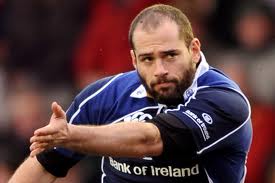
This rule will also make it more difficult for the provinces to recruit high quality NIEs. Players will know they are precluded from staying for longer than their first contract allows. Howlett, Contepomi and Nacewa all went on not only to become legends in their provinces, but brought up their families here. Would you bring your family somewhere you know will be no more than a two-three year stop-off? Unlikely.
The IRFU are broadly correct to tighten the rules on NIEs at this point. The argument that the likes of Jim Williams and John Langford taught the Munster players so much is true, but it’s no longer relevant. Professionalism is now entrenched in Irish rugby, and the last players with connections to the amateur era are now retired. We don’t need a bunch of Aussies explaining that going out on the sauce when you’re injured isn’t a great idea any more, valuable though it was in the past. The Irish senior players are now in a position to pass on this advice. But as the IRFU say, it’s all about balance, and they would want to be mindful they don’t overly restrict the provinces.
There is a danger that this is stemming from the provinces having achieved so much in the last few years, and the IRFU seeking to transfer this success to the national team by committee. We would be quick to point out that Leinster’s success is down to the outstanding coaching and squad management of Joe Schmidt, and that the same is available to the national team with more progressive coaching, gameplan and selection, rather than an overhaul of structures.
Ultimately, it is the provinces, rather than the national team, that have driven so much of the growth in the game in the last decade. The IRFU point out that the Irish national team is still the main revenue driver, and subsidises the provinces, but this reveals only half of the picture. Would the desire to watch the national team be so strong without the provincial successes we’ve enjoyed? Increasingly, the Heineken Cup is the more enjoyable, exciting and glamorous tournament than the Six Nations. The fans feel a bond with their provincial side, which isn’t quite there at national level, where the players tend to be removed from their communities. It’s a distinct possibility that the IRFU could be killing the goose that lays the golden eggs.
Posted by whiffofcordite on December 21, 2011
https://whiffofcordite.com/2011/12/21/the-new-irfu-nie-rules-and-what-they-mean/
Second Row- All Change, All Change!
Ireland’s second row has been a low turnover position over the last decade. Paul O’Connell and Mal O’Kelly were in situ between 2002 and 2006, bolstered by Donncha O’Callaghan, until the lovable scamp passed Big Mal out, and since then the Munster pair have been untouchable. Mick O’Driscoll and Leo Cullen have stepped in during injury layoffs, and in the World Cup Donnacha Ryan warmed the bench, but when available The Two OC’s were pretty much, rightly or wrongly, cast in stone in the Irish XV.
Well, no more. Donners has found himself dropped at Munster following a spell (a four-year long spell, his detractors might argue) of indifferent form. And indeed, we reckon there’ll be a fairly new look to the panel of second rows in Deccie’s squad this spring.
In Dr Beeching’s cross-hairs:
Cut from the squad: Leo Cullen and Mick O’Driscoll
Still a fine player and captain with Leinster, Leo has achieved plenty in his club career, and can feel a little aggrieved he never got the rub of the green at international level. Even when he finally got to a World Cup, he was ousted from the matchday squad and his only runout was with the midweek squad against Russia. That said, at 34, Leo is unlikely to suddenly make an impact in test rugby. A decidedly old school lock, he’s best served continuing to do his thing for Leinster.
Micko is a long-standing bete-noir for Leinster fans who could never quite see why this decidedly middling player persistently made Deccie’s squad, but is nonetheless a handy, durable fellow who leads the pack well (notably in “that” game where the Kiwis did “that” against their fellow countrymen) and presumably a reliable tackle bag holder. He can reflect on a fine career, but it’s one that’s starting to fade. Micko no longer makes the Munster matchday 23, so it’s hard to see how he can still be viewed as an international player.
Demoted from the First Team: Donncha O’Callaghan
A polarising player to say the least. An invaluable grafter willing to do – yawn – the ‘unseen work’ or an underpowered penalty machine? Either way, Donners has fallen behind his almost-namesake Ryan in the Munster team, and can expect the same to happen with Ireland. Inevitably, he’ll still have a place in the panel, and could still make the matchday squad.
TGV service to RWC15 departing from Platform Deccie:
Into the starting team: Donnacha Ryan
With management already in the fanclub, Ryan is likely to find his recent long-overdue breakthrough for Munster mirrored at international level. He’s a player that grows on you, and brings a real aggression to his play. Still a rough-edged jewel but getting better all the time. Also prone to foolish penalties, but, hey, so is O’Callaghan.
On the bench: Dan Tuohy
Ah yes, Dan Tuohy. The big Ulsterman is strange by Irish second row standards in that he can carry and even run with the ball. A luxury, surely?! He’s still a bit up and down in his level, but his performance in the Leicester defeat showcased a player of real quality. As Ireland’s only really footballing lock he would be worth a place as a replacement capable of offering us something different – he looked very comfortable in the green shirt in his only showing to date.
On tackle bag duty: Devin Toner
The Tall Man played badly last year, but the Leinster coaching staff appear to be getting the message through and Toner has played – whisper it – pretty well this season so far and is using his physique to better effect. His sheer height will always be a double edged sword, but there is an obvious value having him in the middle of the lineout. He has only started one of the three HEC games so far, but has performed commendably in all three, and given Joe’s horses for courses selection policy, it would be no surprise to see him start all the remaining three group games. More likely to feature in place of an injured O’Connell than alongside him.
Worth Keeping an Eye On: Ryan Caldwell
An athletic, talented player, but prone to hot-headed silliness, Ulster lost patience with Caldwell. But he’s winning rave reviews in Bath and impressed in the encounter with Leinster. Now in his prime, out of sight will hopefully not be out of mind.
The Fat (well, big) Controller:
Paul O’Connell
The great man will be going nowhere, and the good news for any inexperienced partner is they’ll be playing alongside Europe’s pre-eminent second row. Playing better than ever it seems, some of his carries have even extended beyond the 70cm mark, while his work at restarts is astonishing.
Leaves on the track:
Biiiiiiiiiiiiiiiiiiiiiiiig Bob Casey
The best lineout operator in the Premiership (TM), except its not true any more and he is in and out of the London Samoa team these days. Bob offered impressive ballast in his peak, which he is way past, but the comically sized small table they make him sit at on TV means we simply have to mention him
Tom Hayes
Deccie, just because the Bull has gone doesn’t mean you need to pick his brother. Come on now. Deccie? Please tell us you aren’t on the phone to Ed O’Donoghue. Oh, Ian Nagle? That’s ok, but Ludd has said he isn’t picking him until 2016…
Posted by whiffofcordite on December 14, 2011
https://whiffofcordite.com/2011/12/14/second-row-all-change-all-change/
HEC Preview: Pools 3 & 4
Pool 3: Leinster, Ooooooohhh Bath, Glasgow, Montpellier
Pedigree: Significant. Leinster have won two out of the last three, and Bath won the Cup way back when in 1998. Montpellier are taking their bow in the tournament, and Glasgow traditionally make up the numbers, but have provided the odd scalp.
Preview: When the pools were drawn, this looked an exceptionally kind draw for Leinster. As European champions, they’ll be looking to put up a staunch defence of their Cup. But history has shown the difficulty of retaining the trophy, and the departure of Nathan Hines and the deeply unfortunate injuries to Shaggy and Drico have made things a bit sticky. Without those three, it’s hard to see Leinster being quite as powerful on all fronts as they were last season. We expect them to be involved at the sharp end, but back-to-back Heinos may be a step beyond them.
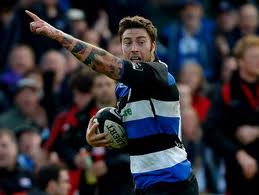

Bath are a great old club in a magnificent town, but a pretty average team, despite the press banging on like a stuck record about the “running game” they last played in the 1990s. The club is still in the process of rebuilding after the drug scandals in 2008, and the fact that Matt Banahan is their go-to guy says a lot. Stephen Donald arrives fresh from a bizarre ascendance to hero status in Kiwiland and should give them a bit of solidity at 10, but they don’t appear to have the sort of gnarled pack that can deliver wins on the road.
Glasgow won’t threaten the knockout stages, and will be content to register a couple of home wins. The news yesterday that Richie Gray is bound for Sale (!) in June is further indication of the sad state of Scottish rugby.
Montpellier are exactly the sort of French team that throws a Gallic shrug at the Heino and decides to concentrate on the South of France Drop Goal and Scrummaging Competition for the winter months. They’ve won just twice in the Top 14 this season, but with their inspirational backrows Ouedraogo and Gorgodze back in harness, they will be far better than that suggests. They open with Leinster at home. Ideally, you would want to be going to the south of France in round five or six, when they’re out and no longer interested (see last year’s visit to Racing Metro), not in round one when the tournament still has novelty and they want to take a scalp for their fans. It makes for an awkward opening tie for the holders.
Verdict: Leinster to win the pool, but not as comfortably as some suggest. Bath second, but to miss out on Amlin qualification.
Pool 4: Leicester, Clermont Auvergne, Ulster, Aironi
Pedigree: Bags of it. Leicester were champions in 2001 and 2002 and Ulster, as they love to remind everyone, won the Cup in 1999 – possibly before Munster did, but Egg Chaser is never the best on dates, so he can’t be sure. Clermont have yet to make the impact their talent suggests they should.
Preview: Something of a pool of death, and one where the ‘As it Stands’ pool may be making a frequent appearance in the corner of the pool during Matchday 6.

Let’s get Aironi out of the way, shall we? They haven’t improved their results from last year in the Rabo and will be on the end of six thrashings in this pool. Done.
Each of the other three effectively starts with 10 points in the bag, and tries to climb their way to 20 or 21, which should get you through, as there’s a good chance of two teams qualifying from this one. Don’t be surprised to see each of the Big Three win both home games against one another, in which case this will come down to who can secure those precious losing bonus points on the road. Leinster and Munster can point to defeats in the Stade Marcel Michelin that felt like wins. Can Ulster do the same? It looks a year too early for them. They have three outstanding forwards; Ferris, Best and Muller, and all must stay fit and at their peak. Even with that trio they look one flanker short of really competing. If their pack managed to get quick, clean ball for their spritely backs, all bets are off, but they need 5 points from the first 2 weeks for starters.
Leicester are in the bottom half of the Premiership, and don’t look the force of yore. They’ll always have a doughty spirit and a solid lineout, but with Ben Youngs set for an extended period on the sidelines, you feel they’ll plod rather than soar. They’re usually good for a place in the knockout stages though, and Welford Road remains one of the toughest grounds in which to win.
Which brings us to the mighty Clermont. This is their centenery year and they want silverware, after something of a victory lap last season. Sivivatu has arrived to give them some real running threat, and they can mix and match David Skrela and Brock James at fly half. Their pack is beastly. They look the complete package, and can top this group. Win at Ravenhill on Saturday and you can get your money out and bet on them to win the competition.
Verdict: Clermont to win the group, with Leicester to squeeze through as runners-up.
Posted by whiffofcordite on November 9, 2011
https://whiffofcordite.com/2011/11/09/hec-preview-pools-3-4/
Shut it Gatty!
Warren Gatland’s whingeing is in danger of squandering the goodwill the Welsh team have won this world cup for their fearless, positive and exciting rugger. Emotional post-match interviews are one thing, but Gatland’s press conference yesterday was another altogether. Enough already!
Firstly, he accepted that Rolland was entitled to give a red card, but said he shouldn’t have because of the occasion. Ah, of course, so the rules are to applied only at a time of Gatty’s choosing – fair enough. Then things got bizarre. Gatty admitted that he’d thought about cheating, by getting one of his props to feign injury to go to uncontested scrums, while getting his back row back to its full compliment. But being the high-minded sportsman he is, he coudn’t do it because it wasn’t morally right. And because of his great moral courage by choosing not to denigrate the final with what would have been the most cynical of cheating, Warburton shouldn’t have been sent off. Struggling to follow the logic? You’re not the only one.
Whiff of Cordite was reminded of the classic Chris Rock sketch about people who want praise for ‘doing shit they just supposed to do’: ‘I ain’t never been to jail!’ ‘What you want, a cookie?’
The pity of it is that Sam Warburton and the Welsh players were so magnanimous in defeat. They have been let down by management’s carping. It’s worth comparing Gatty’s whingeing this week with his words after Wales’ win over Ireland in this year’s 6 Nations, in which the decisive try was scored from a decision which was indisputably incorrect:
“It wasn’t the same ball so that’s a little bit of luck that’s gone our way. Sometimes you deserve a bit of luck and we haven’t had some luck at times. We’ll take one of those decisions that go our way.”
As greater minds than ours have said: Build a bridge, get over it.
Posted by whiffofcordite on October 19, 2011
https://whiffofcordite.com/2011/10/19/shut-it-gatty/
Post-Mortem: Ireland’s World Cup
Whiff of Cordite has never felt such a sense of disappointment, heartache and anticlimax as on saturday morning. All the momentum, all the great work in the pools – all gone. Ireland are on the plane home. WoC predicted a quarter final exit for Ireland, but we certainly didn’t see it panning out the way it did. Ireland finish up in or around par, but it was both much better than that, and yet, so, so disappointing.
First, the good: Ireland made a greater impact at the tournament than ever before. They topped their group for the first time ever. They beat one of the Tri Nations in, if not quite their own patch, their own continent. And they were the darlings of the host nation for their magnificent and numerous support.
Credit is due to the management for preparing and selecting the team so well. They may have lost their four warm-up games, but in many ways it was the best thing for them. They refused to panic, and were ready for battle by the time the Australia game rolled up. They also had an emotional well into which to dip, and duly did so.
But if the management deserve credit for navigating the pool stages then they deserve some flak for the quarter final shambles. Ireland were tactically inept and possibly complacent. Keith Earls spoke beforehand of ‘dreaming of a World Cup final’. What was he thinking? The sight of the man picked to kick Ireland’s goals turning down two kickable penalties early on was mystifying. Did Ireland think the early try against them was just an abberation they could cancel out at will? Ireland, for all their much vaunted Cup Rugby Experience, either panicked or paid too little respect to their opponent.
Kidney had a fine championship, but he must regret not starting the game with the halves who started the Australia game. No-one could have expected ROG to play so poorly, but Sexton’s running threat would have asked more questions of Wales’ fast-up defence. Gareth Thomas revealed in a pre-match interview that Wales would have been thrilled O’Gara had been selected. Why give an inexperienced side such a fillip? Sure enough, they targeted him, ran through him, and cut him off from his backline.
Also, Ireland’s lack of a Plan B came back to bite them. WoC has banged on to the point of tedium about the importance of the modern openside, but Kidney seems to have a blind spot to it. Several media pundits have spent the weekend crying out for Ireland to start developing 7’s, but nobody has pointed out that we had one sitting in the stands. Nobody here is going to argue that Jennings is as good as Warburton, or that he would necessarily have neutralised his threat, but the introduction of a dedicated fetcher would surely have made some sort of difference when it was apparent that Ireland were being slaughtered at the ruck. Instead, Ireland brought on a 6 and a 4 to replace an 8 and a 6.
In the event, Ireland’s supposed ‘experience’ was massively overplayed (guilty as charged m’Lud) – Ireland last played a knockout game in 2003, when they were thrashed by France. Heineken Cup medal counts were produced as evidence, but as we discussed on BP Rugby, the Heineken Cup is a very different tournament. Games are spread out, allowing teams to drop intensity between rounds and rise to the boil. After winning it in 2009, Michael Cheika spoke of having learned how to master this art, of ‘almost manufacturing dips’ in the Magners League to ensure the team peaks emotionally for the right games. The World Cup knockouts allow no such wriggle room – it’s full on intensity one week after the next. Ireland just can’t get enough consistency to sustain a challenge in a tournament like this. This weekend it was clear that it doesn’t matter how you qualify from your pool as long as you get out of it. Only Argentina were condemned to defeat for coming second in their pool. Look at France – they got through their group with the bare minimum of effort, but have plenty in the tank for the task ahead of them. Ultimately, Ireland’s win over Australia, magnificent and thrilling though it was, wasn’t that important. It’s the knockout games that really count – and Ireland have never won one in seven World Cups.
The ultimate feeling is one of sadness, particularly for the great players, BOD, POC, ROG and D’arcy among them, who will not get another chance to reach a World Cup semi-final, or even further. You suspect the younger players, though they will be back, will never get a better one either. But we’ll always have Eden Park.

Posted by whiffofcordite on October 10, 2011
https://whiffofcordite.com/2011/10/10/post-mortem-irelands-world-cup/
World Cup Quarter Finals Part One: Knock Out Six Nations
The alarm clocks are set. The breakfast has been purchased (well, it’ll be bought this evening) and anticipation levels couldn’t be higher. With the draw split entirely by hemisphere, Saturday sees the start of the first Knock-Out Six Nations.
Race to the top: Ireland v Wales
Who saw this coming? Wales and Ireland arrive in the quarter finals as two of the form teams in the tournament. Both appear to have come from nowhere. Ireland were awful in the warm-up games and against USA, but their turnaround has shown how quickly things can change. One extraordinary result and performance against Australia has turned their problems to vapour. Confidence is now oozing through the side, as evidenced by the crushing of Italy. Suddenly they’re everyone’s favourite team and a path to the final has opened up before them.
Wales had been poor for a long time before this tournament, and it wasn’t long ago we thought they mightn’t get out of their pool, but Gatty’s brave selections have unearthed an exciting side. In truth, they should have won their pool, but fell just short against South Africa, before overcoming a potent Samoa side and hammering Fiji. Wazza deserves credit for breaking with the past and jettisoning many of the Class of 2008. James Hook and Ryan Jones finds themselves benched, while Stephen Jones and Lee Byrne are out of the 22. Wales now have something they have lacked for some time – a dynamic, ball-carrying Number 8. Elsewhere, the return of so many players who have either been injured or rubbish for the last two years (the props, Jamie Roberts, Mike Phillips) has reinvigorated the side.
The game is being billed as Youth vs. Experience, a match-up between Wales’ fearless young tyros and Ireland’s gnarled veterans. As such, Ireland are marginal favourites, as history has shown that in World Cup situations, the gnarled veterans tend to come out on top. Much has rightly been made of the Irish players’ medal count against that of the Welsh. This is new territory for the hugely impressive likes of Sam Warburton (23yrs old and captain), Toby Felatau (20) and George North (19) – can they keep their heads under pressure in the way that Paul O’Connell, Brian O’Driscoll and Ronan O’Gara assuredly will do so for Ireland? It might just make the difference.
We can’t see much between the scums and lineouts (so long as Best holds up) and while Ireland have the more potent carriers in their pack, Wales have the specialist groundhog. Wales have terrifying pace (and skill) in their back three, and two monsters in midfield – Ireland don’t dazzle in the same way in attack, but have been supreme defensively. Protecting the 10 channel (we imagine Roberts has been sleeping with a picture of ROG above his bed all week) will be paramount.
We’re keeping with the feelgood factor on this, and predicting Ireland will go through to their first ever semi-final. Their greater knockout savvy, honed through the provinces in the Heineken Cup, should just shade it for them.
Race to the bottom: England v France
Ugh. If Wales v Ireland is shaping up to be a potential classic, the follow-up looks increasingly like a game to sour the milk in your cornflakes. Frankly, neither side deserves to make a semi-final. France’s implosion has been almost comically similar to that of their kickyball team last year. Just what is Lievremont doing? WoC initially enjoyed their cheeky selection against New Zealand, but persisting with a scrummie at out-half against Tonga, and losing, and then doing so again for the quarter final just smacks of lunacy. The bizarre press conferences and attacks on his own players have been unseemly, even prompting our muse Thornley to suggest that that he should have been removed from his post after the Tonga debacle and a new emergency coach installed. Remarkable stuff, but not without merit.
England are little better. True, they would never capitulate like the French in the Tonga game, but they have been abysmal. They were deeply fortunate againt both Argentina and Scotland to emerge from the Group of Dearth with four wins. Woefully indiscpilined and inept in attack, Jonno deserves much of the blame for reneging on the team he had built before the tournament. Remember them? The one that tried to play at pace and run with the football; the one that won the Six Nations and thrashed Australia. But Jonno has decided that the World Cup is no place for such frippery and has reverted to ‘Cup rugby’. For Cup Rugby, see Bollock and Boot Rugby. It merely dragged England down to the levels of Argentina and Scotland.
If France can get their heads right, this England team is there for the taking, but such an eventuality seems unlikely. Expect England to grind it out, and put Lievremont out of his misery.
Posted by whiffofcordite on October 7, 2011
https://whiffofcordite.com/2011/10/07/world-cup-quarter-finals-part-one-knock-out-six-nations/
Palla Ovale’s Tour Diary: Episode 3
Dunedin and Home James
 The student town of Dunedin, home to the world’s steepest residential street was made to look like St Paddy’s Day in Dublin on Sunday. There was barely a blue shirt in sight amid a sea of green in its central Octagon. The Kiwi love for the Irish continues unabated, and there were plenty of Nou Zillund accents to be heard from emerald-clad rugby fans (though our neighbours for the game were tow natives decked out in blue). The party atmosphere continued post-match, beginning with the Irish crowd completely drowning out BOD’s post-match interview. You quite simply couldn’t hear a word.
It was another accomplished performance by an increasingly rounded looking Ireland team. Suddenly, all the component parts are working nicely. Problems are solving themselves, like D’arcy’s upswing in form, while Jonny Sexton’s cameo included a touchline conversion that he badly needed. Meanwhile, Sean O’Brien and Stephen Ferris are marauding their way through the tournament. O’Brien has been voted in one poll in New Zealand as the player of the pool stages. Ferris could not have timed his recovery any better.
There was a touch of sadness mixed with delight for the Ovales, as this was the end of the road for their tour. It was on to Christchurch airport on tuesday, before making the long flight home. So, it’ll be a 6am start for us on saturday. A trip of a lifetime for sure – Simon ‘Posh Boy’ Hick put it best when he tweeted ‘So this is what it’s like to be at a World Cup when your team are brilliant.’ We can only hope the Irish team don’t have to hurry home any time soon.
Posted by whiffofcordite on October 6, 2011
https://whiffofcordite.com/2011/10/06/palla-ovales-tour-diary-episode-3/
 Whiff of Cordite