How Do You Solve A Problem Like Ian?

Saturday night saw another welcome development in the story of the precocious Ian Madigan.  Another Man of the Match display in a Pro12 game, and the try he set up for Fionn Carr showcased his luminous talent.  He has a fantastic, highly unusual (for Irish rugby) skillset: exceptional passing, breaking skills, eye for the tryline and now, solid place kicking [Aside: should Ferg be worried about this development?].  His weaknesses – game management and kicking from hand – are improving. Yes, we know he hasn’t successfully piloted a game through muck and rain in the style of the man he could potentially replace on the Ireland 22, Radge.  Last year he carved up the Pro12 and started his first Heineken Cup game, at home to Montpellier.  An international breakthrough seems inevitible this November.

But it’s becoming increasingly difficult to justify sitting him on the bench for the big games, no matter how well Jonny Sexton is playing.  It’s getting to the stage where Madigan needs to take the next step in his career – starting Heineken Cup games regularly.  WoC has been sniffy about complaints that Madigan ‘isn’t getting enough game time’ in the past, but this season, such is his quality, they will start to become relevant.  Some hard decisions will have to be made.

What is Joe to do? He has a settled and successful team on the pitch, the best 10 in Europe, but has a seriously talented younger chap kicking his heels on the bench. He needs to balance the present, the future, and the maximisation of his existing resources. Can he get Madigan into the team, and how?  Let’s look at the options:

  • Status Quo. In this scenario, Sexton starts the big games and Madigan the Pro12 ones when Deccie says Sexton has a headache. At the very least Madigan will need to be given significant minutes off the bench in Heineken Cup matches.
  • Sexton to 12. This was Deccie’s favoured ploy when he didn’t have the balls to drop Rog decided to play O’Gara and Sexton on the same pitch. To be fair, Sexton never looked uncomfortable, but yet, it never struck us as a viable long-term solution, and genuinely appeared as a sop to the bolshy Rog. Still, it fills what is aleady a problem position for Ireland, and is likely to become one for Leinster. Will Sexton, the best 10 in the Heineken Cup for the last two seasons and favourite to wear the Lions 10 jersey, be impressed with being taken out of the slot to accomodate the uncapped Madigan? In a word – no.
  • Madigan to 9. This has been floated before, most eloquently by the Mole, but Madigan, unlike Giteau, has never played 9. It’s worth a shot if you feel it’s a genuine long-term option, but Leinster and Ireland are well-served in this specialist position, and it would look like a sticking plaster solution to accommodate both men in one team.  And great as Madigan’s distribution is, passing from 10 is not the same as passing (and manging the tempo) from 9.
  • Madigan to 12.  With Ireland crying out for a silky distributor at 12, could Madigan, effectively, be the new Paddy Wallace?  He’d have even more space at 12 than at 10.  Ball-in-hand it looks a good fit, but the 12 channel is popoulated by monsters these days and while Madigan is a brave and competent defender, he probably lacks the sheer bulk to play there.
  • Madigan to 15. Really? With Bob and Isa Nacewa in the squad? And Andrew Conway as the resident promising youngster? Not a runner.
  • Stand Up And Fight. In this scenario, the incumbent (Sexton) gets unceremoniously benched for big games, and Madigan is thrown in to the first team. If Sexton becomes a bench-warmer at Leinster, he won’t be best pleased, and an iHumph-style flounce can’t be ruled out – could Sexy take over Rog’s red and green shirt?

No obvious solution then.  No doubt Ian Madigan is aware that he is working with the best coach of backs in Europe, and it’s almost certain that without Joe Schmidt coaching him, Madigan would not be as far in his development as he is.  It would be a wrench for him to leave all that behind, but this could be a summer for hard decisions.

Were he to look around, he would not lack for suitors.  Both Munster and Ulster would be in the picture.  Ulster are crying out for proven quality in the position and nobody knows how Paddy Jackson will go this season, while Niall O’Connor is squad player material.  At Munster, the world and its mother knows that a legend is nearing the end of his career, and while Keatley has started this season well, doubts remain as to his ability at the very top level.  Last year, you might have argued that Madigan’s skills could wither on the vine at those provinces, but the augurs are good under new coaching regimes.  Mads would most likely have offers from abroad too, probably including franchises from the Super XV, to which his game would be tailor-made.

Leinster would surely hate to see such a special talent slip through their fingers.  Somehow a way has to be found of getting him the necessary exposure to keep him happy and progressing at a suitable pace.  Talent this special is rare indeed.

The Breakdown Of Law

This is our first ever guest publication, kindly written by serial comments-section gasbag HenryFitz. After a  recent comment on our Santa Baby piece, we felt his understanding of the perpetually grey area of the breakdown and how it can be addressed merited a post in itself, and he has duly obliged.   You can tweet at him @HenryFitz1 or read his in-utero blog at polarnews.net.

The first and most influential law in rugby union is the law of unintended consequences. In the game’s staccato evolution from hobby to entertainment product, this law has been the primary catalyst of change. Every rewriting or reinterpretation of rugby’s lawbook has been inspired by the unintended consequences of the last. Nowhere has this been more obvious than at the ruck, or breakdown.

Watch a rugby match today, and you can see the latest unintended consequences played out at every tackle. In search of an ideal game for Antipodean TV, a recent reinterpretation of the lawbook judged the tackle to be a mini-contest and gave the tackler licence to attack the ball from any angle he chose. The tackler was uniquely privileged. Everyone else had to describe the tiresome arc of running back around the fence and through the gate. Like a ghost or a JCB, the tackler could enter from anywhere.

The rationale behind this reinterpretation was twofold. First, it increased the likelihood of a turnover (which is the best attacking possession), and second, it increased the speed of the contest. In theory, the tackler would either win possession immediately or be blown out by supporting players. In practice, it worked out that way for about a month, and then the unintended consequences took hold.

In retrospect, it seems obvious that allowing the tackler to loiter offside at the tackle area might not be the best idea. What was to stop the tackler from getting to his feet to trip or otherwise impede the supporting players while his team-mates scrabbled for the ball on the ground? Nothing, it transpired. What was to stop the participants in a double or triple tackle from obstructing the clearers ahead of the ball while one of the other tacklers made off with the egg? Again, nothing. The tackler could come in from the side of the ruck and steal the ball unless there were two clearers on either side of it to look after him. One man (the tackler) could easily outmatch two. In fact, the only methods of stopping any of this previously illegal play were for referees to arbitrarily penalise the most blatant examples, or for the supporting players to take matters into their own hands.

Wherever You Rest Your Head, That’s Not Home

The subject of sealing-off at rucks is a sore one. Or at least, he used to be. In the days of genuine, bona fide rucks – what the dictionary remembers as a play in which a mass of players gather around a ball dropped by the ball-carrier and each tries to win the ball by kicking it to his team-mates – any player who found himself on the ground could expect painful encouragement to move out of harm’s way. The referee’s call of ‘ruck’ was not so much a legal distinction as an exhortation – a starter’s gun. When the ruck was a brutal, dynamic battle between opposing phalanxes, only the foolhardy or the unconscious sealed off in an attempt to protect possession.

But, as Schopenhauer enjoins us to consider the problem of unequal happiness by imagining the respective feelings of two animals, one in the process of being eaten by the other, so the lawmakers and the litigious forced us to consider the feelings of the players on the ground, and how their unhappiness might outweigh the sadistic joy of the forwards trampling on them.

When the ground became a safer place to rest your body, the game evolved to include sealing-off as a primary tactic, with the Brumbies of 2003 and Munster of 2008 being the most famous exponents. By the beginning of the 2008-09 season, lawmakers and spectators had grown tired of the game’s reduction to a long exhibition of the pick and synchronised dive, and a new directive about supporting the body-weight came into force. Players would be penalised for using their arms or shoulders to support themselves at a ruck.

The results were not pretty. No leniency or common sense was allowed, and with the jackal move in vogue (a manoeuvre where the tackler got to his feet by pinning the ball-carrier to the ground, preventing the release of the ball), bringing the ball into a ruck in your own half became a low-percentage play. Kickathons ensued.

Then minds changed. From 2009 to the present, the directive against sealing-off has been relaxed and the jackal move has been hunted to virtual extinction, but the lese-tackler privileges have brought all the old, unintended consequences back.

Mutually Assured Destruction

As referees are unable, under the laws, to deal with the tackler obstructing or disrupting possession from an offside position, it has fallen to the players themselves. There has been an arms race. The most effective counter-measure against the tackler is to neutralise him immediately in the ruck. As the tackler is generally in a prone position, that means the supporting players dive straight to ground, and then either reef the tackler out of the ruck or pin him to the turf. An unintended consequence of the tackler’s expanded rights therefore is that the first movement of clearers at a ruck is to go to ground and seal off possession. Depending on how the referee feels that week about sealing-off, this may cause penalties, or it may not.

Mirror, mirror on the wall, who is the arbitrariest of them all? But of course, that is my decision, not yours.

The consequences of not sealing-off and ignoring the tackler are random and referee-dependent. In the following video, we see John Barclay stealing the laid egg at the back of a French ‘ruck’ and running away with it for an eventual try, a try which could have won Scotland the game. An oddity of the laws is that the two players who stepped over the ball to protect at the tackle do not constitute a ruck (as there were no opposition players bound), and Barclay was perfectly free to run away with the ball from an apparently offside position.

[Starts at 0.47 in below]

Then in the 3rd test of Ireland’s tour of NZ, we see two separate incidents where the same referee’s interpretation of what constitutes a formed ruck differs randomly. In the first, Peter O’Mahony bounces to his feet and grabs the ball, only to be penalised.

[Starts at 18.10]

In the second, Richie McCaw does the same, while Seán O’Brien’s protestations are unavailing.

[Starts at 7.20]

In addition, here are two instances of sealing-off, one of which is penalised, the other of which is not.

[Starts at 12.29]

[Starts at 17.55]

Videos may be damaging to health of Irish supporters, so consume with caution.

A further consequence is what has become known as screening, or as referees call it when they occasionally penalise it: ‘taking up the space’. In these situations, a tackler disengages from the tackle to block supporting players, most particularly the scrum-half. He may then accidentally fall on top of the ball-carrier, slowing down the release of the ball. As with many of the dark arts, this one is more sneaky and more successful the higher the level of the game.

In general then, the consequences of these expanded rights for the tackler have been to make the breakdown: more chaotic; more difficult to referee; the scene of random penalties; alternately a pile of players lying on top of each other or the fiefdom of an upper-class of tacklers who can take the ball whenever they like without having to work for it. By placing the duty of interpretation in the hands of the referee, and forcing illegality in many breakdown clearouts, it has also made the game more susceptible to bribery or bias. From week to week, the same offences are punished or pardoned by lottery, and spectators howl their outrage or turn to each other shrugging and confused to say ‘what was that for?’. Worse again, with the return of sealing-off, the prospect of a genuine contest at the ruck is a distant island from which the game is drifting away. Who wins at the ruck is decided by who cheats and gets away with it, not by any fair shoving and wrestling match over the ball.

Someone, Don’t Think of the Children

Those schooled in the older, harder game of amateur rugby union, when it was a violent pastime between consenting adults, could tell you one sure way to solve this problem. Bring back rucking. Rugby has always had, alongside its judicial framework, a system of natural or vigilante justice. Expand its powers again, and the laws would be more rigorously enforced. Unfortunately, so would the law of punitive retribution. Making rugby a more dangerous game would make it more expensive to insure and administrate, which is not a choice businesses are known to favour. As a franchisable circus, professional rugby must consider the cost of its activities. Rucking is not likely to pay for itself.

Other measures then, are required. Perhaps you think the tackler’s privileges should be reduced. However you got the idea, you have good reason. Forcing the tackler to go back around and through the gate will make obstructive and sealing-off offences more obvious and, hopefully, more rare. The remaining difficulty will be at the contest itself, where the clearers try to dislodge an opposition limpet scrabbling for the ball – a struggle which usually results in both limpet and picker prone on the ground, impeding further contest. The lawbook does ask players on the ground to roll away from the breakdown, but referees have been unwilling to penalise this offence. Some make an effort to shout at players to regain their feet, but penalties are exceedingly rare. Under current law interpretations, any move to regularly penalise such offences would lead to kickathons like Wales-France in the 6N this year within a week. This second change is most definitely dependent on the successful implementation of the first.

But here there is a trap. The obvious and unaddressed problem of any proposed change is what the unintended consequences might be. Rugby’s current equilibrium has been achieved by referees rigging the system to favour continuity, with a blind eye being turned to certain offences for the sake of the end product. This devil that we know is a handsome sort of game, with plenty of backs moves and speedy ball presentation. Turnovers are fast and produce tries, and the occasional counter-drive provides the illusion of a contest at the breakdown. The referees may be wholly arbitrary, but good teams still do well, and the product is attractive. Ultimately, though changes in the way the game is refereed might make it fairer and more understandable to fans, they may not make it more entertaining. Unfortunately for those of us who would prefer a game with fewer ambiguous or disputed outcomes, that will probably be the decisive consideration.

It Starts

We’ve only 4 words we can use to sum up the weekend past: rugger, rugger, rugger, rugger! After the summer soothed the bile and bitterness of the NZ tour, we are all ready for action, as you have probably worked out from our previews over the last weeks. So what did we make of it all?

Me, Sir! Me, Sir! Pick me!!

Ulster and Munster started well – showing much more hunger and cohesiveness than their opponents, and both deservedly winning. Kudos go to the new coaches in both cases, who selected callow sides and saw rewards. In Leinster’s case, the youngsters were eviscerated by the Scarlets, treating ball carriers like leprosy victims to be avoided at all costs. Connacht also lost to an inspired Welsh side, Cardiff doing the damage. So, does this all mean (as some have suggested) that Leinster’s much-vaunted depth is actually shallow? That Munster’s transition has happened already, in Rob Penney’s two week pre-season? That Nick Williams is the new Kieran Read? Errr .. no. All 4 winning sides have new coaches – the urgency that comes with that has played a major part in our view – it’s easier to hit the ground running when everything is up for grabs. Let’s withhold judgement on the provinces’ prospects for a while yet.  That said, the manner in which the Munster backs got on James Downey’s wavelength was impressive and Laulala showed why he won’t be shoved out of the 13 jersey just because Keith Earls really likes playing there.  More of that sort of thing.

Its the Messiah! Or maybe its Brian

So, Nick Williams has put his “lifestyle issues” behind him, and blasted would-be Glasgow tacklers asunder for the 50 minutes he was on the field. Jared Payne (admittedly not a complete newbie) looked high class. Rob Herring was solid and the lineout smooth. It’s been an impressive weekend for Ulster’s summer signings – long may it continue. Robbie Diack looked a new man and Lewis Stevenson was prominent, doing both seen and unseen work. It’s good news for the depth chart in Ravers, and certainly puts the commenters 1-0 up on WoC. That said, Niall O’Connor’s performance was below par to say the least (admittedly, he improved as the game went on) – you simply cannot have a fly-half standing so far back when you have so many strike backs on the field. We thought (and think) Ulster would not have the depth to cope of two fronts, but it was an encouraging start.

Told you so, or How I Learned to Stop Worrying and Love the Oooooooooooooohhhh!

The most enjoyable game of the weekend was undoubtedly Wasps-Quins in the Premiership. Wasps went 40-13 up, helped by a blitz of tries from their pacy wings – but then Quins clicked into gear and hammered 4 quick tries, then winning with a last minute penalty from Nuck. Exeter hockeyed Sale 43-6 and two other sides won with try bonus points (Sarries, Leicester). Averaging more than 5 tries a game, it’s the new Super 14.

Bish, Bash, Bosh

In contrast to last season’s mess, Biarritz are flying high in the Top 14, topping the log with 3 wins and a bonus point – the Basques have resolved to take it seriously this year after last season, when they were scratching against relegation and only got back into the HEC through the Amlin Vase. Boring bosh-merchants Toulon, Toulouse, Castres and Racing Metro are all in play-off positions, but its Clermont who set Week 3 on fire, scoring  7 tries (the same as Toulon, Toulouse, Castres and Racing Metro put together) and conceding 3 to Perpignan in a 53-31 basketball game – we didn’t see it, but wish we had. More of Clermont, less of scrummage/drop goal contests please.

2012/13 Season Preview: Ulster

Last Season: Ulster had their best year since 1999, reaching the Heineken Cup final on the back of epic victories over Leicester, Clermont and Munster, and a near-miss in the Marcel Michelin. The beating in the final took a little gloss off the year, but there is a satisfied glow in Belfast this summer.

League form started badly, recovered, then fell off a cliff after Thomond – the 6th place finish was probably a tad unfair on their general play, but they don’t have the depth to compete on both fronts.

In: Mark Anscombe (Auckland, coach), Tommy Bowe (Ospreys), Roger Wilson (Northampton Saints), Nick Williams (Aironi), Niall O’Connor (Connacht), Rob Herring (Stormers)

Out: Brian McLoughlin (errr … somewhere in Ravenhill that isn’t immediately clear; possibly washing linen), Ian Humphreys & Conor Gaston (London Irish), Pedrie Wannenbosh (Castres), Ian Whitten (Exeter Chiefs), Willie Faloon (Connacht), Simon Danielli & Stefan Terblanche (retired)

Last season will live long in Ulster memories – not only did they get to a HEC final, but they produced two of their best away performances of the professional era en route. Ulster were always seen as a soft touch away from Ravenhill, but their efforts in Clermont and Munster will be remembered for a long time.

On the flip side of that, Ulster started the season appallingly, and their efforts after Thomond Park were not great. The decision to change the fly-half after Humphreys poor performances in March and April did not work on the field (with respect to Paddy Jackson, he did ok, but looked too raw for the highest level), and back-fired spectacularly off it. The vision of having an experienced and competitive out-half nursing young Jackson through his formative years are in ashes after iHumph didn’t feel the love and jumped ship. It clearly still hurts (is there regret?), and must rank as a stunningly poor piece of man-management of an important player by the coaching staff.

Of course, Brian McLaughlin has moved on to be replaced by Mark Anscombe – while there is no doubt he was rather shabbily treated, we think he had taken Ulster as far as he could, and a new voice was needed. That new voice was received rather unenthusiastically after the usual Wayne Smith type speculation, and his record is less impressive than say, Rob Penney’s, but we have to assume Humph knows what he has done. As it stands, the starting 10 is likely to be Jackson, with O’Connor backing up – it’s pretty raw and shallow, and if it doesn’t work out for whatever reason, Ulster might struggle – it’s huge pressure at an early age on Jackson, let’s hope he copes with the expectation.

[Aside: this doesn’t imply Penney would have been a better man for the job – the Ulster job entails guiding a relatively young team driven by a core of grizzled leaders to European silverware, its a much more laissez-faire role than Penney’s activist re-shaping in Munster – a different personality and skillset would be needed. Penney would probably have been too hands-on for Ulster at this stage in their development.]

On the playing front, it’s been roughly a break-even summer on the transfer front. Bowe for Danielli is clearly a significant improvement, but O’Connor for iHumph is not, and while Roger Wilson for Wannebosh is not a like-for-like comparison, it’s replacing an older player with a record of good service with a younger one who understands the club mentality. Factor in that fly half and backrow are more important than wing, and perhaps Ulster didn’t do that well..

The loss through injury of Paddy McAllister is significant – not only are Ulster relying on Tom Court, but when Deccie borrows him to make half-time oranges for Cian Healy, they’ll have to play Callum Black. It’s terrible for a young promising player to miss a whole season at this stage of his development – we wish him the best. At tighthead, they have the opposite problem – Deccie will want to see a lot of Deccie Fitz and Adam Macklin, but Ulster haven’t signed John Afoa to make up the numbers. That ranks as a good problem. Expect to see Niall Annett start some Pro12 games when Rory Best is sunning himself in Maynooth – Nigel Brady and Rob Herring are also in the squad, but Annett is the future.

Second-row depth is good – Johann Muller and Dan Tuohy are one of the best starting pairs in the HEC, Lewis Stevenson developed at a rate of knots last year, and Iain Henderson is the coming lock of Irish rugby. Henderson will probably play more at 6 this season, both to get experience and to cover a thin sector, but he’ll be challenging for a starting spot within the next 2-3 years.

The second real problem area for Ulster (the first being loose-head and the third out-half) is the back-row. The starting trio of Stephen Ferris, Chris Henry and Roger Wilson are top class – Fez is incomparable, Henry was the stand-out openside in the Heineken Cup last season and his injury played a large part in Leinster’s ease of victory in the final, while Roger Wilson has been swimming at the top level for three years now. But behind those, it’s a steep drop-off to Mike McComish, Robbie Diack and Nick Williams – ouch! Williams was a mystifying signing – he was poor at Munster, and struggled to get his game at Aironi – why the coaching staff thought he’d be the man to backup the classy Ulster starters when silverware is the aim is unclear. The transfer of Willie Falloon to Connacht has further thinned out the back row – he hasn’t exactly been shooting the lights out, but he could be a useful Pro12 asset.

Ruan Pienaar is likely to be absent until the HEC starts due to his Boks role, so Paul Marshall will have a chance to get some momentum going again – he was brilliant when asked last year, but his opportunities were restricted at the later stages of the HEC. Its worth mentioning that Marshall-Pienaar looks an obvious solution to the outhalf issues, but Pienaar came to Ulster to prove himself a specialist 9, so he will not want to move out on a regular basis.

Ulster’s three-quarter line looks well-stocked and balanced – Paddy Wallace and Darren Cave both had their best professional seasons last year and coming kids Nevin Spence, Luke Marshall and Chris Farrell (Ooooooohh) will provide backup. Tommy Bowe has come home to contest the wing slots with Andrew Trimble and Craig Gilroy – Trimble is the most prosaic, but his boshes off the wing were a key setup point for Ulster attacks last season, Exhibit A being Gilroy’s try in Thomond – whoever misses out will be an improvement on the departed Ian Whitten in squad terms. Jared Payne is hoping to put an injury-hit first season behind him and, allied to the arrival of Bowe, the ouside backs look much more threatening this season – Terblanche was as safe as houses last year, but wasn’t exactly Isa Nacewa on the counter. Adam D’Arcy provides pace and broken-field expertise combined with an inability to pass off the bench.  Can Ulster develop their Saffer-inspired gameplan to cut them loose?

Ulster have a benign HEC draw this season – all three home games will be won, and the timing of the fixtures means Castres away will be targeted. We think they can pick up that and another win plus enough bonus points to win the pool and earn a home quarter-final – the first knockout HEC game at Ravers since 1999. That would represent progress. After that, its a question of the Lady Luck. If Leinster and Clermont clear one or the other out of the HEC groups, a path could open up for Ulster to go further. But that itself may depend on the fitness of the starting pack and halves – it’s hard to imagine Ulster could survive long stretches while relying on the likes of Black, Diack, Williams and O’Connor.

In the Pro12, Ulster have tended to pick up momentum in the spring due to the lack of front-line internationals in their squad – one of the results of their success and development is that the likes of Deccie Fitz, Tuohy, Henry, Cave and Gilroy may get Deccie-d, and remove the March safety valve from consideration.

Verdict: The lack of depth in key positions is our biggest problem with Ulster. The loss of iHumph has not been adequately addressed, and the backrow unit has not been improved over the summer. The three-quarter line is now stacked, but getting the ball back there in decent shape is the challenge.

The front-liners are strong enough to go far in the HEC, but a win might be beyond them. If they get a bit of fortune, another HEC final is achievable, but a home quarter final should be the target for the season. It’s hard to look beyond that; if they get it, they should have a semi-final in them, then who knows. The under-powered backrow backups are going to be a problem in the Pro12 – Ulster are likely to be without more players in February and March than in previous years, and we can’t see them making the hay like they usually do. We think they will miss out on the play-offs for the second successive season.

Premiership Preview

We were sitting down over caramel mocha skinny frappoccinos in the Southside yesterday, before heading home to the Northside for deep fried lard-balls and gravy chips, and we pondered the post about how dire the Top14 is – the prospect of writing a preview was not appealing to say the least.

So we started talking about the Pro12, and ended up equally as unenthused – the idea of previewing a league where pretty much all the teams don’t give a sh*t about it ain’t much craic either. This led us to a rather revolutionary idea – writing a Premiership preview! Ooooooooooooooohh!

The Premiership might have been a laughing stock for the last few years, and indeed some of our more mouth-foaming fans maintained Connacht were better than Leicester following their thumping in Ravers last January, but it’s genuinely competitive and more exciting than you might think. Last year there were way more tries than in either other league on average, and Leicester were like the Baabaas in the second half, scoring 6 try bonus point wins in a row.

Bath

The sexiest city in England, the best ground in England, great fans, great tradition, but a rubbish team. There is potential in the squad through the likes of Jack Cuthbert and Tom Heathcote, but it’s mostly packed to the gills with dead wood. Another mid-table mediocrity season beckons – treading water.

Look out for: Heathcote is a sparkling young 20-year old who has no pressure thanks to George Ford and big money signing Beaver – finally a home-grown 10 worthy of Barnesy’s shirt

Oooooooooohh: Converted second row Matt Banahan has the turning circle of the Titanic

Exeter Chiefs

Went from surprise winners of the Championship to surprise Premiership survivors to surprise HEC qualifiers. The upwardly-mobile Chiefs have a strong support and what looks like a cracking little atmospheric ground. They’ll want another HEC qualification, but we think they won’t get it.

Look out for: We wonder when Dean Mumm went to sleep on those Wallaby training camps after a day with Nathan Sharpe did he dream of partnering Tom Hayes?

Oooooooooohh: big-boned Fijian winger Sireli Naqelavuki knows only one thing – running very fast towards an opposing player – bash!

Gloucester

A disappointing season for Glaws last year despite the memorable thumping of boring bosh-merchants Toulouse – the days of topping the regular-season log are long gone. They’ve responded by making quite a few interesting signings like Jimmy Cowan, Ben Morgan and Billy Twelvetrees to add to their youthful zip. A return to the HEC placings looks within their reach.

Look out for: Any of the jet-heeled backs – we’re pretty big fans of Jonny May here – but it’s Freddie Burns who looks the real deal

Oooooooooohh:  Admirably free of bosh in the post-Vainikolo days – if anything they need a couple of crash-ball merchants to set targets.  More Oooooooooooohhh, not less! You heard it here first.

Harlequins

Started last season like a bullet, and, amazingly didn’t end up losing at the hands of one of the nastier boys in the playground i.e. Tigers, Saints or Sarries. Carried home their first Premiership title and were a breath of fresh mostly-English air. Europe will probably be the priority this year – we think a repeat is unlikely, but playoffs probable.

Look out for: Luke Wallace never quite nailed down a starting position last season, but he is a pure groundhog who we will see plenty more of

Oooooooooohh: Jordan Turner-Hall has taken contact and held on in the tackle – again!

Leicester Tigers

Made their 8th final in a row last season, and are English rugby’s bluebloods. Still, no silverware to speak of, and a frightful beating in Belfast to boot. Despite another stinker of a HEC draw, they’ll want to make amends for last season – they’ve a deep squad and will want their English crown back.

Look out for: George Ford is the next big thing – he might be their starter by the end of the season, and Floody could go from being tomorrow’s man to yesterday’s man in one fell swoop

Oooooooooohh: Now that Alesana Tuilagi, Barnesy’s favourite bosh-merchant, has gone, it has to be Thomas “the Tank Engine” Waldrom, famed for going missing when it really counts

London Samoa Irish

Irish appear to have eschewed boshing in favour of something more watchable – the coaching staff is all new, and the inventor of defence, St Shaun of Oop North, is on board. Will be able to concentrate on the Premiership, and the exit of Felon Armitage will ensure less sideshows, and more likeability as well.

Look out for: Iain Humphreys flounced out of Ulster after being dropped for P-Jack for the HEC semi, but on form, he can inspire a backline to high levels of expansiveness

Oooooooooohh: League convert Setaimata Sa is on board – he’s described as a “line-breaking centre or back-row”, which we think means “contact merchant with hands of stone”

London Welsh

Have the be-wigged beaks of the Bailey to thank for being here – after initially being turned down to replace Newcastle, they got their way. Promoted despite finishing a distant 4th in the Championship, they’ll do extremely well to avoid an immediate return there

Look out for: we hate ourselves for saying this, but attention-seeking has-been Gav Henson will dominate headlines. He doesn’t deserve this nth last chance, but he has it, so let’s grudgingly wish him the best

Oooooooooohh: we’re being pretty presumptuous here, having never seen him play, but Hudson Tonga’uiha is a Tongan centre – we imagine he isn’t known for his defence-splitting soft hands

Northampton Saints

The team which expended so much energy getting from the Championship to the HEC final is slowly chipping away – Downey, Wilson and Ashton left this summer. We are pretty down on any team piloted by Ryan Lamb, and we think they are going to miss out on the playoffs this ear.

Look out for: Ben Foden is a damn handsome chap, but a rejuvenated Courtney Lawes is even more crucial if Saints are to prosper this year

Oooooooooohh: He might get Barnesy excited, but So’ane Tonga’uiha isn’t actually all that good

Sale Sharks

Huge amount of excitement this summer at Sale, as two of rugger’s bigger names signed up to Steve Diamond’s “project”. We’re uber-excited to see Cippers back – expect fun either way – and we think he can inspire the Nordies to the playoffs and possibly, maybe, who knows, book himself onto the Lions tour.

Look out for: Corpulent Jerry might think he looks as though he runs through treacle, but to us and most sane people, Richie Gray is one of the best locks in world rugby – his break and step against Ireland this year was laughably good

Oooooooooohh: Munster foreign signing fail Sam Tuitupou is captain (captain!) – look to see space outside eschewed for a crunch into an opposing centre

Saracens

Brand Sarries continue to push upwards – a strong squad was strengthened by the arrival of Chief Dickhead Chris Ashton, and there is a HEC game scheduled for Brussels in October. They only finished two points off the top last season, and will be aiming to get their crown back.

Look out for: Owen Farrell was anointed as England’s saviour, then lamented as a poor man’s Wilko. We would be hoping to see him develop into a more rounded game manager this year

Oooooooooohh: In last years Six Nations, straight-line Brad Barritt made Dr Roberts look like Sonny Bill Williams

Wasps

This time 5 years ago, Wasps were starting the season as European champions, and would go on to lift the Premiership trophy – yet last season they narrowly avoided the drop having lost key players to injury – by contrast it’s hard to imagine Leinster scratching it out with Zebre in 2017. Saved from bankruptcy this summer, Dai Young is in as director of rugby and it’s year zero. They’d take mid-table respectability, and they’ll probably get it.

Look out for: With Danny Care, Lee Dickson and Ben Youngs doing their best not to nail down the England 9 shirt, Joe Simpson will have an eye on regular international recognition

Oooooooooohh: Former Cheetahs back-rower Ashley Johnson has tired of the long queue ahead of him for the Boks, and is taking his contact game to the Premiership – don’t expect many offloads

Worcester Warriors

Worcester were just happy not to be where Newcastle finished – narrowly avoiding a return from whence they came. With Bristol blowing promotion again, Worcester will fancy themselves to stay ahead of London Welsh and continue to hang on by their fingernails.

Look out for: Long touted as the next big thing, Matt Kvesic is a teak-tough all-action 6.5 – think Wally

Oooooooooohh: Neil Best has never been shy of an argument and the muck and crash of the bottom of the Premiership suits him

For once we are actually going to nail our colours to the mast, and not talk in endless possibilities. Here’s how its going to finish up:

Champions: Leicester

Playoffs: Saracens, Harlequins, Sale Sharks

HEC: Gloucester, Northampton

Relegated: London Welsh

Eight Games That Defined Irish Rugby: Match Five

The Game: Gloucester 3-16 Munster, 5th April 2008

What it Defined: the transformation of Irish provinces into all-conquering Europe-dominating machines, and in particular Munster’s period of dominance

The State of Play

The Heineken European Cup (then just the European Cup) began with a bit of a whimper in 1995.  The first season had no English or Scots, but one Romanian representative. Ulster,  Munster and Leinster threw their hats in the ring, and the IRFU was delighted to find something for its newly-minted employees to do. Leinster were the only Irish side to make it past the first round, but were beaten by Cardiff in the semi-final, in front of 7,000 (!) at Lansdowne Road.

The English and Scottish joined the next year, and that ruined any chance of immediate success for the Irish. No Irish province made the knock-out stages, which was a fair reflection of Irish rugby’s standing at the time – until the English took a sabbatical in 1998-99.

It was that year that the Irish finally got a taste for the competition. The absence of the English gave them crucial oxygen at a time when the moneybags English game had its jackboot firmly on the Celtic throat – leaving 1999 aside; Bath, Northampton and Leicester (twice) gave England four wins in a row. Ulster and Munster took advantage of the empty field, both making their knock-out debuts. While Munster fell at the next hurdle, Ulster went on to memorable success – the semi-final win over Stade Francais was the first of many Epics involving Irish sides, and the final was an unforgettable occasion, if a forgettable match – the first Irish success in the competition, albeit with an asterisk.

From that point on, for the next 10 and a bit years, the story of Irish rugby in Europe was bound up in Munster’s story. Sporadic success from Leinster merely masked a poor setup, and Ulster endured the worst years in their history.  Both played second fiddle to the all-conquering Liginds from the south.

It was all the more impressive for having started at a low base.  They will always remember the lowest low in Munster: Mick Galwey standing under the Toulouse posts, begging the lads to keep it below 60 (they did). But their capacity to learn and develop led them to higher and higher peaks.

In truth though, there were three Munster teams – the cohort of 2000 and 2002 were essentially a crowd of players who had straddled the amateur and professional eras, led by giants from outside. Munster rugby had always stood in greater contrast to Ulster and Leinster in that the club scene was the main development pathway, unlike the schools system elsewhere.  This meant that players like Peter Clohessy and Mick Galwey immediately brought the ethos of Limerick club rugby, which had dominated the AIL in the early 1990s, into Munster. Outsiders like John Langford and Keith Wood (remember, he played virtually his entire career in England) came in and channeled the latent talent into a team that could compete with the best.

That team’s finest hour was the 31-25 semi-final victory away to Toulouse in 2000, a remarkable result, and for many the day that Munster rugby as we know it was born.  It left them needing to beat an unremarkable Northampton team in the final, but in heartbreaking fashion, Munster let the game slip from their grasp.  The night before the game, the players had an emotional team meeting, with players reportedly in tears talking about the pride they felt in the jersey.  It backfired – the emotion was spent and the team were flat by the time they took the field of play.  The team that lost the 2000 final had a pack of Clohessy, Wood, Hayes, Galwey, Langford, Halvey, Wallace, Foley.

Two years later another final beckoned, but again Munster came up agonisingly short.  Unable to conjure up a try, they did manage to create a platform in the dying minutes with an attaking scrum, but… well, we all know what happened next.

The second great Munster team, the first to bring home the trophy, against Biarritz in 2006, had only Hayes, Wallace and Foley from the 2000 forwards – a serious amount of experience gone, but replaced by the next generation, typified by the aggression of Jirry Flannery, Paul O’Connell and Denis Leamy. The near-miss against Wasps in the 2004 semi-final – one of the greatest matches in the Cup’s history – was the crucible that forged that side.  Only six of the team that day started the 2000 final, but most of the newbies would still be there two years later. The 2006 team also had Peter Stringer and Ronan O’Gara years older and more experienced, and possessors of a couple of Triple Crowns – key players were now becoming accustomed to success.

Either side of that 2006 triumph, Munster limped out in the quarter-finals – still respectable no doubt, but it showed they weren’t yet complete. Their true peak came from 2008-2009, when they mutated into a machine, a match-winning juggernaut that was the best team in Europe, supplied more Lions than any other team, and at times seemed unbeatable.

In the 2007-08 tournament, Munster had a stinking draw, their toughest to date: champions Wasps, their 2007 conquerers Llanelli and French nouveau riche Clermont Auvergne. The group games were memorable, primarily for the bonus point in the Marcel Michelin that ultimately put them through.  The stadium would become a familiar venue for Irish bonus points (no wins!), and Munster laid the marker down.  In the final pool game they ground a cocky Wasps side into the dirt, ROG giving his much-vaunted opposite number, Danny Cipriani, a lesson in how to play cup rugby on a wet day.

Waiting in the quarter-finals were Gloucester – top of the Premiership and flying high in Europe. It was a familiar stage for Munster, but their last quarter-final win away from Thomond was five years previously, and they were second favourites.

The Game

This build-up will be remembered for Deccie’s two massive selection calls – Tomas O’Leary and Denis Hurley came in for Shaun Payne and Peter Stringer. Both turned up and justified Deccie’s faith – admittedly when you are playing behind a pack like Munster had, that is a little easier to do. This was classic management from a wily coach – changing from a position of strength, and ensuring the new players were being dropped into a settled, winning team.  Munster were utterly dominant after a slightly off-key start.  Chris Paterson was given several attempts to get Glaws off the mark, but uncharacteristically missed three times in the opening quarter.

After that, it was all Munster – the high-octane frenzied defence and aggressive and opportunistic attack that was to be their signature were both present here. Ian Dowling and Dougie Howlett crossed either side of half time, and Rog’s boot did the rest – it was 16-0 after an hour, and finished 16-3. The intensity and control of Munster’s display was breath-taking, and a harbinger of things to come.

For sure there were more iconic games and more miraculous matches, if you will, but while other games may have defined the Munster spirit and ethos to a greater degree, we have chosen this game because we feel it was the point at which they became a great team, who will be remembered for their trophy haul and not just their pluck. From this point, they didn’t need miracles, only a stage for their greatness.

The teams that day were:

Gloucester: Morgan; Paterson, Simpson-Daniel, Allen, (Ooooooh) Vainikolo; Lamb, Lawson; Wood, Titterill, Nieto; Bortolami, Brown; Buxton, Hazell, Naraway.

Munster: Hurley; Howlett, Tipoki, Mafi, Dowling;  O’Gara, O’Leary; Horan, Flannery, Hayes; O’Connell, O’Callaghan; Quinlan, Wallace, Leamy.

The Aftermath

Munster went on to win the trophy for a second time, narrowly winning a nervy semi-final against Saracens before dispatching the mighty Toulouse 16-13 in the final. The last 10 minutes of the final became Exhibit A in favour of tweaks to the ruck laws to prevent teams picking and going to wind the clock down, but that didn’t stop Munster on the day.  To those playing and watching it felt different to the 2006 win.  First time around the overriding emotion was of relief that, having had so many heartbreaking near-misses, they had finally reached their holy grail.  In 2008, it felt like the arrival of a truly great side; a European force.  The players felt they could enjoy the victory more the second time.

The next season, Munster were insatiable. By now Kidney had moved on, replaced by McGahan, but the transition was seamless.  Incredibly, they stepped up another level – the pool stages were a wash, Munster only losing one game (in Clermont) to earn a home quarter-final. That was the game they peaked – smashing an Ospreys team containing Tommy Bowe, James Hook, Mike Phillips and most of the 2012 Grand Slam Welsh tight five 43-9. Seven of the pack that day played in the 2006 final, but only two of the backs.  This Munster had a backline threat to go with their test-level pack.  Paul Warwick gave them a newfound spark of creativity in the back three, and their sparkling new centre, local boy Keith Earls was enjoying a terrific breakthrough season. The days of Munster as a 10 man team were in the past.

It was the pinacle of Munster 3.0 – with back-to-back Heiny’s seemingly at their mercy, they lost the semi-final that year to an unfancied Leinster (more of which anon). They were the most consistent team in Europe that year, but finished without the trophy (that’s Cup rugby for you), and they never quite recovered.  The following year, they were patchy at times, but roused themselves for a couple of memorable performances.  They ended a lengthy home winning record in Perpignan’s Stade Aime Geral, thrashing the hosts 37-14, from where they topped the pool.  They followed that with a memorable slapdown of Northampton in the quarter-final. It ended in the next round though; Biarritz ground them into the dust, exploiting the rapid de-powering of the front row to end the short-lived dominance of Munster 3.0.

The combination of the experienced and powerful pack built through campaign after campaign in Europe with the perfect 10, a breaking 9, the best centre partnership in professional Munster’s history and the All Black’s leading try-scorer was a potent mix – and it first came together that day in Kingsholm. Keith Earls and Paul Warwick would improve it further.  Their peak was a year later against the Ospreys, and their last hurrah another year later against the Saints.

They began a five season period where Irish teams went from a situation where they achieved occasional success, but more often heroic defeat, to one where they beat all comers – four HECs in five seasons (and counting) is testament to that. Despite beating them in 2009, Leinster definitively overtook them only in 2010-11, and by then Munster 3.0 had disintegrated into the rabble that succumbed so meekly in Toulon – Father Time and a reluctance to move on had seen to that.

They’ll be back, but the magic that started in Kingsholm will remain their high water mark for a long time.

Eight Games That Defined Irish Rugby: Match Four

The Game: Ireland 14-10 Georgia, 15 September 2007

What it Defined: the decline of the Eddie O’Sullivan era and the 2007 World Cup catastrophe

The State of Play

Ireland are travelling to the world cup in rude health, with a fully fit squad and sky-high expectations.  In short, Irish rugby has never had it so good.  The team is settled and the age profile of the team is optimal, with all its key leaders in the 25-29 bracket.  They have played a lot of very good rugby over the previous twelve months.  In the November internationals they reach new peaks, comfortably beating South Africa and Australia and thrashing the Pacific Islands.  The Six Nations is thrilling, heartbreaking, but ultimately encouraging.  Ireland lose it on points difference to France, but most commentators agree Ireland are the best team in Europe.

Huge credit is given to (and lapped up by) their one-man-band of a coach, Eddie O’Sullivan.  Uninterested in delegating and something of a control freak, he has full control of all elements of the team.  Perhaps his greatest accomplishment is the conditioning of the players, which has seen Ireland shed its long-held reputation as a 60-minute team.  Much is made of their visits to the cryotherapy chambers in Spala, Poland, where the players sit in sub-sub-zero temperatures for short periods of time, which improves the recovery speed of the muscles.  When a bunch of photographs of the players messing on the beach goes viral, the nation marvels at these specimens; tanned and toned, muscles rippling.  To reflect the coach’s achievements he is handed a four-year contract before the World Cup has even begun.

But there are a couple of problems looming, though nobody is overly concerned yet.  After the Six Nations, both Munster and Leinster limp out of the Heineken Cup in the quarter finals.  It means it’s a long time without high-intensity matches.  The summer tour to Argentina sees Ireland lose twice, and draws clear lines of demarcation between the first XV, “Eddie’s Untouchables”, who don’t travel and the rest of the squad, the tackle-bag holders, who do. The tour was ominous – granted, the first XV weren’t there, but the ease with which Argentina dispatched Ireland was a worry.

And Ireland’s pre-tournament preparation did not go well.  They’ve played poorly, losing to Scotland and only beating Italy in Ravenhill thanks to a highly dubious last-minute try.  The idea of playing a club side, Bayonne, once in camp in France, backfires, with the locals delighting in the role of hired hands set out to soften the opposition up for the main fight with France.  O’Driscoll is punched off the ball and leaves the match with a fractured cheekbone.  Eddie’s squad is rather lopsided, with a wealth of blindsides, but no specialised cover at 7 or 8.

The first game of the tournament sees Ireland play badly against Namibia, the tournament’s lowest ranked side. Eddie picked his Untouchables, with a view to playing them into form – they win 32-17, but it’s an inauspicious start – France and Argentina would put 150 points on the Namibians collectively, yet Ireland actually lost the second half 14-12.

Now the alarm bells were ringing – it was Georgia next, and any opportunity to play some of the dirt-trackers was gone as the imperative was to get the first XV back to life. This was the last opportunity before the real games come, against hosts France, and a fired-up Argentina side which has blown the tournament open by beating France in the opening game.

The Game

The first half is a pedestrian affair.  Ireland get a try, through Rory Best, but David Wallace is sent to the sin-bin and Georgia score the resulting penalty to trail 7-3 at half-time.  Then things go pear-shaped.  Peter Stringer throws a floaty pass towards O’Driscoll, and it’s intercepted for a try.  The body language between O’Driscoll and Stringer as the try is scored is not indicative of a team which is enjoying its rugby.  Girvan Dempsey replies with a try in the corner, which Ronan O’Gara converts to give Ireland a 14-10 lead.  But they cannot put the Georgians away, and as the game enters the last ten minutes it is the minnows who are piling on the pressure.  Winning the physical battle, they pick, drive and maul their way towards the line.  Indeed, they get over the whitewash, but Denis Leamy’s body is under the ball, and Ireland breathe again.

Ireland win 14-10, but it is the closest any established nation has come to such humiliation – had the Georgians showed a bit more poise and not attempted a swathe of miracle drop goals in the second half, the victory was there for the taking.  Ireland’s form is now beyond crisis point.  They have also failed to secure a bonus point, meaning if they lose to France and beat Argentina they could still go out.  The tournament is shaping up to be a disaster – Ireland appear poorly conditioned (but how, when they looked so good?) and Eddie has been forced to stick rigidly to his first team in an effort to play them in to something approaching form, but it hasn’t happened.

This half of WoC (Palla) remembers watching the game through his fingers.  With flights booked to Paris for the following week, it simply didn’t bear thinking about that the long awaited trip could be to see two dead rubbers in the French capital.

The Aftermath

The rest of the World Cup panned out with the inevitability of an unfolding horror story.  Ireland did up their game to an extent against France, but ran out 25-3 losers, two classic poacher’s tries by – who else? – Vincent Clerc enabling the hosts to pull away on the scoreboard.  It left Ireland needing not only to beat Argentina, but win by more than seven and score four tries in the process.  It never looked like happening, and Argentina dominated the match, winning 30-15.  In the first half, when David Wallace, of all people, was gang tackled and driven back 20 metres, it was clear the jig was up.  Juan Martin Hernandez was the game’s dominant figure, dropping three goals with all the fuss of someone buying a pint of milk.

Ireland went home humiliated, having entered the tournament as one of the favourites.  It was an astonishing fall from grace.  What had gone wrong?  Any number of theories were put forward, with the rumour mill going into overdrive.  Ronan O’Gara – having played with all the conviction of a man struggling to remember if he’d left the iron on at home – was having personal problems.  Geordan Murphy had packed his bags after being dropped from the bench for the French game.  Brian O’Driscoll and Peter Stringer had come to blows after the Georgia game.  It went on and on, and was very ugly – the intrusion into certain players lives was completely unnecessary, and quite shocking.

Other reasons with more foundation were offered up.  What was clear was that the players were poorly conditioned for test rugby.  Sure, they looked great on the beach, but they weren’t battle hardened.  The preparation was flawed, and once the team started underperforming, Eddie was unwilling to change the team – save for Peter Stringer, who became something of a fall guy.  The players were miserable in a poor choice of hotel in Bordeaux and became bored and irritable.

Frankie Sheahan offered an interesting nugget in a recent Sunday Times article: he felt the coaches had become too concerned with player statistics.  Certain players were being absolved from blame for particular outcomes because they had hit so many rucks, or made so many tackles.  He felt it contributed to an ‘I’m alright, Jack’ mentality within the squad.  When he talked to Rodrigo Roncero at the post-match dinner, Frankie asked him if the Argentina camp had relied on individual performance statistics.  ‘No’, Rodrigo replied, ‘we don’t care how many tackles a player makes, whether it’s 1 or 100, so long as somebody makes the tackle when it has to be made’.  It spoke of a coach whose philosophy had reached its sell-by date.

The strangest thing was that when the players returned to their provinces, the majority found their form again quickly.  Ronan O’Gara went back to Munster and immediately played as well as he had ever done.  Indeed, he piloted them to the Heineken Cup that year, while Leinster won the Magners League.  The players themselves were at a loss to explain it all.  Shane Horgan recently recalled irate fans demanding answers as to why they had been so poor, and his thoughts were: ‘You want answers?  I’m the one who wants answers!’

Eddie had one more Six Nations to put things right, but by now he was a busted flush.  He belatedly and reluctantly let a bang-in-form Jamie Heaslip have a game, and was rewarded with a performance (but no victory) in Paris, but the final two games saw Ireland lose at home to Wales and get thrashed by a Danny Cipriani-inspired England.

Eddie did the decent thing and resigned, leaving the team at a pretty low ebb.  There was only one choice of replacement: the man who had led Munster to two Heineken Cups in three years, and a coach his polar opposite in almost every way: Declan Kidney. The players were crying out for a new approach, and they were going to get one.

Eight Games That Defined Irish Rugby: Match Three

The Game: England 13 Ireland 19, 6th March 2004

What it Defined: The emergence of a consistently successful Ireland side

The State of Play

After the Night of the Long Knives following the All Blacks defeat in 2001, Eddie was always going to get some time to get things right – and he needed it. In the 2002 Six Nations, Ireland mixed the sublime with the ridiculous – veering from feeding Wales a painful 50-burger to being on the end of two shellackings in Twickers and Paris.  The inconsistency that had been Gatty’s downfall wasn’t going to go away quickly.

Next season, it looked like they had begun to sort themselves out. After being unable to beat Scotland for a decade, suddenly Ireland were finding it very easy – a 3rd win in 4 years got them off to a great start, and it was followed up by a routine win in Rome. The character of the next two wins had the Irish public sensing something different – a tough grinding win over France in Lansdowne Road was followed up with a last gasp one point win in Cardiff (shurely shome mishtake Mish Moneypenny). The mental toughness we had been looking for seemed within reach … as did a Grand Slam as England came to town.

Until, of course, it was slapped down in spectacular fashion by Johnno and co. at Lansdowne Road. The game will be remembered for the English captain’s perceived snub of Mary McAleese, but that preceded a right beating from the English, who were thoroughly sick of being denied Grand Slams by Celtic upstarts. A 5-try 42-6 demolishing was the result, but Ireland were quietly pleased with progress, and this was one hell of an England side.

The World Cup in Oz that autumn was about one thing in the minds of the Irish rugby public – atonement for Lens. Ireland had been drawn with Argentina again, as well as the hosts, and someone was going to bite the bullet. In the event, Ireland staggered past an obdurate Pumas side in a stinking game – Quinny’s try-scoring injury put him out for a long time, and both Argentinian props were accused of gouging in the aftermath.

The newly carefree Irish almost caught the Wallabies napping in the final pool game, but a last minute Humph drop goal sailing left meant it was the French instead of the Scots, and after 30 minutes Ireland were whacked and bagged at 24-0 down, eventually losing 43-21 – a defeat which prompted the retirement of all-time legend Woody.  It was about par for Ireland World Cups, but the players had a ball in a terrific base.  Shane Horgan rated it as a career highlight, but lamented that it came a year too soon for what was a young team.

The following years’ Six Nations started with defeat to France, but that was followed up by another handsome victory over Wales. Despite the loss of Wood, the trip to Twickenham was crucial for Ireland – another defeat and they were essentially back where they were after 2000 – some pretty wins, but no cigars.

England themselves were reigning world champions and at the peak of their powers – they had scored 11 tries against the concession of one in their first two games – we tend to associate the 2004 England side with their shambolic 2006-10 cousins, not the powerful machine which won a series in New Zealand and the World Cup in the nine months preceding this game – make no mistake, this was a formidable team, one of the best (if not the best) of the professional era.

The Game

This was the first Great Eddie Performance – a ruthless and well-executed devastation of the opposition’s weak point: the lineout. Thommo had the worst day of his career, and Mal O’Kelly the best, in tandem with the incredible Paul O’Connell. The English set pieces never got going, and Ireland kept them under incredible pressure throughout the first half. Despite an opportunist try from Matt Dawson, Ireland went in 12-10 in front thanks to four Ronan O’Gara penalties.

England came out flying after the break, with a Ben Cohen try in the corner ruled out by the TMO for a double movement. It was a tight call, but probably correct.  Ireland responded with one of the memorable moments of the last decade, and another Eddie Classic – an all-singing backline move started by a sublime step-and-go from Gordon D’arcy – suddenly playing to his great potential – and finished by Girvan Dempsey. Every step was training ground rehearsed.  Egg can recall the dirty Vinnie Jones-esque tackle on Dempsey by Cohen as much as the try itself, but it was beautiful to behold (although look how deep the whole line stands!).

Ireland closed it out after that with the sort of tough hard-nosed performance they needed to produce – it was a display full of grit, desire and marked confidence in their gameplan. Gordon D’Arcy and Paul O’Connell were excellent in their first games in Twickers and would be mainstays of the team for years to come. The England team they beat were missing Johnson and Wilko, but had a plethora of World Cup winners, and were led by Lawrence Dallaglio.

The teams that day were:

England: Balshaw; Lewsey, Robinson, Greenwood, Cohen; Grayson, Dawson; Woodman, Thompson, Vickery; Borthwick, Kay; Worsley, Hill, Dallaglio.

Ireland: Dempsey; Horgan, O’Driscoll, D’Arcy, Howe; O’Gara, Stringer; Corrigan, Byrne, Hayes; O’Kelly, O’Connell; Easterby, Gleeson, Foley.

The Aftermath

The game was the catalyst for Ireland to win three Triple Crowns in four seasons – their most consistent period of success in history. The first was secured three weeks later at home to Scotland and prompted wild celebrations. The team of 2004 was largely the team that played for this entire World Cup cycle and through to France 2007, missing only the silky-haired Jirry Flannery – at that point just back in Munster after a sojourn in Connacht – and the soon-to-re-emerge David Wallace.

The following season, it was Wales’ turn, and they won a rather fortuitous Grand Slam, but this was the catalyst for Eddie’s best years – a Triple Crown followed in 2006 (as did a horror beating in Paris – something which was becoming a familiar marker), and that Autumn, Ireland beat both South Africa and Australia, and reached the heady heights of 3rd in the world rankings.  The South Africa and Australia teams were somewhat developmental in nature, but that was lost on a public giddy with excitement over Ireland’s form.  Ronan O’Gara surely never played flatter than in that series, and two new stars from Ulster emerged: powerful winger Andrew Trimble and wrecking-ball blindside, Neil Best.

The peak of the side was due to be in 2007, and it corresponded with the knocking down of decrepit old Lansdowne Road in favour of the sparkling new Palindrome – Ireland were to play their home game from 2007-2010 in Croke Park, the 80,000 seater occasionally atmospheric home of the GAA. The emotion and unfamiliarity of it all were undoubtedly contributors to a slightly off-key performance in the first game of the series, against France. Ireland were but a lucky bounce away from a home win that would likely have led to a Grand Slam.  As a fan, there are some defeats you never quite get over, and for Palla Ovale this is one – he simply sat, motionless in Croke Park with his head in his scarf for an extended period of time, before going straight home to bed.

The team were more proactive however – they were primed against England in their next home game. The emotional peak and nationalistic fervour conspired to inspire Ireland to their most complete performance to date – a 43-13 pummeling of a shell-shocked England. The momentum took them to a 50 point win in Rome, which would surely have been good enough for the Championship had France played Scotland simultaneously. In the event, it was another Triple Crown, and this one was greeted rather less positively than the previous two – it was, quite rightly, perceived as a chance of a lifetime having been missed, and Ireland felt short-changed.  They hadn’t climbed their mountain yet, but the mentality was one of winners.  A Triple Crown was no longer good enough.

After the physical and mental peaks of the Six Nations, surely Ireland would be firing on all cylinders again for the World Cup in October?

Eight Games That Defined Irish Rugby: Match Two

The Game: Ireland 44 Scotland 22, February 2000

What it Defined: The birth of a new generation of Irish players, a ‘Golden Generation’ according to some

The State of Play

Irish rugby has been in the doldrums for a decade.  The IRFU has grudgingly lumbered into the dawn of professionalism unprepared and unwilling.  The majority of Ireland’s players are playing for England’s club sides and the national team appear to be slipping towards the second tier of world rugby.  Results are appalling.  Ireland have not won more than a single match in the Five Nations since 1993.  The 1999 World Cup is a disaster, with Ireland exiting before the quarter-finals in a dramatic loss to a gutsy but limited Argentina side.  It is a very public humiliation, with the entire world watching our glaring incompetence.  In the opening game of the now Six Nations (after some notable results in friendly games, Italy are included in the championship for the first time), Ireland are beaten by a rampant England side by 50-18, conceding six tries.

However, all is not as bad as it might appear.  While the Lens debacle was a crushing and highly visible lowpoint, much work behind the scenes has been done.   With the birth of professionalism, the newly minted Heineken European Cup is successfully launched.  It creates a platform for four Irish provincial franchises, giving Ireland a vehicle to keep its best players on these shores, and just as importantly, to pool its playing resources into just four teams rather than a sprawl of AIL sides, and they get exposure to playing the big French and English clubs.  By 2000, the competition has gained significant traction and Irish provinces are improving rapidly.  Ulster win the Cup in 1999 (albeit with the English sides not taking part) and in Spring 2000, Munster have qualified for the quarter-final, having beaten Saracens and Colomiers home and away, with a young pair of halfbacks, Peter Stringer and Ronan O’Gara catching the eye.  The new format is catching on with the public, too.  Ulster’s victory is played out in front of a rammed Lansdowne Road, and in Munster, where the club game has always been strong, an army of Cork and Limerick fans are rallying behind the Munster brand.

Ireland also have an exciting coaching team in place.  While Gatland has yet to preside over any upswing in results, he is held in high esteem.  And he has a new assistant coach in tow – Eddie O’Sullivan.  The Corkman is considered authoritarian and aloof, but is a technically outstanding coach of back play and a master at analysing how to hurt opponents.  He favours a highly programmed and rehearsed, but often exciting and attractive brand of rugby, with a heavy emphasis on first-phase back moves.

The Game

Following the defeat to England, Ireland face Scotland in Lansdowne Road.  Warren Gatland ditches the old brigade and selects five young players, four of whom are playing in Ireland, for their first caps.  The five are a giant prop, John Hayes, Munster’s fresh-faced halfbacks, Stringer and O’Gara, a rangy winger-cum-centre from Leinster called Shane Horgan and a gutsy backrow playing for Llanelli, Simon Easterby – all went on to be key members of the first team for 8 years.  The changes mean that 13 of the team are plying their club trade in Ireland; Easterby and Kieran Dawson (London Irish) are the exceptions.

After a slow, nervous start, Ireland fall 10-0 behind, but recover their composure to lead 13-10 at the break, with Mal O’Kelly scoring his first try for Ireland, and Ronan O’Gara settling into the match.  In the second half they pull away, winning the match 44-22, with Horgan bagging a try on his debut.  Two old hands, Keith Wood and David Humphreys, are hugely influential in the win, and the five debutants are all considered a success.

Four weeks later, after hammering Italy 60-13, Ireland, improbably, incredibly, go to Paris and win, 27-25, with a famous hat-trick from another kid playing his first Six Nations, a youthful Brian O’Driscoll, seemingly playing in a jersey several sizes too big for him.  Although the season peters out with a loss at home to Wales, the series is a success, with Ireland bagging three wins, their best for some time, and with a young, zestful team.  For the first time in a long time, there is a feelgood feeling around Irish rugby.

With the five new debutants picked to start against Scotland, the team that came together over the next decade was largely in place.  The full line-up that day was:

Ireland: 1 Peter Clohessy, 2 Keith Wood (c), 3 John Hayes, 4 Mick Galwey, 5 Malcolm O’Kelly, 6 Kieron Dawson, 7 Simon Easterby, 8 Anthony Foley, 9 Peter Stringer, 10 Ronan O’Gara, 11 Denis Hickie, 12 Mike Mullins, 13 Brian O’Driscoll, 14 Shane Horgan, 15 Girvan Dempsey
Reserves: Jeremy Davidson, Rob Henderson, David Humphreys, Justin Fitzpatrick
Unused: Guy Easterby, Trevor Brennan, Frankie Sheahan

The Aftermath

The Golden Generation of Irish rugby is born.  With this group of players currently passing into retirement, the idea of them being a one-off ‘golden generation’ seems foolish, but, for certain, they were golden compared to what went before.  Whatever you make of the phrase, there is little doubt that throughout the noughties, Ireland were blessed by a group of brilliant players who completely turned the fortunes of rugby in the country.  The bad old days of the 1990s were behind us.

The new generation were fearless, incredibly tough and, crucially, professional to the core, with no hangover from the amateur days.  They were broadly split between a Munster-based pack and halves, which had lost none of the chippiness handed down from the previous generation, but had absorbed the tenets of professionalism, and a slick cabal of Leinster backs; skilful, exciting and capable of scoring from anywhere on the pitch.  They were incredibly demanding of themselves and one another.  The old have-a-go-and-sure-we’ll-drink-them-under-the-table-anyway ethos was put to bed – these were men who dreamed only of winning, of securing silverware and medals.  They would go on to become heroes to a nation, household names and thanks to a certain pair of red underpants, even sex icons.

They’d have to do most of that without Warren Gatland, though, and the demise of the head coach after his conspicuous role in turning around the nation’s rugby fortunes represents one of Irish rugby’s great cloak-and-dagger moments.   Indeed, Gatland’s Ireland take another big step forward in the following Six Nations.  In a foot-and-mouth disrupted series, they beat France and Italy before the tournament is postponed.  Reconvening in September, the series is there for the taking, but they splutter to an awful 32-10 drubbing against Scotland.  The season is rescued in style, however: thrashing Wales in Cardiff and signing off with a Grand Slam party-pooping, Keith Wood-inspired 20-14 victory against England.  It’s a four-win series, and Ireland are denied the championship only on points difference.  A month later they give New Zealand a jolt, running up a 21-7 lead early in the second half, before eventually succumbing to the visitors, who are debuting a new openside from Canterbury, Richie McCaw.

However, it proves to be Gatland’s last game in charge.  The IRFU appear to be taken with the impact of his increasingly prominent assistant, O’Sullivan, who is credited with the newfound invention in Ireland’s back play.  Gatland recieves his marching orders, and as he is driving out of the Berkley Court Hotel, having been told in an eight-minute meeting that his contract will not be renewed, his assistant Eddie O’Sullivan is seen arriving, ready to sign a new three-year contract as Head Coach.  Gatland perceives it as an act of unforgiveable treachery, giving rise to ‘Dagger’s image as a ruthless political mover.

Three final pieces of the jigsaw were needed for Ireland to become properly competitive: an athletic, flame-haired pack enforcer in the second row, for their quick-footed line-breaking inside centre to get his head sorted out, and for their powerful ball-carrying openside to overcome a spell of injuries and patchy form.  Once those ingredients were in place, Ireland could begin to strive for something greater…

Summer Time

Readers, it may be the end of the season in (NH) rugger-land, but there is no rest for the wicked.

We’ll still be posting throughout the summer, albeit at a slower pace. We’ll be talking about Super Rugby now and then, and the Quad-Nations Rugby Championship. Without much in the way of news from up here, we might indulge ourselves a little and post some stuff that we like – hopefully you won’t be disappointed.

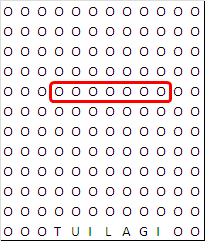
In case you need something to do, we have developed the first patented WoC party game – the Barnesy Word Grid. See how many of Barnesy’s favourite words you can find in the grid .. we’ve started you off.