Everyone Thinks They Have the Most Beautiful Wife at Home

After last week’s HEC action, everyone is banging on about how the AAABankPro’s contingent did themselves proud – and 9 wins from 12 is not to be sniffed at, especially when some Sky-hyped Premiership sides were downed in the process. Even our favourite corpulent ego-merchant has been giving his tuppence, making the not entirely ridiculous point that if the top 4 in England, France and Celt-land played each other, it would mostly be even between all 3 leagues.

Of course, the uncomfortable point for Barnesy and Miles among all this is that when Edinburgh (8th last season) beat London Samoan Irish (6th last season), its is the equivalent of Exeter beating Cardiff – something we can’t see happening too regularly.

Anyway, less Premiership-bashing, its not that bad to be fair, and is a sight better than Dragons-Connacht on a mucky Friday night. Let us do what nerds do and present a scientific analysis of which league is stronger. What we are going to do is take the top 6 in each league and look at their performances against one another in the following season’s HEC, for the last 3 European Cups. This controls for standard on the pitch – no-one cares about how much Sarries can stuff Treviso, if they can’t beat Munster (their equivalent this year as domestic champions in 2011).

We should acknowledge that the group stages are the most representative as teams play home and away. We will take knock-out stages into consideration as well, but they are less easy to extrapolate from, as one-off occasions.

So, our sample contains:

2009 HEC:
Celtic League: Leinster, Cardiff, Munster, Edinburgh, Glasgow, Scarlets
Premiership: Gloucester, Wasps, Ooooooooooooooohh Bath, Leicester, Sale Sharks, Harlequins
Top 14: Clermont, Toulouse, Stade Francais, Perpignan, Castres, Biarritz

2010 HEC:
Celtic League: Munster, Leinster, Edinburgh, Ospreys, Scarlets, Cardiff
Premiership: Leicester, Harlequins, London Irish, Ooooooooooooooohh Bath, Sale Sharks, Gloucester
Top 14: Perpignan, Toulouse, Clermont, Stade Francais, Biarritz, Brive

2011 HEC:
Celtic League: Leinster, Ospreys, Glasgow, Munster, Cardiff, Edinburgh
Premiership: Leicester, Northampton, Wasps, Ooooooooooooooohh Bath, London Irish, Saracens
Top 14: Perpignan, Toulon, Clermont, Toulouse, Castres, Racing Metro

2009:

Group Stages:


P

W

D

L

BP

Tot

Premiership

24

14

1

9

9

67

Celtic League

24

13

0

11

13

65

Top 14

24

8

1

15

7

41

Knock-out Stages:
Cardiff (CL) 9-6 Toulouse (T14)
Harleqiuns (AP) 5-6 Leinster (CL)
Cardiff (CL) 26-26 Leicester (AP)
Leinster (CL) 19-16 Leicester (AP)

Verdict: The Premiership shaded the regular season, but the Celts hit back with 2 wins and a draw against English opponents in the knock-out stages, both in neutral and English grounds. We think this makes up the 2 point differential so the Celtic League wins. Top 14 nowhere.

2010:

Group Stages:


P

W

D

L

BP

Tot

Celtic League

24

16

2

6

7

75

Top 14

24

11

0

13

11

55

Premiership

24

7

2

15

10

42

Knock-out Stages:
Leinster (CL) 29-28 Clermont (T14)
Biarritz (T14) 29-28 Ospreys (CL)
Toulouse (T14) 26-16 Leinster (CL)
Biarritz (T14) 18-7 Munster (CL)

Verdict: Although the Top 14 was soundly beaten in the regular season (not helped by Brive going 0-6), they won 3 of their 4 games at the business end (and the one they lost was one that got away). The best teams in the tournament were undoubtedly from France. Still, this is about the season as a whole and the Top 14 had 20 points less in the groups stages – so the Celtic League wins this one as well. The Premiership were laggards.

2011:

Group Stages:


P

W

D

L

BP

Tot

Top 14

26

14

1

11

8

66

Celtic League

26

12

0

14

12

60

Premiership

24

11

1

12

7

53

Knock-out Stages:

Leinster (CL) 17-10 Leicester (AP)
Leinster (CL) 32-23 Toulouse (T14)
Northampton (AP) 23-7 Perpignan (T14)
Leinster (CL) 33-22 Northampton (AP)

Verdict: The Celtic League was just behind the Top 14 on regular season (note the Celtic and French teams played extra games against one another due to vagaries of the draw). In terms of points per game, the Premiership (2.2) still lagged the Celts (2.3). In the knock-out stages, Leinster won the one game between the 2 leagues, albeit it home.. We still have to award this one to the Top 14. The Premiership once again is lagging behind, but not as much as in a grim 2010.

What do we think then? Undoubtedly, the League formerly known as Magners is the most consistent. The Top 14 seems to swing from the sublime to the ridiculous, and we should note that the occasional French team is not too bothered, so the overall standard is maybe higher than it looks. As for the Premiership – work to do. The best teams are as good as anyone, but the quality tapers off pretty quickly – teams like Bath and London Irish have a propensity to lose at home, something the French, Welsh and Irish do not make a habit of.

Of what use it this analysis? Well, when we meet Barnesy on our WoC away trip to Bath in December, we can blitz him with numbers. Then ask him about Matt Banahan. Altogether now: Oooooooooooooooohhh!!!

Thirteenwatch: Episode 1

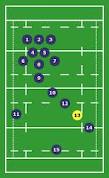
With his BODness out for this year’s Six Nations, in the absence of an Ireland backs coach, we’re stepping up our responsibilities and getting on the hunt for Ireland’s next 13, as a favour for Deccie.  We’re not even asking for a reward, it’s just our way of giving a little bit back – that’s the sort of guys we are. 

This week each of the provinces had an Irishman in the 13 shirt.  We were watching closely to see how they got on, and we’ll be back to update episodically over the next few months.

Eoin Griffin (Connacht)

Plenty of promise here.  Griffin made the crucial break for the first Connacht try, before perfectly executing the two-on-one to put O’Halloran in the corner.  He has plenty of gas, but is still a bit raw – witness his killing of the space when put into a wide channel shortly after Duffy’s try.  O’Driscoll would have straightened the line to give his wing the best chance of scoring. 

BOD Rating: not international class yet, but one for the future. 7/13

Fergus McFadden (Leinster)

Made yards in contact, but his partnership with Dorce looks flawed.  Both men want to plough into the nearest defender and neither really has great distribution skills, which makes for a one-dimensional, dare we say it, almost Ooooooooooohhhh! partnership.  Fergus was better than the badly-out-of-form Dorce, but still looks more of a 12 to us.

BOD Rating: needs a more complementary partner if he is to replace BOD. 6/13

Darren Cave (Ulster)

Less heralded than teammate Nevin Spence, but is getting the nod for Ulster at the moment, and is probably the form contender.  It was a day for the fatties in Ravenhill, but Cave put in a good shift against a quality opponent in Rougerie and was involved in the Ulster try.

BOD Rating: Cave is no BOD, but can expect to be in the shake up for caps if he keeps up this vein of form. 8/13

Danny Barnes (Munster)

Munster’s backline never really sparked this weekend, and was largely dominated by Saints’ potent mix of boshers up the middle and Ben Foden’s classy running.  Barnes showed some neat touches on the ball, and played a big part in Munster’s second try, but still has much to learn, particularly in defence where his passive line-speed allowed Foden and Ashton to create a superb try in the first half.

BOD Rating: still learning the position, but will get plenty of game time this year 6/13

Luke Fitzgerald and Tommy Bowe (Leinster & Ospreys)

Neither played 13, but both looked sharp as a tack, and will be contenders for the shirt if they get a run there.  Given Leinster’s misfiring centres, Luke could be due a run in the 13 shirt.

BOD Rating: need to see if they get a run in the 13 shirt, but if either or both get a chance, they would be strong contenders 7/13

Notes for Deccie: Early days Deccie, but if you’re starting Dorce you may want to think twice about partnering him with McFadden.  Yes, Deccie, we know Earls will be back in February.  No, Deccie, I don’t think that’s a good idea.  On the wing, Deccie, where he can score tries.  Come back, Deccie…


Heineken Cup Week 1: The Good, the Bad and the Referees

Good week
Flowers of Scotland
 
Scotland had a pretty grim RWC, and the drip-drip of dispiriting news, which seems to have been going on forever, continued with last weeks revelation that the man who will anchor the Jock pack for the next decade, Richie Gray, was flying the coop. And not to Toulon, Clermont or even Narbonne – to Sale Sharks! To team up with renowned team players like Mushy and Powell-y. But this weekend showed a chink of light in the gloom. On Saturday, Embra scored a well-earned win in Reading. London Irish might be awful, but any away win deserves a clap on the back in this competition. Then yesterday, Glasgow soaked up all the “running rugby” Bath could throw at them and struck for a last-minute sucker punch. The Scots are 2 for 2, and Edinburgh have a chance to go 2/2 themselves when Racing Metro come to town at the weekend. Long may it last.
 
Onwards and upwards


Wales, in contrast to Scotland, had an excellent RWC with talented young players who showed maturity that seemed out of reach for Mike Philips and Gav the elder statesmen of the side. Ospreys are top of the TripleALeague, and the good news seems set to last. And it continued this weekend, with a full house from our Welsh friends. Cardiff had the stand-out result of the weekend, winning in Paris and already looking like they have a firm stranglehold on Pool 2. Ospreys and the Scarlets also saw off French opposition, both showing admirable cojones when the pressure was put on in the second half.
23 Man Rugby

 
Deccie has yet to embrace the concept, but the rules of rugby these days allow shrewd coaches to replace players who aren’t injured with other players. During the game! I know – revolutionary. The best coaches, however, are completely au fait with the idea, and have responded in a rational fashion – pick 8 (or 7) men on the bench who you can tactically introduce in an attempt to win matches. You are often left with the (somewhat contradictory) idea that the correct XV was picked, but the substitutes made the difference. Joe Schmidt is an expert in this regard. He picked a pack (and a 9) to meet the physical intensity of Montpellier head-on. After 55 minutes, Leinster were teetering at 16-6, but Joe could introduce players better suited to tiring opponents such as Sean Cronin, Devin Toner, Shane Jennings and Eoin Reddan. The use of the bench was the key factor in Leinster’s recovery.

Bad Week

Homer Owens and Blind Dave Pearson

It’s an unfortunate state of affairs that so many high profile rugby matches are decided by the man in the middle.  As @sarahlennon08 tweeted, ‘After watching Owens and Pearson today, I have decided I don’t understand the laws of rugby.’  It felt a bit that way to us, too.  The last minute penalty for Leinster where the Montpellier chap was clearly first into the tackle zone, the scrum penalties when Munster were scrummaging at 90 degrees to the tryline, the blatant crooked feeds, O’Mahony playing the ball while his legs were in mid air in a maul, the same fellow being penalised at the lineout for contesting possesion, the stopping of the Saints maul in full flow… we were left saying ‘Huh?’  more than once.

Northampton Saints

They were a two minutes from a famous victory, and putting themselves in complete control of the pool, and as bad as Owens was, Saints will be kicking themselves.  Ryan Lamb lost his bottle kicking from hand, and needed to look for further territory.  Artemyev showed why Leinster were willing to let him go (he has feet for hands) and Northampton were fiddling around in a maul in their own half when they should have just been kicking downtown in the last minute of the game.  Saints have the pack to win the tournament, but have been on the wrong end of too many close matches.  They need to win a big one like this to be genuine contenders, but we think they’re still favourites to top the group.

Clermont Fly Halves

Two 10s, and both as flaky as each other.  Brock James has never recovered from that night in the RDS and Skrela plays like a man who is trying to remember if he left the iron on at home too often for a player at an elite club.  Between them, they let Ulster back into a game in which they should have been dead and buried.  Like Saints, Clermont have a pack to live with anyone, but their woes on the road will continue with these two fly-halves.  Morgan Parra at 10, anyone?

Oooooooooooooooooohhh Barnesy’s Excited, and so are we!

It’s the first weekend of the Heineken Cup, folks, and that can only mean one thing: Barnesy’s back.  Unless you watch the English Premiership every week (confession time: we find it too dull) it’s only on Heineken Cup weekends that we get a full dose of Stuart ‘Oooooooooooooooohhh!’ Barnes.  Whether extolling Bath’s super-slick running game or conspiring to add to Munster’s disciplinary woes (right, Gerry?), or talking up his latest overhyped bright young thing, we love a bit of Barnesy.  But nothing beats that ‘Oooooooooooooooohhhh!!’ as a shuddering no-arms smash from some Island loose cannon upends a 75kg scrum half.

Here’s some of what we’re looking forward to this weekend:

It’s Barnesy time!

HEC Preview: Pool 5 & Pool 6

Pool 5: Biarritz, Saracens, Ospreys, Treviso

Pedigree: Solid. Biarritz have two final appearances on their CV, losing both narrowly. The most recent was in 2010, where they shunted the Liginds into the dust before losing to Toulouse in the final. Sarries were Glen Jackson-inspired semi-finalists in 2008, when they almost upset the Munster bandwagon. Ospreys have a smattering of knockout experience and Treviso have little to shout about – although they get closer to scalping a big name every year.

Preview: The experience of Biarritz throws up a frequently-cited curiosity of the HEC draw. Because, inevitably, some French side with little European pedigree qualifies every year (e.g. Agen, Bourgoin, Montauban, Racing Metro, Montpellier) and must be kept apart from other French sides, top seeded French teams tend to draw a bunny e.g. Italian teams. Which means they are much more likely to qualify for the knockout stages and hence keep their top rating, then draw a bunny, etc, etc. Biarritz are a functional side built around a garganutan pack, Dmitri Yachvili’s on-field generalship and Damien Traille’s boot – but they are pretty average, and “boast” Iain Balshaw in their backline. Still, it’s a formula that works well in European rugby, and they have punched above their weight.

They know how to take 10 points from Italian sides (notwithstanding last year’s shock defeat to Aironi), get losing bonus points away and then blow teams apart at home (or in San Sebastian) – they will be very hard to stop in this pool, in spite of their precarious position in the Top 14

Sarries, on paper, carry a real threat. They are English champions (albeit with a smattering of South African influence) and aren’t easily beaten. Their problem might be in picking up enough bonus points to qualify, as they aren’t full of tries. They will win their home games against the two outsiders, but could struggle to seal the deal away, especially in Biarritz, and double especially because they plan to bring the Basques to Cape Town in January for their “home” game – with the kind of climate that the Biarritz lads will prefer to the muck, bosh and boot of North Lahndahn.

The Hairsprays have started the RaboMagners in chipper fashion, careering along happily, and with the tightest defence in the league. The jettisoning of the like of Jerry Collins and Mike Philips and banning of fake tan seems to have helped with team spirit, and the club are in a better place. At home, they are strong and are difficult to beat – they will be looking to be in the mix for the knockouts, but won’t qualify this year.

Treviso are interesting – they are far away from the worst side in Europe now, and will be aiming for a home win to put in their locker – any of these three constitute a scalp and any win would be a big step forward for the Italians.

Verdict: Biarritz to cruise the pool, and maybe even get a home quarter-final. Sarries should win enough games to contend for a quarter-final as best runners-up, but could regret the holiday in the Cape. We think if Quins fail to beat Toulouse at home in Pool 6, Sarries are through.

Pool 6: Toulouse, Harlequins, Gloucester, Connacht

Pedigree: The most decorated group in the compeition, and all due to Toulouse – 4 wins and 2 runners-up appearances trumps everyone else. Gloucester reached the knock-out stages in 2008, and Quins in 2010, but both lost to Irish opposition, in Quins case in spite of a little help from Count Drac. Connacht are making their HEC debut.

Preview: Toulouse never stop – last year they did well in the Top 14, and gave Leinster their toughest game of the HEC in the semi-final. And it was still not good enough. They have recruited well over the summer and look primed for another huge season. Luke McAlister has hit the ground running, and a pool short on sharks will be welcome – they had a huge RWC contingent who they will want firing on all cylinders in May, the integration process of Dusautoir et al may determine the level of silverware spending the summer under Guy Noves’ beady gaze.

Quins have started the English season like a train – 10 from 10 in all competitions, and playing a pretty attractive brand of rugby as well. They have undoubtedly been helped by having virtually a full team throughout the RWC, including Nick Evans and potential FEC Chris Robshaw. We don’t doubt the momentum won’t last, but if they get an away win at Gloucester in week 2, they are contenders for the knockout stages.

Gloucester themselves have started well in England, but are another team which had a low RWC quotient, and a trip to Toulouse will not be pleasant to start things off. The game with Quins will determine their tournament, and if they lose, they may not have the stomach for the one game Connacht will fancy themselves for in week 3 – they are firm outsiders now, but don’t rule them out if they win well in week 2.

Connacht themselves represent 10 points in the bag for Toulouse and Quins, and at least 6 for Gloucester. They will target the Cherry and Whites and hope the Atlantic whips up a winter storm, but it probably won’t be enough – this is a step way beyond what Connacht have experienced, and while it’s great to see a new name in the tournamnt, it could get very grizzly in January.

Verdict: Toulouse will stroll this pool, without needing (or wanting) to get out of third gear. Quins have a chance of sneaking into the quarter-finals on their coat-tails if they beat Gloucester in week 2 – if they don’t they will need to beat Toulouse at home. Connacht to get zero wins, regretably.

HEC Preview: Pool 1 & Pool 2

Pool 1: Munster, Northampton, Castres, Scarlets

Pedigree: Huge. Munster are Heineken Cup royalty, and the Saints are no slouches either – 3 victories between them and 3 other final appearances. The Scarlets have a few semi-finals to boast of, most recently in 2007 when Ireland’s favourite un-droppable Welshman, Simon Easterby, led them past Munster. Castres have no history of note, but look a team on the rise, domestically at least.

Preview: Two years ago, Munster and Northampton were paired together in a memorable series of pool games and quarter-final. The Saints felt that they had the Liginds’ number after the pool, but they were taught a lesson in European Cup rugby in the quarter-final. And it’s a lesson they paid heed to, making the final last year with a series of gritty wins. Rope-a-dope was unlikely to work against Leinster, so they came out throwing the ball around and very nearly pulled it off. Munster, meanwhile, failed to make the knockout stages for the first time in 10 years in atypically harum-scarum fashion.

It certainly gives the impression the graphs of these two crossed last year, and we would agree. The Saints should win in Franklins Gardens and will be targetting Thomond Park – Munster will do well to tie this head-to-head in match points. Castres are very tough at home, but lay down like lambs away – they won’t care about the HEC, but won’t want to give up a proud home record. Northampton’s pack looks not only higher in quality, but more gnarled than Munster’s, and are better equipped to win in France.  They have a bit more depth this year after some good recruiting (Vasily Artemiev has arrived with a bang) and their St. Boshingtons contingent will be hungry to restore battered reputations.

The Scarlets are the joker here – they will be looking to break games up and give their exciting young backs plenty of quick ball – they could win a couple of games, but won’t be in the shake-up.

It will ultimately come down to who is better at winning away from home, and that’s something Munster failed to do last year in a notably weaker pool than this one – only Toulon was an intimidating place to visit. Forget the Miracle Match – getting through this pool will be the greatest escape of the lot.

Verdict: Northampton to win the pool and advance.  Munster into the AmlinVase

Pool 2: Cardiff, London Irish, Edinburgh, Racing Metro

Pedigree: Not great, but not as bad as you might think – Cardiff were runners-up in the first tournament, and have a few semi-finals as well – most recently in 2009, when Leicester beat them on penalties. Irish, amazingly, were semi-finalists as recently as 2008, when Toulouse sent them packing. Edinburgh and Racing have no achievements to speak of at this level.

Preview: The Group of Dearth – whoever ups their game here will win it. Let’s start with the least likely – Edinburgh. The Scots have regressed badly since their top 4 Magners finish a few years ago, and pretty much the only good thing on the horizon is Tim Visser. They will fancy themselves at home to Irish, and Cardiff and (particularly) Racing if they take their eye off the ball. Away, they will be eviscerated.

Irish are almost as bad – they have replaced the bosh-tastic but reasonably decent Seilala Mapasua with the bosh-tastic and terrible Shontayne Hape. Don’t expect fireworks in Reading – just the way Biiiiiiiiiiiiig Bob likes it. Irish will beat Embra at home, and probably Racing Metro, but achieve nothing else.

So its between Cardiff and Racing Metro. The French side will win all their home games, but won’t be too bothered about wininng away – they should knock off Embra, but might get well beaten in Wales. Cardiff have underachived given the stellar names in their squad in recent years, and they have Sam Warburton, the new Tana Umaga Richie McCaw and a rejuvenated Jamie Roberts. The structure of the RaboCiderPro12 will allow them to target games, and this pool is there for the taking if they get it right.

Verdict: Cardiff will win it, and continue pushing forward the feel-good factor in Welsh rugby. Racing Metro to get the Amlin booby prize

Team in Focus: Connacht

Last season: C. They struggled domestically and failed to build on their AmlinVase semi-final from the year before. Then all their decent players left. However, Leinster winning it all meant they got a backdoor ticket to the HEC.

So far this year: Grinding on in the RaboProLeague – 3 wins from 7. They won’t be too pleased given everyone else has been understrength, but at least new players (of which there are many) have had some integration time.

Prospects: As usual, as soon as any Connacht players impressed, they bailed out of there. Sean Cronin, Jamie Hagan and Fionn Carr headed (back) to Leinster, and Ian Keatley went to Munster. Another bunch of surplus to requirement players from the other 3 provinces stepped into their shoes, but another season of embedding guys who will leave at the first opportunity is Connachts’s lot.

The front row will suffer for the loss of 2/3 of its starting contingent. The fantastically-named Rodney Ah You comes in a tight-head, but its more likely to be Rodney Peep Collapsing Yes You against the big sides. Hooker Ethienne Reynecke came from Sarries to replace Cronin, but its fair to say he isn’t top class. Brett Wilkinson is another Saffa, and is a decent honest loose-head who won’t let you down. Stewart Maguire used to be the a big prospect in the Leinster academy – lets hope he fulfils some hype.

Mike McCarthy held his own in the pre-RWC Ireland training camps and is typical of the current generational of Irish second rows (Paulie aside) – hard working but uninspiring. Connacht look to have recruited well in the back-row – TJ Anderson and particularly Eoghan Grace are young men who once had a promising career and have come West to do a Jirry and get regular gametime to step on. Grace was once in the position Peter O’Mahoney finds himself in – that is the young saviour of an ageing Munster back-row. It hasn’t happened so far, but at least now he has a shirt. Johnny O’Connor and John Muldoon are the grizzled veterans here – O’Connor once had words with Egg Chaser’s younger brother on Egg’s stag in his moonlighting bouncer role, and gained kudos for allowing trousers to remain on head.

Paul O’Donohoe never quite made the grade at Leinster – a couple of starts here and there tended to end when established names came back – he’s still young and possesses a snappy pass. He’ll think a few good few years in Connacht will set him up to return home to perhaps take Eoin Reddan’s place in the Leinster squad – he is not to be underestimated. Former Leicester Tiger Frank Murphy will backup O’Donohoe and is an able deputy. The (very) poor mans Morne Steyn, Niall O’Connor, has joined from Ulster. In Matt Williams final year in Ravenhill, O’Connor kept iHumph on the bench, and he offers a towering boot and defensive solidity. In many ways, its exactly what Connacht need – he will kick goals from anywhere inside the opposition half, and keeping the scoreboard ticking over will be a key component in the hanging-in-there gameplan Connacht generally adopt.

The diamond in the backline is young Tiarnan O’Halloran, the star turn in the Connacht academy’s respectable production line of the last year or 2. The lad is only 20, and can play at centre or full-back. If he continues his progression, there is a fair chance he could be the first Connacht player since Eric Elwood to consistently make national squads. He should get plenty of time this year, and expect him to catch the eye. Hopefully players like O’Halloran do not have to leave Galway to make career progress, but the reality is, without regular HEC football, you aren’t getting international recognition.

Relatively familiar names like Gavin Duffy and Mark McCrea are bog standard Rabo backline merchants. Fetu’u Vainikolo at one stage was a peer of Israel Dagg, but concerns about his positioning led to the Highlanders letting him slide, and he has wound up in Connacht – he could be a real danger and is a like-for-like replacement for Carr, albeit with greater Oooooooohhh factor. Kiwi Benson Stanley was at one stage interested in rocking up to Galway, but rumour has it he confused Connacht with Leinster and didn’t sign when he realised the the difference between the RDS and the Sportsground – and we aren’t talking about the availability of butternut squash focaccia and skinny caramel frappaccinos.

Connacht’s inaugural HEC adventure was kind in terms of the bank balance potential of the draw – European big guns Toulouse will bring their unique brand of brilliance to Galway, and will be joined by Conor O’Shea’s Harlequins and the eminently beatable Gloucester. Toulouse in November will be the biggest and most glamourous game in Connacht’s history, and the exposure alone will be worth its weight in gold. At home, Connacht’s small squad tends to mean that, instead of rotation, they target particular games to make best use of resources – this means they tend to mix heroic home victories with pastings on their travels. Its not always pretty, but you can only work with the tools you have

Verdict: Despite the chopping and changing, the summer has been a successful one for Connacht – season ticket sales has rocketed following Heineken Cup qualification, and the feel-good factor around the province is high. The increased exposure and revenue should help bring through more Tiarnan O’Halloran’s, which is realistically the best way forward for the poor relation of Irish rugby. The need for regular HEC rugby is likely to only be fulfilled through the back door, so young talent is the way forward.

On the pitch, we foresee some schizophrenia in the HEC. Connacht have generally been very competitive at home in the AmlinVase, and might target Gloucester, and should come very close to winning that one. Away, it could be painful. Five match points in the pool would represent a major triumph for Elwood.

In the RaboLeague, Connacht are struggling after 7 games in which every other side has been under-strength. Finishing above someone other than Aironi would ensure a good season at home. The chances of getting back to the HEC rest solely on the shoulder of the Leinster squad, but the increased exposure, revenue and investment from this season will mean it is a good season for Connacht no matter what happens on the field.

Team in Focus: Munster

Last season: A curate’s egg.  For the first time, Munster failed to make it out of their HEC group, and were lamentable in their pivotal game in Toulon.  The sight of their scrum being shunted around the park and a collective loss of discipline appeared to mean the jig was up for McGahan.  But Munster salvaged a difficult year with a Magners League win, with particular satisfaction derived from beating their rivals to secure it.  The long and painful transition to a new era spearheaded by the likes of Conor Murray, Keith Earls and Felix Jones looks to have begun.

Season so far: business as usual, with five wins from seven in the Pro12. From a rudimentary scan of headlines in the Indo, Peter O’Mahoney appears to have cured the lepers and turned water into wine.

Prospects: This is a huge season for Munster, with one overriding objective: re-establishing themselves in Europe.  The Heineken Cup has always been the lifeblood of the province, and despite finishing with silverware last year, for most fans the season was a disappointment.  Failing to get to the knockout stages of the Heineken Cup just shouldn’t happen to Munster, and it never happened to the liginds.

It’s an objective that looks increasingly difficult.  Munster have been drawn with Northampton, beaten finalists last year, and travel to Castres (second in the Top 14) in Week Two.  A much-fancied Scarlets side makes up the group.

What sort of Munster team will be put out to face these sides?  A pretty unfamilar one, all told.  Generation Ligind, essentially the pack and halves that delivered two Heineken Cups, has all but passed into the next world.  Quinny has gone, Hayes and Horan will be bit part players, Flannery’s future is less certain than ever and David Wallace’s injury robs them of their primary carrier.  Dennis Leamy, no longer anything like the powerful, aggressive player of four years ago, may not make the team and Peter Stringer is now third – maybe fourth – choice scrummie. Stalwarts like Donncha are starting to fade, and the production line is not quite what it should be – Munster under-20s are poor, and have been passed out by Connacht.

The front row will likely be du Preez, Varley and Botha.  The success of the scrum entirely depends on Botha staying fit and in form.  His last season at Ulster was marred by injury and mediocrity; Munster will hope they have the 2009 version.  A creaky Munster scrum is nothing new, of course, but they are used to putting out top class second and back rows.

Paulie can still mix it with the best, and is fit and flying – he was missed hugely in the early stages of the HEC last year. Micko has been performing very creditably (and at a level above Donncha) for two years now – his experience will be a useful asset, though he may take a back seat to allow the likes of Donnacha Ryan is and Ian Nagle more gametime. Nagle is a prospect, but still a little underpowered, but is – he’s unlikely to feature at HEC level this year, but we are hoping Ludd gives him some Rabo action.

Moving back, the glory days of the Quinny-Wally-Axel axis are a dim and distant memory – the 2012 unit is likely to be Ryan/Leamy-O’Mahony-Coughlan.  Ryan seemed to finally break into the first team last year and played fairly well on World Cup duty with Ireland, but the jury is still out – he has only one HEC start, and that was in defeat to London Irish.  Coughlan is an honest, hard-working journeyman, but struggles against the better sides.  Peter ‘the son Hugh Farrelly never had’ O’Mahony is the wildcard – Munster fans had better hope he’s half as good as Farrelly thinks he is – otherwise they’ll be taking on Saints with the ineffectual Niall Ronan at openside. Paddy “Slievenamon” Butler was a barnstorming underage number 8 a few years back, but he hasn’t made it past first base yet – we’re hopeful he can breakthrough for some Rabo games at least.

At half, Conor Murray will likely own the 9 shirt for big games, unless Tomás gets back to 2009 form – and we aren’t optimistic on that front. ROG still has the fire, no doubt there, but he’s 34 now. As one of rugby’s most forthright, intelligent (and divisive) men, he will be aware managing succession is crucial to sustained success, but don’t expect him to be helping Keatley into the 10 jumper just yet.  Munster’s hopes will rest on ROG’s ability to turn dirty, slow ball into scores. Again. It’s not code red yet, but this looks like a potential problem position for Munster in two years’ time unless Keatley can prove himself HEC standard.

Outside the halves, it’s a huge pity that Felix Jones is injured; he added much to Munster’s attack in the second half of last season.  At centre – a problem position last season – Tuitupou has been swapped for Will Chambers, signed from Queensland Reds.  It should be an improvement (lets face it, Chambers would have to be pretty bad to be worse than Tuitupooooooooooooooohh), but a lot rests on the young shoulders of Danny Barnes.  There’s Lifeimi Mafi too, who was superb in the ML final last year, but hopeless (and pretty dirty) for most of the campaign. Keith Earls has class with ball in hand, but moving him around is guaranteed to maximise defensive mistakes – Ludd and Axel (and Keith) need to decide what they want him to be – he looks a winger to us, but many in the Cork Con Mafia media are convinced otherwise.

All told, it’s not a side to strike fear into top-class opponents the way the 2004-2009 vintage did.  Northampton will fancy themselves in the opening week visit to Thomond Park.  Munster will be relying more than ever on the great warriors Paul O’Connell and Ronan O’Gara to navigate them through the tough games – it may be too much to ask.

Forecast: We think Munster will ultimately come second to Northampton.  The two will probably trade wins, and Thomond Park will remain a fortress, but Munster will probably need to get two wins on the road, and we just can’t see it.  In the Pro12, Munster’s ability to consistently churn out results against weaker sides will stand to them, and it’s impossible to see the semi-finals without them.  Another tilt at silverware is inevitable, but they may come up just short this time.

Team in focus: Ulster

Last season: A. Ulster had a fantastic season, their best since Humph retired – some shrewd Saffa recruitment and up-and-coming young talent led Ulster through their HEC pool, and, with a little more belief, the Saints were there for the taking. Third place in the ML secured a playoff, but an(other) inevitable defeat to Leinster ensued it ended potless in Ravenhill.

So far this year: If last year was A, this season has been C- so far. They didn’t have many players in NZ, but the ones they did have were crucial – the spine of the team (2, 5, 6, 9, 11, 12, 14 including captain, vice-captain and on-field lieutenants) were gone. The forwards have been too lightweight to get ball for the talented backs and old faultlines have re-appeared – e.g. iHumph’s salloon door tackling.

Prospects: The shocking HEC draw has concentrated minds in Ravenhill – there is no room for error, and they must hit the ground running and beat the in-form and intimidating Clermont Auvergne next week followed by a tilt at the Tigers the week after.

The pressure seems to be telling a little and Ulster are struggling to get motoring. The hope was that the younger players would put some pressure on the established names, and that the RWC returnees would be coming back into a fight for the shirt. That hasn’t happened, and the string of losses is worrying.

On the personnel front, the question marks are mainly around whether the players who did well last year can step up. Paddy McAlister looks a real prospect at loose-head – he’s physical and aggressive and certainly looks more effective than Tom Court. If McLaughlin throws him in against the (very) big guns of Clermont and Leicester, it will be very interesting. Opposite him, John Afoa on the tight-head side can’t come in soon enough – Court’s scrummaging has always been passable at best, and it is frankly abominable on the tight side. Rory Best isn’t being shifted, but young Niall Annett has captained every age group he has played in, and will be given a taste of Rabo action this year – one to watch in 2015.

Further back, Ulster will want big seasons from Dan Tuohy and Chris Henry. Tuohy is a great ball carrier and when on form, seems to have all the tools to be an international player. The problem is that, particularly this season, his form has been up and down. The return of Muller alongside him (and Best) should help him concentrate on his own game.

The Ulster back-row is in a bit of flux. You want your back-row to be well-balanced and to have a tackler, a carrier and a line-out merchant. Fez is all 3 really, Pedrie Wannenburg is a carrier and Chris Henry is, well … nothing, really. For Henry to continue his progression, he needs to make a shirt and a role his own. He is probably best-suited to 6, but the imposing frame of Fez is blocking him in the big games (assuming he is fit). At 8, he is behind agricultural Bok bosher Wannenburg, who might be fairly one-dimensional, but he gets across the gainline and has a happy knack of picking up tries. Which leaves 7, where Willie Falloon is a much better, albeit inconsistent, fit. Henry is in danger of being left behind, but he has potential and is a good leader – it’s a huge season for him. The afore-mentioned Falloon is a classic openside and Ulster look much better balanced with him in the side. He is a younger man and has yet to produce consistently, but if he gets form and starts, he balances the team much better. Which leaves Henry on the bench…

Pienaar and iHumph offer Ulster a balanced and exciting halfback pairing. The idea of a play-making scummie is still a bit odd here, and it gives Ulster the ability to play it either way. Pienaar’s game management and kicking is top class, and it allows the luxury of Humphreys silky skills and woollen defence at 10. Paul Marshall on the bench offers snappy service and a fast break as the game opens up. Also, look out for a fascinating battle between Paddy Jackson and James McKinney for the Young Outhalf Prospect Cup. At centre, the current incumbents are Nevin Spence and Paddy Wallace, with Luke Marshall and Darren Cave backing up. The competition should bring the best out of them all, and probably usher in Paddy Wallace’s swansong. In Cordite Villlas, we hope to see Spence in a green shirt very soon.

Out wide, it seems strange that its less than 2 years since Timmy Naguca, Mark McCrea and Clinton Shifcofske were trundling around Mount Merrion wasting good ball. Trimble and Danielli are genuinely HEC class, and youngsters Craig Gilroy and Conor Gaston will hope for lots of gametime. Adam D’Arcy is a fantastic broken field runner, but it’s all a bit pointless given he can’t actually pass the ball. Ageing Saffa boot merchant Stefan Terblanche has been brought in to cover for the unfortunate Jared Payne, and will actually contribute – Ulster do not have a safe as houses full-back a la Bob Kearney in the squad.

Ulster got an absolute stinker of a HEC draw this year – just when they needed something benign (e.g. Biarritz) to establish themselves as a quarter-final side, out popped the worst conceivable pool – Leicester and Clermont. To be fair, neither of those two would have been happy to see Ulster – Leicester have had some very bad days in Ravenhill, and Clermont, despite being among the three best sides in Europe for the last 4 years, have seen their ambitions founder on Irish soil.

Nineteen points will generally get you close to a wild card for the knock-out stages, and it’s a simple formula – 4 wins and 3 bonus points. Ulster have to let tie-breaking criteria think of themselves, and hope perhaps that Clermont do a Perpignan and get a result in Welford Road. They will aim for a double over Aironi and two other home wins. As for bonus points, the most likely scenario for getting three is two try numbers from the Italians and one losing point in Leicester – nobody gets one in the Stade Marcel Michelin (except Munster and Leinster). It’s a tall order, but Ulster played the timing of their fixtures well last year, and its an easy argument to make that now is the time to be visiting Welford Road.

At home, it’s about getting into the top 4 – only Leinster stand out in the Rabo pack, and Ulster, Munster and the bigger Welsh sides are of a similar standard. Fourth place will do, but fifth wouldn’t be a disaster if some of the younger guns get useful and productive gametime.

Verdict: Despite all the optimism Egg Chaser can muster, it’s a huge ask to get out of this pool. We think they will come mighty close though. We forecast 18 points and a finish behind Clermont. ERC tie-breakers will decide if its them or Leicester who join Munster in pursuit of the AmlinVase. At ProDirect level, they won’t get a home semi-final, but will do enough to get an away one – the lack of Irish internationals will work in their favour in February and March. Unless of course Deccie goes for revolution not evolution… Nah, playoffs it is.

Team in Focus: Leinster

Last week we caught up with the domestic season so far, but it’s hard to escape the sense that the phoney war is now over and the serious business starts this Friday. This weekend the provinces reintegrate their full quotient of frontliners, Leinster take on Munster and Ulster face Connacht, and the following week the Heineken Cup kicks off.  We’re going to have an in-depth look at each of the Irish provinces, and we’ll look at the Heineken Cup groups after that.  We’re kicking off with European Champions, Leinster.

Last season: A+ all round. Joe Schmidt overcame a terrible opening month to deliver a second Heineken Cup in three years.  Unlike the first Cup triumph, Leinster were imperious throughout the competition; Schmidt reinvigorated a tired looking backline by introducing an offloading game that made them more potent than ever in attack, while retaining the hard-nosed winning mentality forged under Michael Cheika.

So far this season: Ticking over.  Five wins in the Magners League, but unsurprisingly, have yet to scale the heights of last year.

Prospects: Leinster will be looking to go one better than last season, which can only be done by winning both the Heineken Cup and the Pro12.  On the face of it their prospects couldn’t be healthier.  Joe Schmidt is fully settled in the role, and now tipped as the next Ireland coach, and a raft of players who made an impression last year will be a year older and more experienced: the likes of Rhys Rudock, Dom Ryan, Fergus McFadden and Eoin O’Malley will be looking to push on and start the big games this year. 

Back row is an area of notable strength, where Sean O’Brien has graduated to the status of global star, and Jamie Healsip will look forward to playing his natural game after a subdued World Cup.  Jennings, McLaughlin, Ryan and Ruddock will be toughing it out to to start alongside them.  With Ross and Healy, the scrum looks rock solid and the addition of Cronin at hooker means Leinster have solid cover for the outstanding Richardt Strauss.  In the backline, Rob Kearney is back to full fitness having had a sound world Cup and the returning Fionn Carr brings out-and-out pace, a missing ingredient since Disco Den’s retirement.  A relatively benign draw (Bath, Glasgow, Montpellier) in the group stages of the HEC puts Leinster in the position of joint tournament favourites, with Toulouse, to win the Cup.

It looks like an impossibly rosy picture – but a couple of clouds are looming.  Second row is a worry.  It is impossible to overrate the contribution of Nathan Hines to last year’s HEC win – the big man’s handling skills were crucial to the offlading game Leinster play, but he has been forced out by the IRFU.  Early indications are that Devin Toner is being groomed to start in his place this year.  At 208cm, Toner is a completely different player to Hines.  He played badly last season (his restart work is frequently appaling), but has started well this, and has a newfound, and badly needed, aggression about his play.  The middle of the lineout should be safe enough with him on the pitch, but Leinster will miss the power, and that bit of mongrel that Hines brought to bare on the team.  Much will depend on whether Toner steps up to the plate.

And what of the centres?  Brian O’Driscoll played the World Cup on one shoulder, and assuredly won’t get through a season unless he is given the chance to properly recover.  How he is handled by the Leinster management remains to be seen, but it must be possible that Leinster will have to cope without him for the early rounds of the Heineken Cup.  Gordon D’arcy has struggled for consistency for some time, and in a world of 110kg centres, looks decidedly small these days.  Shane Horgan is a grievous loss, and leaves Leinster without a big man in the backline.  It means we’ll be seeing more of Fergus McFadden, who was knocking hard on the door last year – this has to be his breakthrough season.  If the BOD-Dorce-Shaggy axis is M.I.A. for vast swathes of the season, it’s hard to see Leinster retaining the Cup, but at the same time they need to start safeguarding for the future.

There’s also the possibility of ‘second season syndrome’ for Joe, and the historical difficulty of retaining the Heineken Cup (only Leicester, in 2001, have done it).  What looked like an easy HEC draw became tougher when Leinster were sent to Montpellier in the opening week.

Forecast: Leinster should qualify from their group, but it may end up tougher than is anticipated.  Lose to Montpellier in opening week, and they’ll have to go to the Rec and win – a result they should get, but not easily.  The knockouts are impossible to predict this far out, but Leinster will be in the shake-down.  In the Pro12, there should be plenty of bitterness stored up by losing out to Munster last year, and Leinster will be looking to pip their rivals this time.  They should manage that, and the likelihood is that Leinster will win silverware in one of the two competitions this year – but a double will remain beyond them.