Early Christmas Day, Egg Chaser looked at the pile of presents under his tree. Pondering which one to open first (he has many siblings, and thus was confronted the agony of choice), he picked a vaguely book-looking gift, and opened it.
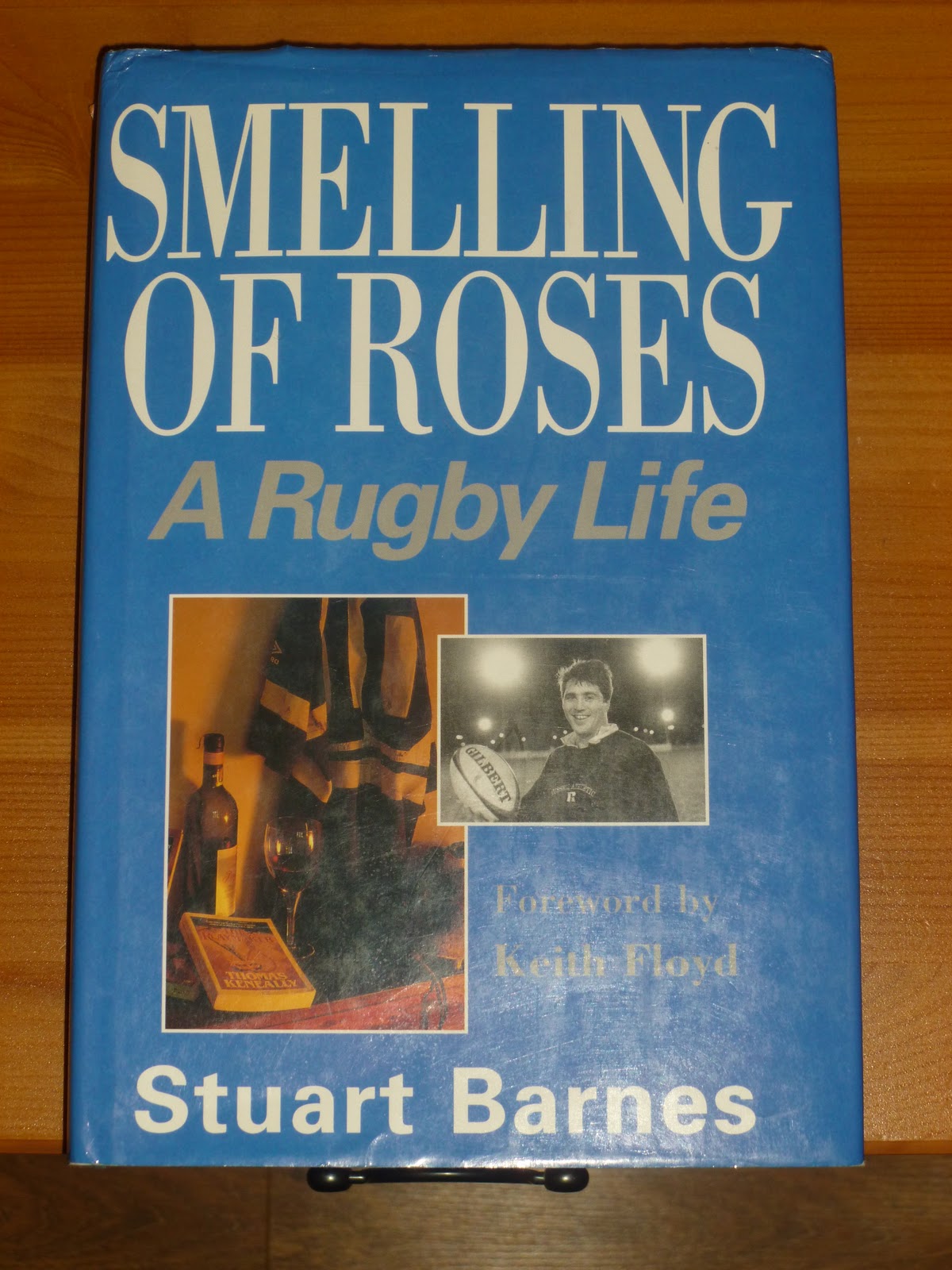
What was it but the best present in history? – a signed (signed!) copy of Barnesy’s 1994 autobiography, Smelling of Roses. You’re right – it doesn’t get much better. So we spent the next 3 days ignoring the family and reading it. Brilliant
So what did we learn? Well, some things we knew already, like:
- Barnesy can express his opinions and is well-spoken
- He loves Bath
- He is a fat chap, who can devour red wine
- He is bitter about his largely unfulfilled international career
- He loves big hits from Samoans. No wait, this was the amateur era – English club teams didn’t hire boshing Rent-A-Samoans yet. Scratch that bit
So far, so sports-biography predictable. But what was new? What pearls of wisdom were spoken by our favourite rugger pundit that illuminated the festive season?
Firstly, his rugby education is Welsh, which certainly puts a new perspective on his rugby outlook. Barnesy was (and is) a huge Arsenal fan from Essex who loves soccer. He did not even know what a rugby ball was until Clan Barnes moved to Wales when he was 12 or so. His school (the same Alma Mater as deranged mouth-frothing hack Stephen Jones) in Newport made him play, and he was captain in his first year. He played for Welsh Schools, and narrowly missed out on a place on the Welsh bench for a 5 Nations game in his last season in Wales before moving to Oxford University, where he declared himself English.
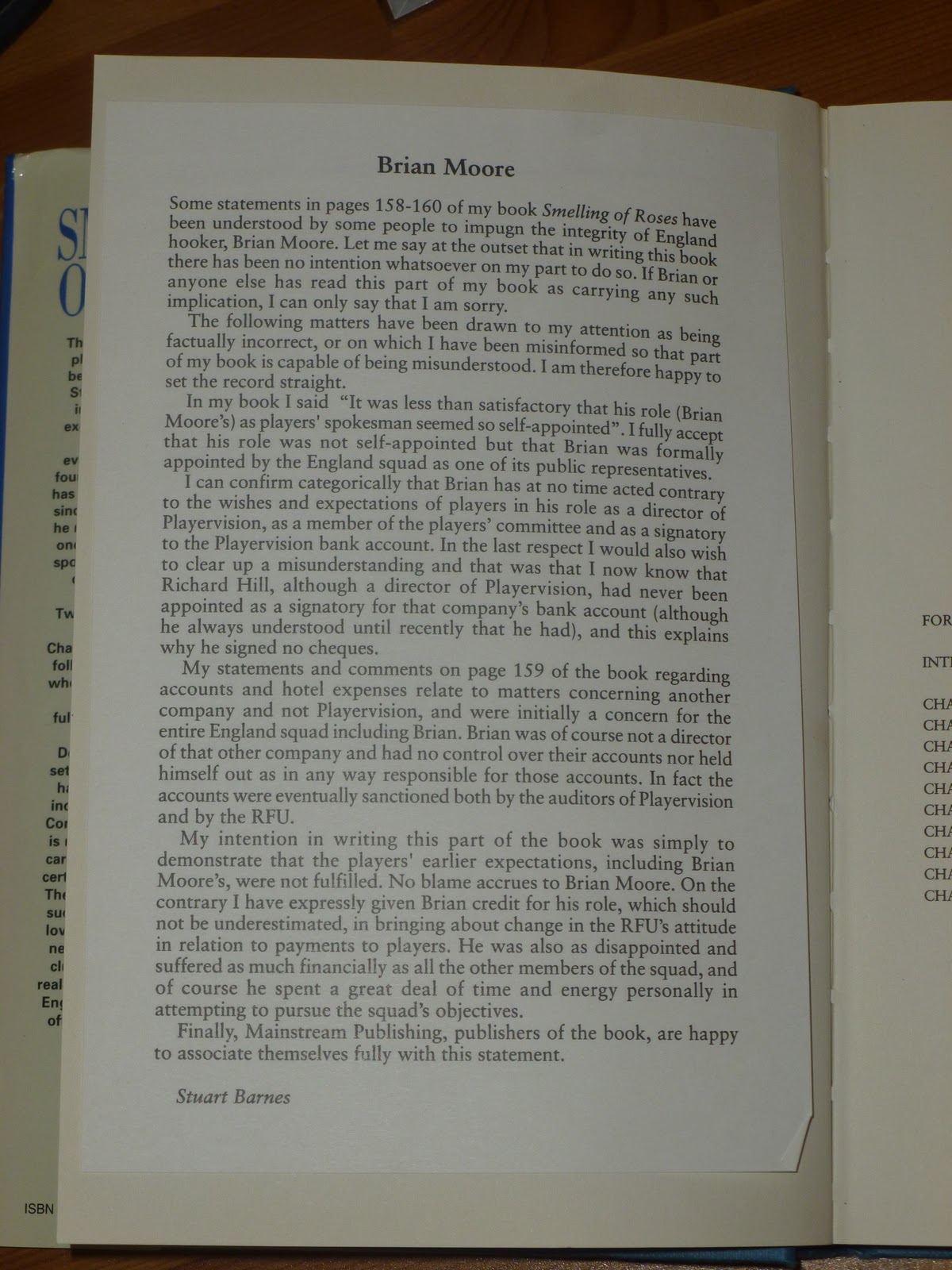
 What else? He doesn’t hold back. The very first page of the book contains a glued-in page with a lengthly apology for any perceived insult to Brian Moore in the book. And it continues in a simliar vein. Geoff Cooke was unimaginative and controlled Bum-chin Carling and Moore, reining in their on-pitch rebellious tendencies and making them automatons. Cooke’s fly half, Rob Andrew, reacted to the threat from Barnesy by standing 10 yards behind the scrum and kicking the corners – safety-first no-mistake rugby – to ensure he wouldn’t make an error and be dropped. Andrew (and Cooke)’s view that a 10 is a cog in the machine and not the driver of the machine itself is heavily criticized. The sainted Ian McGeechan (now, of course, Bath coach) – disinterested in the peripheral Lions and unable to react to what was in front of him on the 1993 Tour. Moore and the Players Committee in the few years before professionalism (which Barnesy considered inevitable) – naive and shambolic. It’s amazing stuff.
In our opinion, the most interesting thing was his consistent argument against Groupthink in English rugby, perpetrated by the (then-and-now) powerful English rugby media. Recently, Barnesy has talked about how ex-playing pundits are largely drawn from one club (Leicester, presumably) and that clubs’ ethos/gameplan is largely uncriticized and thus considered a zenith. No room for alternatives are discussed or acknowledged if success is the goal. In the book, he continually refers to the idea that because England didn’t win a Grand Slam in 1990 playing ambitious rugby, and did in 1991 and 1992 playing 10-man stuff, 10-man was the only way to play. The idea that there was a potentially better and more successful way was not on the agenda. The sight of England bottling the 1991 RWC final is a particular bugbear for Barnesy.
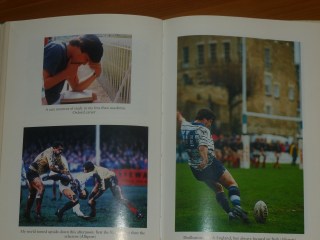 Now, admittedly, back in 1994, this was pretty self-serving. If England did want to expand their game, they were hardly going to ignore the best 10 in the country at running a backline to do so. But the point stands and is just as relevant today. England won the RWC in 2003 with a team that had already peaked that summer and was so fearful of losing they boot-and-bullocked it .. crucially, they had the personnel to do so successfully. In both subsequent RWC tournaments, when the pressure was on, all ambition was ditched and they reverted to the 2003 type, despite having nothing like the capability to execute the gameplan. They fluked their way to a final in 2007, but the chickens came home to roost this year.
Even thinking about England’s approach between tournaments, consider a list of attacking players who have all played for England in the last 10 years and been ditched sharpish after 1 or 2 mistakes: Olly Barkley (23 caps in 10 years), Charlie Hodgson (36 caps in 10 years), Danny Cipriani (7 caps, rushed back and then humiliated by Johnno), Olly Morgan (2 caps), Dave Strettle (7), Shane Geraghty (6). Now, they aren’t all the answer to England’s problems (here’s looking at you Charlie), but there is no doubt all of them would have more caps, and more encouragement, had they been Welsh, Irish or French. Contrast to, say, Shontayne Hape (13 caps in 18 months and not one notable memory), Mark Cueto (55 caps in 7 years, consistently not at international level, but so many recalls we have lost count), Matt Banahan (16 caps in 2 years – more than Cipriani and Strettle combined).
What would Barnesy say? It’s easy to guess, and one doubts Danny Cipriani would be in Melbourne if the Barnesy’s of this world had their way. Barnesy, as ever, we salute thee!





 Whiff of Cordite